What Is the Typical Cost for Winter Battery Replacement and Starting System Testing in Chicagoland?
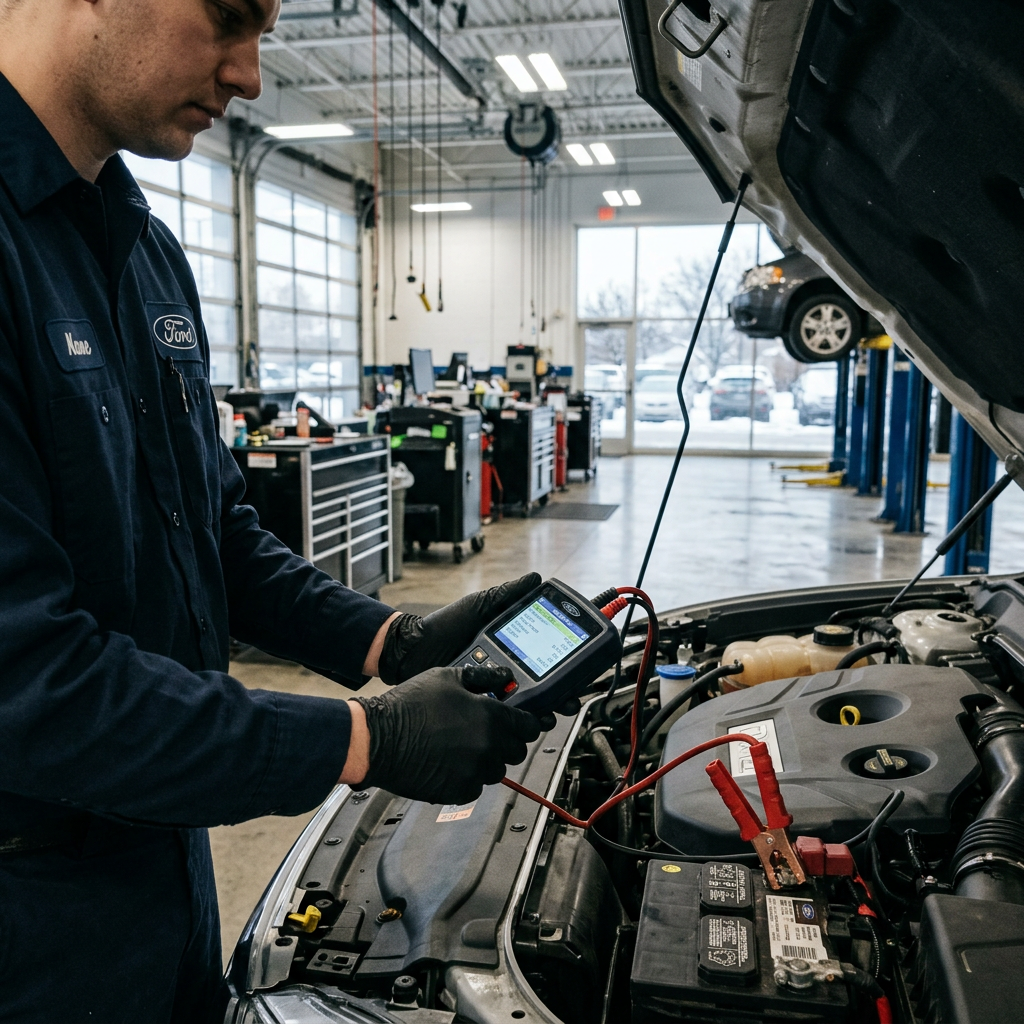
When the polar vortex sweeps across Chicagoland, bringing negative ambient temperatures and harsh winds off Lake Michigan, your vehicle’s electrical system is put to the ultimate test. Drivers in Carol Stream, Bloomingdale, Glendale Heights, and throughout DuPage County frequently ask: what should I expect to pay for winter battery replacement and starting system testing? The straightforward answer is that a standard winter battery health test ranges from $0 to $50(and is frequently complimentary during routine service inspections at Hawk Ford of Carol Stream), full computerized starting and charging system diagnostics typically run $50 to $120, and a premium cold-weather battery replacement costs between $150 and $350 including professional installation and computerized recalibration.
Understanding this financial outlay requires looking beyond just the box on the shelf. In northern Illinois, a simple battery swap without complete starting system verification can leave you stranded on Route 64 or I-290 during a sub-zero blizzard. A healthy battery cannot start a vehicle if the starter motor suffers from high internal resistance or if the alternator fails to replenish spent energy during short suburban commutes. Total expected out-of-pocket costs depend heavily on your vehicle’s specific power demands, engine displacement, chemistry requirements (such as Standard Flooded vs. Absorbed Glass Mat), and whether your car utilizes modern micro-hybrid technologies like auto start-stop.
For most drivers in the western suburbs, investing in professional winter electrical service before severe weather strikes is far more economical than paying for emergency towing, lost workday productivity, or roadside callouts on freezing mornings. Below, we break down every line item, technical nuance, and local climate factor so you can make informed decisions for your vehicle’s winter readiness.
Breaking Down Winter Auto Battery and Starting System Costs Across Suburban Chicago
Itemizing line-by-line expenses helps clarify where your money goes during a winter service visit. In suburban Chicago, automotive repair pricing reflects specialized diagnostic equipment, certified labor, and regional environmental compliance standards.
1. Standard Flooded Lead-Acid Batteries ($130 – $200): Suitable for older vehicles with modest electrical demands. These units carry lower upfront costs but suffer greater output loss in deep freezes.
2. Absorbed Glass Mat (AGM) Batteries ($220 – $380): Required for modern Fords and luxury vehicles equipped with auto start-stop, heated seats, heated steering wheels, and high-draw infotainment. They deliver superior cold-cranking performance and faster recharge acceptance.
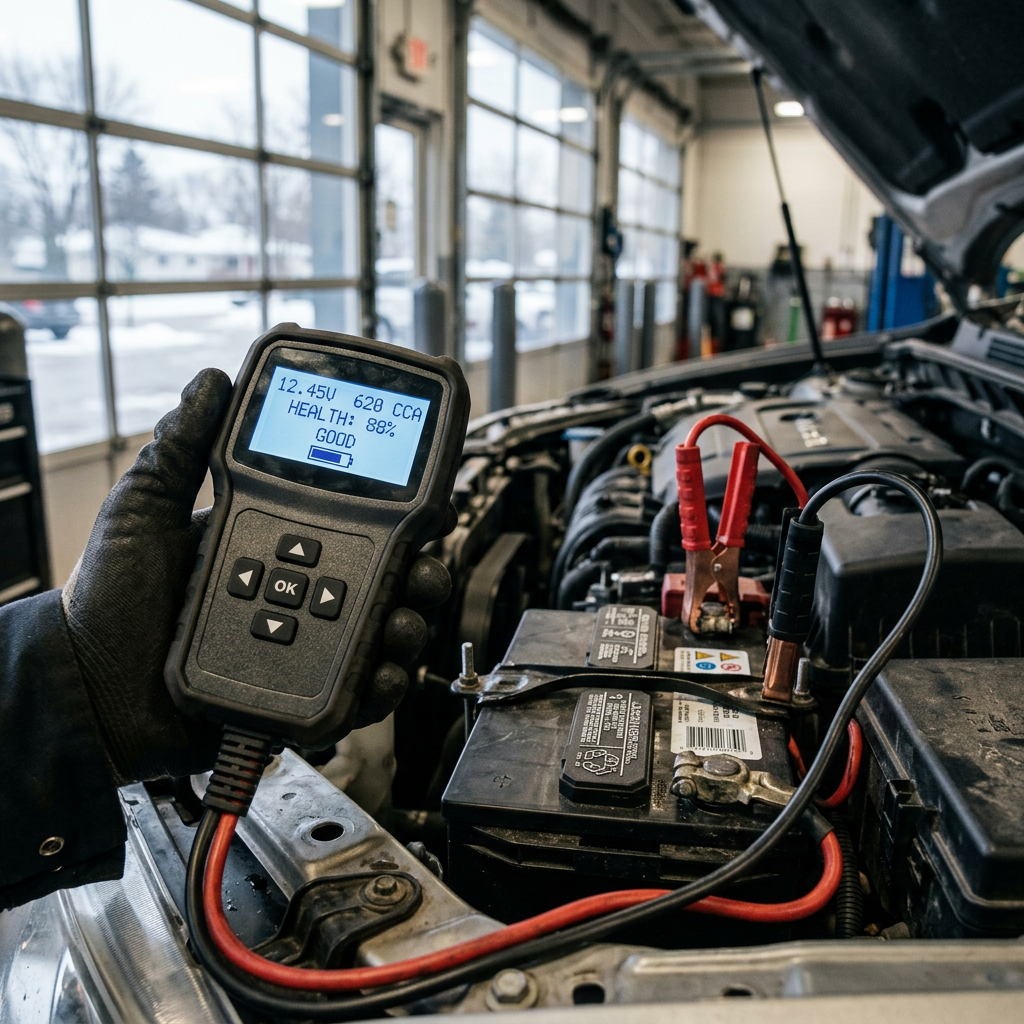
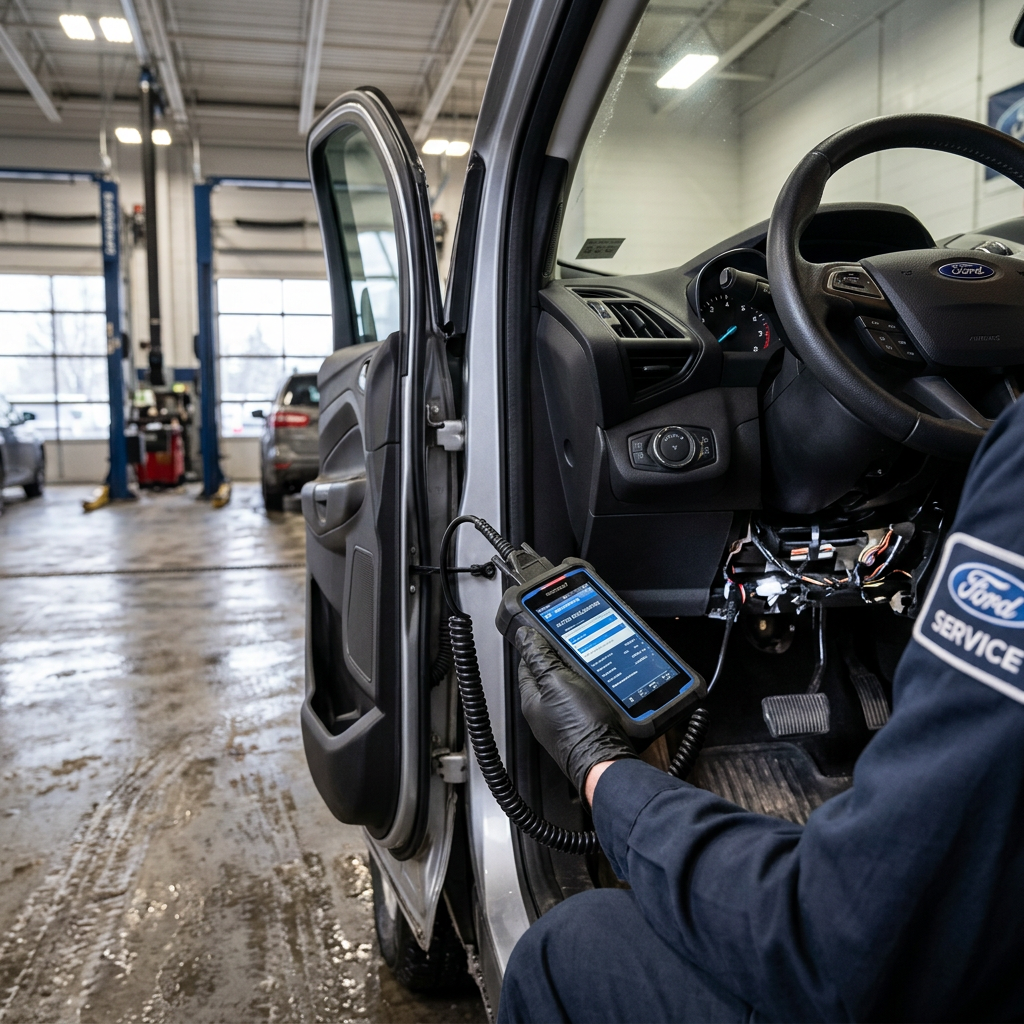
3. Computerized System Diagnostics ($50 – $120): A full check tests starter motor current draw, alternator voltage regulation, diode ripple, and parasitic key-off drain.
4. Installation & BMS Reset ($30 – $75): Labor for physical replacement, terminal cleaning, anti-corrosion sealing, and resetting the Battery Management System (BMS).
| Service / Item Component |
Estimated Cost Range |
Key Notes & Inclusions |
| Basic Battery Health Test |
$0 – $35 |
Often FREE with routine multi-point inspection |
| Full Starting System Diagnostic |
$50 – $120 |
Tests starter, alternator, and parasitic draw |
| Standard Lead-Acid Battery |
$130 – $200 |
3-year warranty, standard electrical load |
| Premium AGM Battery |
$220 – $380 |
High CCA, mandatory for Start-Stop systems |
| Professional Installation & BMS Reset |
$30 – $75 |
Includes terminal cleaning & computer registration |
| Hazardous Material & Recycling Fee |
$5 – $18 |
Mandatory state environmental compliance |
What Cold Cranking Amps (CCA) Rating Is Required for Car Batteries in Chicagoland Winters?
Cold Cranking Amps (CCA) is the industry standard measurement defining a battery’s ability to start an engine in extreme cold. Specifically, CCA represents the number of amperes a 12-volt battery can deliver at 0°F (-18°C) for 30 seconds while maintaining a voltage of at least 7.2 volts. In Chicagoland, where winter overnight temperatures frequently dip well below zero, CCA is the single most vital specification on your battery’s label.
When temperatures plummet to 0°F, two simultaneous thermodynamic challenges strike your vehicle: first, chemical reactions inside the battery slow dramatically, reducing available electrical output by roughly 30% to 50%. Second, engine oil thickens to syrup-like viscosity, requiring significantly more mechanical energy to turn the crankshaft. A battery rated for mild southern climates (e.g., 400–500 CCA) will rapidly fail under DuPage County winter conditions.
For reliable sub-zero cold starts in Carol Stream, local vehicles typically require:
• Compact & Midsize Sedans (4-cylinder): Minimum 550 to 650 CCA
• SUVs, Crossovers & Light Trucks (V6/EcoBoost): Minimum 650 to 750 CCA
• Full-Size Trucks, V8s & Diesels: Minimum 800 to 950+ CCA (or dual battery setups)
Along with CCA, pay close attention to Reserve Capacity (RC). RC measures how many minutes the battery can supply 25 amps of current at 80°F before dropping below 10.5 volts. In winter, high RC ensures that seat heaters, windshield defrosters, headlights, and cabin blowers won’t drain your battery during heavy snow delays on North Avenue.
How Does Cold Winter Weather Affect AGM Versus Standard Flooded Lead-Acid Batteries?
Standard Flooded Lead-Acid
Conventional lead-acid batteries contain liquid electrolyte solution surrounding lead plates. In severe winter cold, chemical mobility drops sharply. If a flooded battery becomes discharged below 50%, its electrolyte dilutes into mostly water, which can freeze at 32°F. Freezing expands the liquid, cracking plastic casings and warping internal lead plates permanently.
Absorbed Glass Mat (AGM)
AGM technology suspends the liquid electrolyte inside ultrafine fiberglass mat separators compressed tightly between plates. Because there is no free-flowing liquid, AGM batteries are virtually spill-proof, offer extremely low internal resistance, and exhibit exceptional resistance to deep-freeze cracking down to -40°F.
Winter Performance Edge
AGM batteries recharge up to 5 times faster than standard batteries during short winter trips. They deliver higher surge currents for demanding quick-starts and withstand up to 3 times the total cycle life. For Chicagoland commuters, AGM provides unmatched peace of mind during extended sub-zero cold snaps.
Can a Vehicle Designed for a Flooded Battery Be Upgraded to an AGM Battery?
Yes, in almost all cases you can upgrade from a standard flooded battery to an AGM battery, provided the replacement unit matches the correct BCI Group Size (e.g., Group 35, 48/H6, 94R/H7, 65) and meets or exceeds OEM cold cranking specifications. However, making this switch involves crucial technical steps that go beyond physical drop-in installation.
Modern Ford vehicles and late-model cars utilize sophisticated Battery Management Systems (BMS). The powertrain control module continually tracks battery age, state of charge (SoC), internal resistance, and ambient operating temperature to adjust smart-alternator output voltages dynamically.
Because AGM chemistry requires slightly different charging voltage profiles than flooded batteries (AGM is sensitive to high-voltage overcharging above 14.8V), failing to recalibrate the BMS will cause the alternator to overcharge the new AGM unit or treat it as an aging, degraded battery. Professional installation at
Hawk Ford of Carol Stream includes resetting the BMS parameter using factory diagnostic equipment.
Why BMS Reset Matters: Installing an upgraded AGM battery without resetting the computer can result in premature battery failure within 12 to 18 months, erratic auto start-stop operation, and disabled accessory features (like heated seats or sync displays) as the computer unnecessarily sheds electrical loads.
How Long Should an Engine Block Heater Be Plugged in Before Starting a Car?
An engine block heater warms the engine coolant and block block metal, ensuring that motor oil remains fluid and easy to pump during severe Chicagoland freezes. When ambient temperatures drop below 0°F (-18°C), using a block heater dramatically reduces mechanical friction inside the engine during initial startup.
The Ideal Plug-In Duration: 2 to 3 Hours.
Contrary to popular belief, leaving a block heater plugged in all night (8+ hours) provides no additional benefit and simply wastes electrical power. An engine block reaches maximum heat saturation within 3 hours. Using a heavy-duty outdoor grounding timer set to activate 2.5 hours before your morning commute saves money on electric bills while providing maximum battery stress relief.
Key Benefits for Your Starting System:
• Reduced Cranking Amperes: Warmer motor oil allows the starter motor to turn the engine with 40% to 50% less electrical current draw from the battery.
• Instant Cabin Heat: Warmed coolant allows your HVAC defroster to deliver warm air almost immediately, clearing iced windshields faster on winter mornings.
• Reduced Engine Wear: Up to 75% of wear occurs during cold starts. Warm oil circulates instantly to vital valvetrain and turbocharger components.
• Lower Tailpipe Emissions: The engine reaches closed-loop fuel management faster, reducing unburned fuel during cold idle.
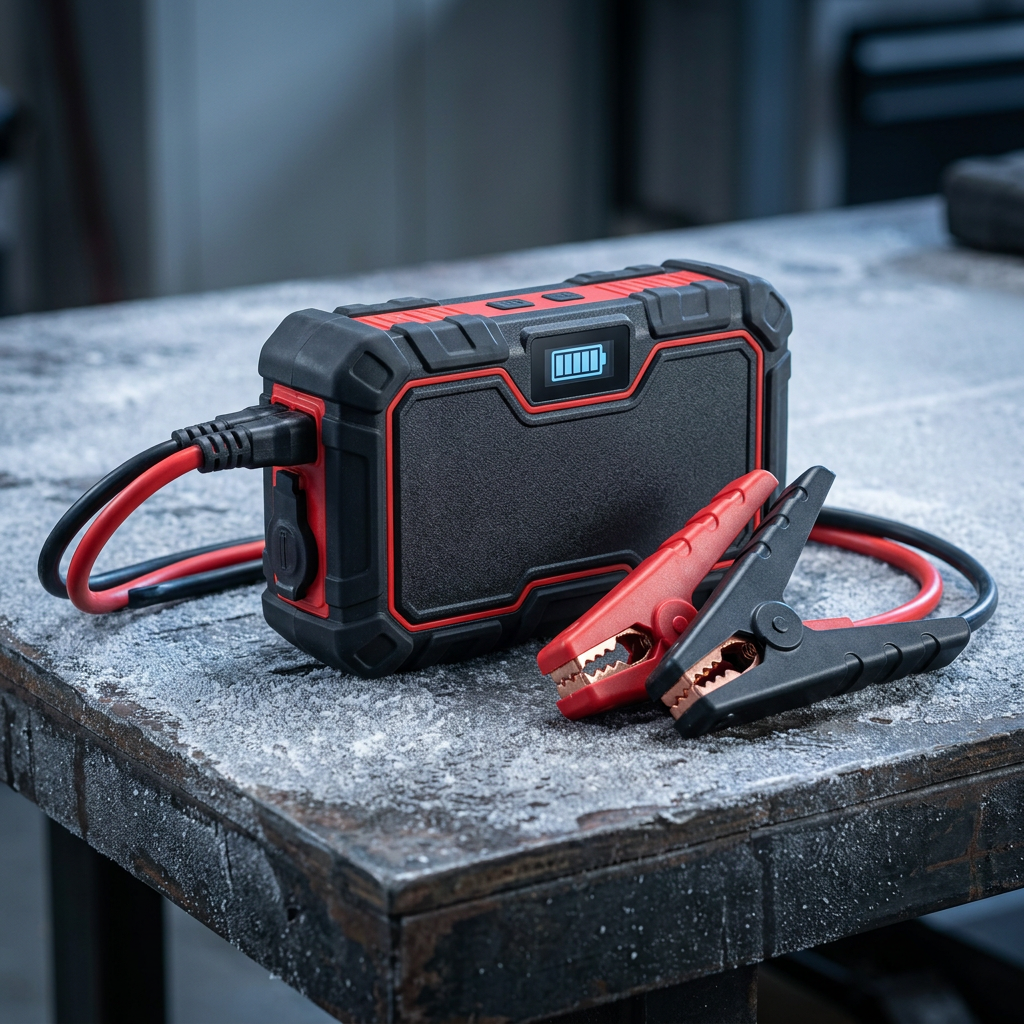
What Peak Amp Rating Is Recommended for a Portable Winter Jump Starter?
1000A – 1500A Peak
Ideal for 4-cylinder compact cars and small crossovers (up to 3.5L gas engines). Provides adequate short-burst amperage to overcome frozen motor oil in small displacement engines.
1500A – 2500A Peak
Recommended standard for midsize/full-size SUVs, V6 EcoBoost engines, and light trucks (up to 6.0L gas / 3.0L diesel). Ensures reliable boosting at sub-zero temperatures.
3000A+ Commercial
Essential for heavy-duty trucks (Super Duty V8/PowerStroke Diesel, 6.7L+). High displacement diesels require immense initial current to overcome massive cylinder compression in sub-zero weather.
Critical Winter Storage Tip: Lithium-ion jump packs lose charge when left overnight inside an unheated glove box at -10°F. For maximum emergency reliability, keep your jump starter inside your climate-controlled home or office and bring it to your vehicle when heading out.
Essential Chicagoland Winter Battery and Cold-Start Maintenance Checklist
Preventing cold-weather roadside breakdowns starts with systematic maintenance. Before winter weather intensifies across Carol Stream, perform or request this comprehensive electrical system health inspection:
| Inspection Component |
Optimal Service Specification |
Winter Impact & Failure Risk |
| Terminal Post & Clamps |
Clean lead metal, 0% corrosion, torque to 5–7 lb-ft |
Corrosion creates high electrical resistance, cutting cranking power |
| State of Charge (SoC) |
12.6V to 12.8V at rest (100% charged) |
At 12.2V (50% charge), battery electrolyte can freeze at 0°F |
| Digital Conductance Test |
Delivers >= 85% of rated Cold Cranking Amps |
Degraded plates fail when polar cold increases starting load |
| Parasitic Key-Off Drain |
Less than 50 milliamperes (mA) after sleep mode |
Excessive draw empties battery over a cold weekend driveway park |
| Alternator Output & Ripple |
13.8V – 14.8V charging output,< 50mV AC ripple |
Faulty diodes undercharge battery while heavy defrosters run |
| Serpentine Drive Belt |
No rib cracking, proper auto-tensioner range |
Slipping belt in snow spray reduces alternator charging output |
Recognizing Early Signs of a Weak Battery and Starter System in Cold Weather
Rarely does an automotive battery die without prior warning. By recognizing subtle symptoms during initial cold starts, you can address starting issues at
Hawk Ford of Carol Stream before becoming stranded.
• Sluggish Engine Crank (“Rrr-Rrr-Rrr”): The engine turns over noticeably slower than normal when turn the key or push the start button.
• Dim Cabin & Headlight Output: Lighting brightens when you rev the engine, signaling that the system is relying heavily on alternator output.
• Rapid Solenoid Clicking: A repeating sharp click indicates sufficient voltage to engage the starter solenoid but insufficient amperage to spin the starter motor.
• Spontaneous Electronics Resets: Clock time, radio presets, or trip odometers resetting during engine start indicate temporary voltage drop below 9 volts.
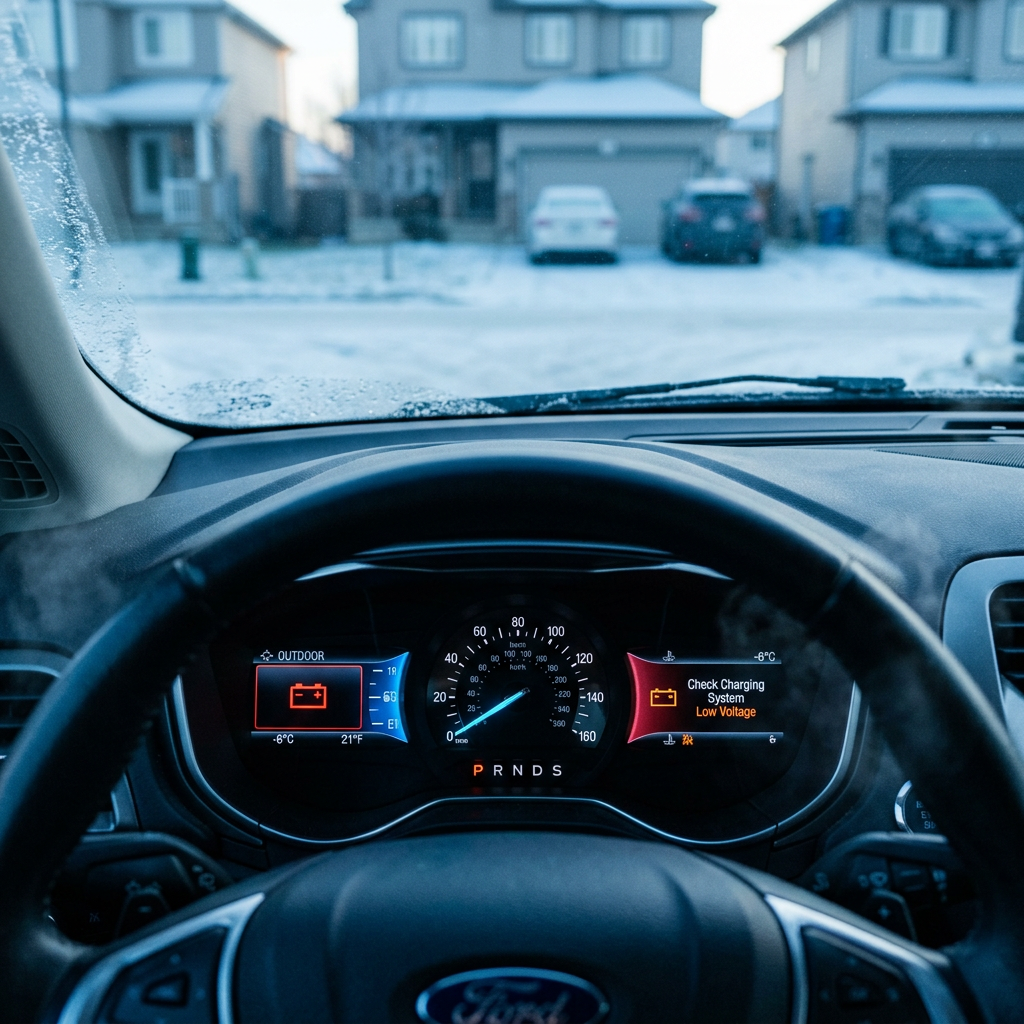
• Battery Warning Light / Check Engine Light: Onboard diagnostic codes such as P0562 (System Voltage Low) stored in the ECM.
Is it the Battery or Starter Motor? If headlights remain bright but the car refuses to crank with a single heavy thunk sound, the starter solenoid or motor contacts are likely worn. If lights dim to black instantly when trying to crank, the battery is discharged or dead.
How Chicagoland’s Extreme Winter Freeze Accelerates Battery Degradation
1. Summer Heat Micro-Damage
Ironicaly, summer heat does the underlying internal damage. Hot temperatures evaporate water from liquid electrolyte, shedding lead paste from positive grids and causing internal plate corrosion that diminishes overall capacity.
2. Winter Cold Paralysis
When sub-zero winter temperatures arrive in Bloomingdale and Glendale Heights, the already heat-damaged battery experiences slowed chemical kinetics. The weakened structure cannot deliver necessary cranking power.
3. Short Commute Charging Deficit
Short winter trips under 15 minutes with seat warmers, rear defrosters, and cabin blowers running on high prevent the alternator from fully restoring the energy used during a frigid cold start, creating a cumulative discharge debt.
DIY Battery Replacement vs Professional Starting System Diagnostics in Carol Stream
While swapping a battery yourself in a driveway might seem like a straightforward money-saving project, modern automotive architectures introduce technical complexities:
• Loss of Module Memory & Security Settings: Disconnecting the battery without a memory saver tool can erase power steering calibration, throttle body idle memory, window auto-up limits, and radio settings.
• BMS Failure: As detailed earlier, skipping computer registration leads to overcharging and premature battery burnout.
• Misdiagnosis Risk: Replacing a battery when the true culprit is a sticking starter solenoid, corroded ground strap, or diode-failed alternator leads to wasted money.
• Heavy Lifting & Corrosive Acid Safety: Handling heavy 40-pound lead batteries in icy outdoor conditions poses injury and skin burn hazards.
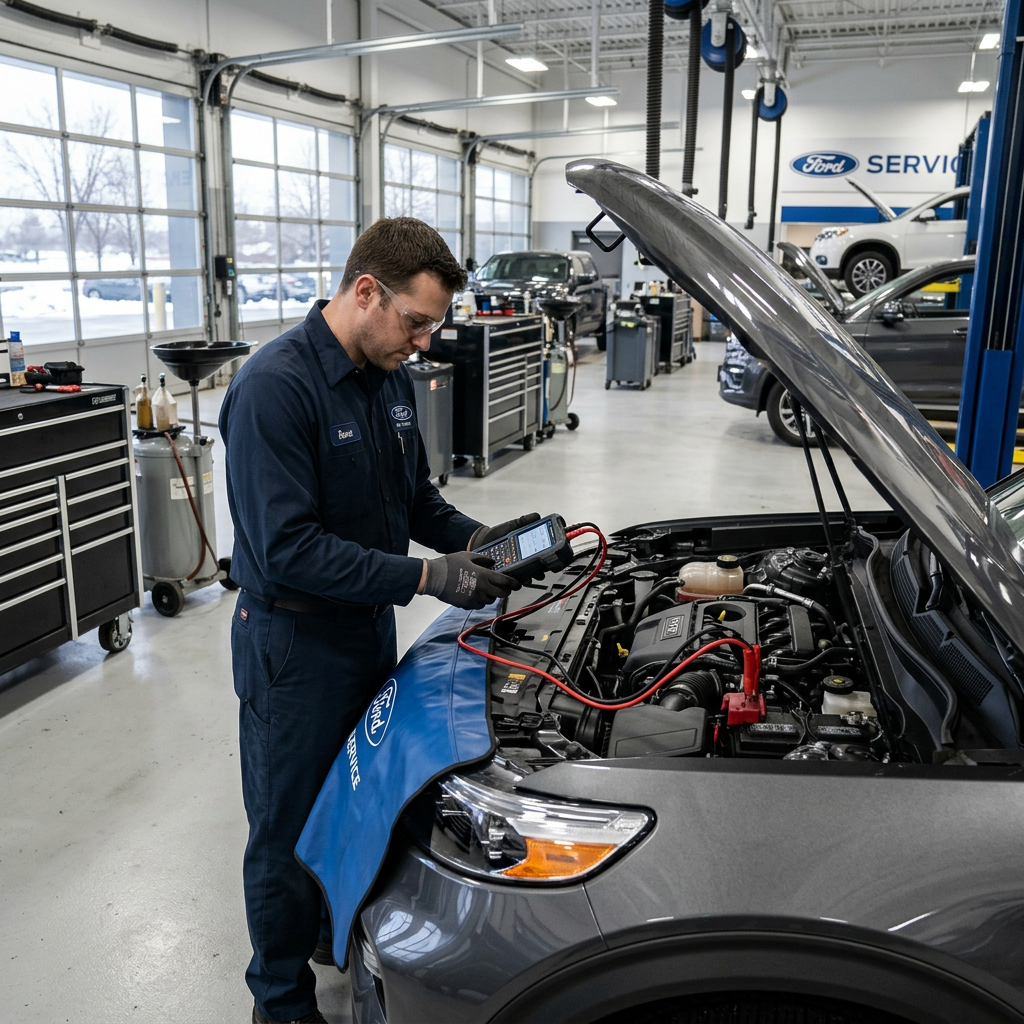
The Hawk Ford Advantage: Service at Hawk Ford of Carol Stream includes high-grade computerized load testing, starter draw verification, alternator ripple analysis, terminal anti-corrosion sealing, complete BMS reset, and proper hazardous material core recycling.
Schedule Your Winter Battery Test and Replacement at Hawk Ford of Carol Stream
Don’t wait for the next severe Chicagoland deep freeze to discover a dying battery. Whether you commute down North Avenue, drive along Army Trail Road, or travel across DuPage County, our factory-certified service center is fully equipped to keep your vehicle starting reliably all winter long.
Visit
Hawk Ford of Carol Stream today for a complimentary quick battery test or comprehensive starting system inspection. We stock genuine Motorcraft Tested Tough MAX and AGM batteries engineered specifically for peak performance in Midwestern winters.




0 comment(s) so far on Winter Battery Replacement & Starting System Testing Cost Guide – Carol Stream, IL