Temperature Thresholds: When Should You Plug in a Ford Engine Block Heater in Illinois?
As autumn transitions into winter across Chicagoland, Illinois drivers face sudden temperature drops that severely affect vehicle engines. Knowing precisely when to plug in your Ford engine block heater is crucial for protecting your powertrain, preserving starter motor longevity, and ensuring effortless morning starts in extreme cold.
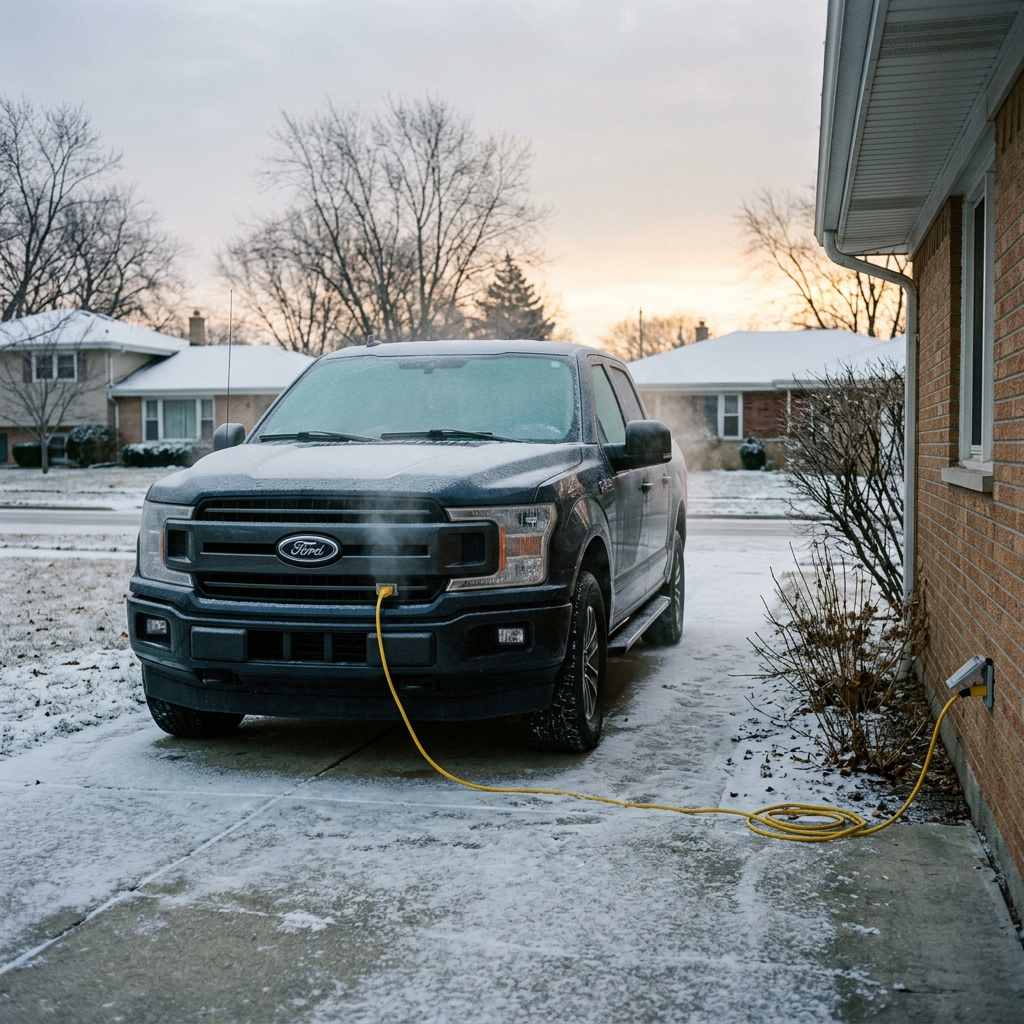
The General Rule: Plug in your Ford engine block heater when ambient outdoor temperatures drop to 15°F (-9°C) or lower. However, if your Ford engine utilizes modern full-synthetic motor oil (such as Motorcraft SAE 5W-20 or 5W-30 Full Synthetic), you can comfortably delay plugging in until outdoor temperatures drop near 0°F (-18°C). For PowerStroke Diesel engines (such as the 6.7L V8 Turbo Diesel found in Ford Super Duty trucks), thermal pre-heating becomes beneficial as high as 20°F (-6°C) due to higher compression ratios and diesel glow plug heating requirements.
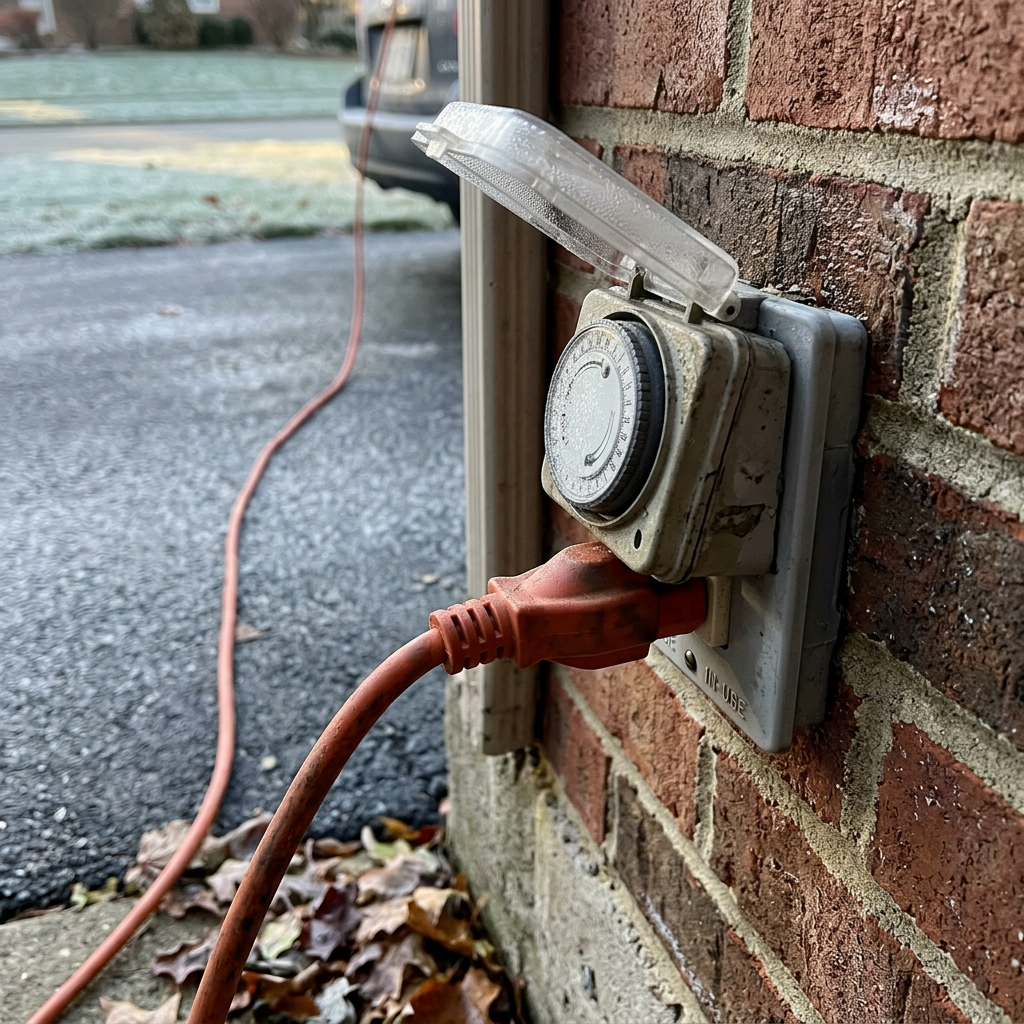
Rather than running your block heater continuously all night long, operating the heater on an heavy-duty outdoor timer for 2 to 3 hours prior to cold starts provides maximum mechanical protection and rapid cabin warming while eliminating unnecessary electricity consumption on your utility bill.
How a Ford Engine Block Heater Works During Severe Chicagoland Winters
Internal Fluid & Metal Thermal Transfer
An OEM Ford engine block heater is an electric heating element submerged directly within the engine block’s coolant passages. Powered by standard 120V residential current, the element warms the surrounding engine coolant. Through convection, this thermal energy circulates gently throughout the entire cylinder block, warming vital engine oil channels, cylinder walls, and cylinder heads. During extreme northern Illinois winter freezes, engine oil thickens significantly, creating high viscosity resistance during initial cranking. By maintaining internal fluid temperatures 30°F to 50°F above ambient outdoor conditions, the block heater keeps engine oil fluid and ready to lubricate tight internal clearances instantly upon turning the key.
Protection for EcoBoost Gas & PowerStroke Diesel Engines
Modern Ford EcoBoost turbocharged gasoline engines rely on immediate, high-pressure oil lubrication to feed delicate turbocharger bearings during start-up. In sub-zero weather, cold, thick oil starves these high-RPM bearings during the initial 15-30 seconds after starting, accelerating mechanical wear over time. For PowerStroke diesel engines, pre-warming the combustion chamber reduces fuel glow plug strain, eliminates harsh diesel knock, reduces heavy emissions output during idle warmup, and prevents unburned fuel from washing past piston rings. An added benefit for drivers is immediate cabin heat and rapid windshield defrosting right after start-up.
How Many Hours Should You Keep Your Ford Plugged In?
A common myth among DuPage County truck and SUV owners is that leaving an engine block heater plugged in all night long provides better warming. In reality, a standard Ford block heater draws between 400 and 1,000 watts of electrical power. Leaving your vehicle plugged in for 8 to 12 hours overnight yields no additional engine temperature benefit once maximum saturation temperature is achieved, while wasting significant electricity.
Automotive thermal tests confirm that a Ford engine block reaches peak heat absorption within 2 to 3 hours of continuous plug-in time. Any power consumed beyond 3 hours radiates away into ambient air surrounding the engine bay.
To optimize efficiency before your morning commute from Glendale Heights, Bloomingdale, or Carol Stream, plug your heater cord into an outdoor-rated, heavy-duty programmable mechanical or smart digital timer set to turn on 2.5 hours before your scheduled departure.
DuPage County Fall Maintenance Guide: Preparing Your Ford for October Freeze
Autumn in northern Illinois brings unpredictable weather shifts. Mild October afternoons can suddenly plunge into sub-freezing night temperatures, catching unprepared motorists off guard. Preparing your Ford vehicle before the first hard freeze strikes in late October ensures uninterrupted performance, maximum fuel economy, and peace of mind during winter travel.
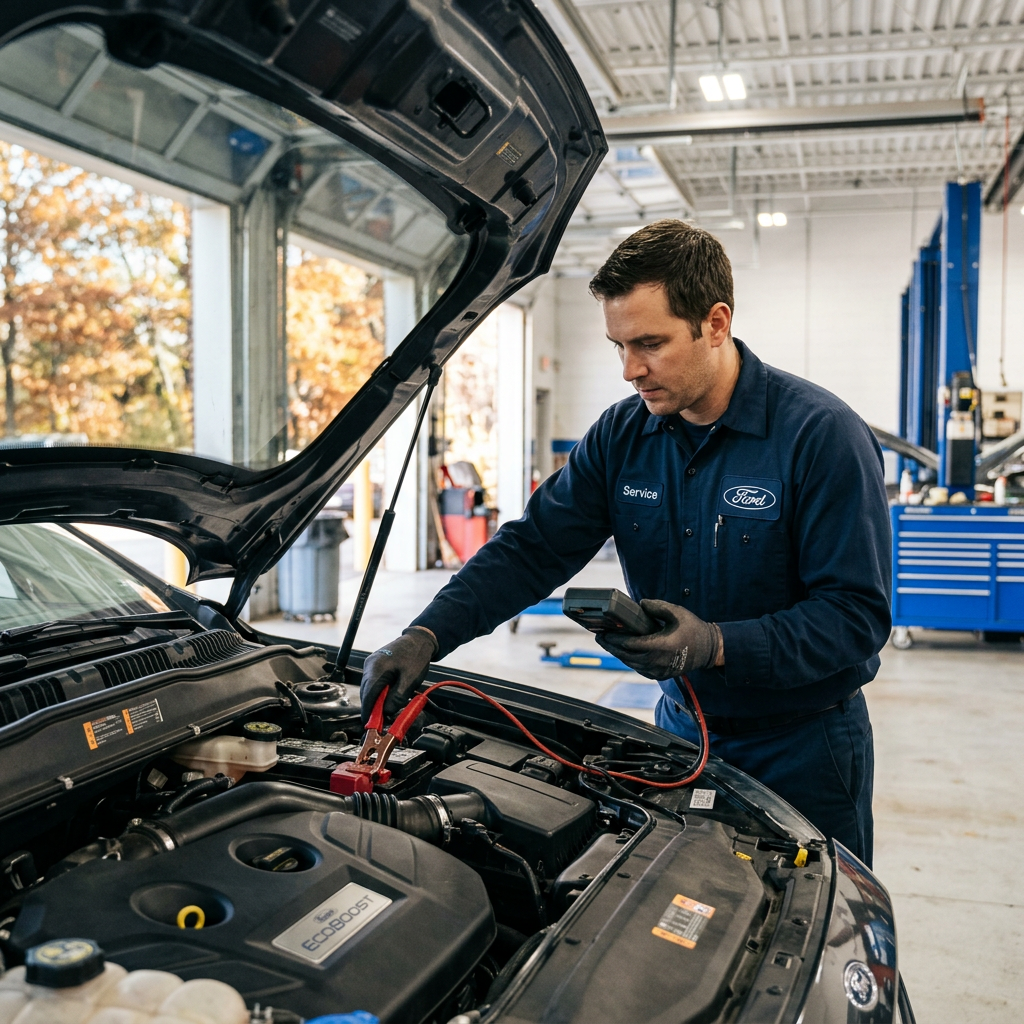
At Hawk Ford of Carol Stream, our Factory-Trained Certified Technicians recommend completing your annual winter prep checklist before November 1st. Key October checks include block heater element testing, battery load diagnostics, cooling system freeze protection verification, and cold tire pressure calibration. You can easily
Get Directions to Hawk Ford of Carol Stream located conveniently at 175 North Ave, Carol Stream, IL 60188, or
Call us at (630) 233-9696 to schedule your inspection.
Why Do Car Batteries Fail During the First Sudden Freeze in October?
Chemical Reaction Slowdown
Lead-acid and AGM 12V automotive batteries generate power through electrochemical reactions. At 32°F, a battery loses roughly 35% of its available starting power compared to its output at 80°F. When temperatures hit 0°F, power capacity drops by over 50%.
Increased Engine Resistance
Simultaneously, freezing temperatures double the electrical current required by your starter motor to turn over cold engine oil. This double-whammy—higher power demand matched with reduced battery output—causes weak batteries to fail on early cold mornings.
Early Warning Symptoms
Watch for slow engine cranking, dimming cabin headlights during ignition, or low-voltage warning messages on your Ford SYNC screen. Our service team performs comprehensive digital battery conductance testing to replace aging batteries before winter.
What Engine Coolant Mix Ratio Is Required for 2027 Ford Vehicles During Freezing Weather?
For late-model 2027 Ford vehicles, maintaining the exact ethylene glycol concentration in your cooling system is vital. Ford mandates using Motorcraft Yellow Prediluted or Concentrated Antifreeze/Coolant (meeting Ford Specification WSS-M97B57-A1).
The recommended standard mix ratio is a 50/50 blend of coolant concentrate and distilled water, offering freeze protection down to -34°F (-37°C). For severe northern Illinois sub-zero polar vortex events, Ford approves a maximum concentration of 60% coolant concentrate to 40% distilled water, extending freeze protection down to -62°F (-52°C).
Never exceed a 60/40 mix, as excessive concentrate reduces heat transfer capability and can cause coolant crystallization in low temperatures.
Diluting engine coolant with plain tap water introduces minerals like calcium and magnesium, which cause scale buildup, clogging microscopic aluminum heater core channels and radiator passages. Always use distilled water or Motorcraft Prediluted coolant formulas.
| Coolant Mixture Ratio |
Freezing Protection Level |
Boiling Point Protection |
Recommended Usage Condition |
| 50% Coolant / 50% Distilled Water |
-34°F (-37°C) |
265°F (129°C) |
Standard Chicagoland Winter Driving |
| 60% Coolant / 40% Distilled Water |
-62°F (-52°C) |
270°F (132°C) |
Severe Illinois Arctic Cold Spells |
What Is the Recommended Cold Tire Pressure for a 2027 Ford F-150?
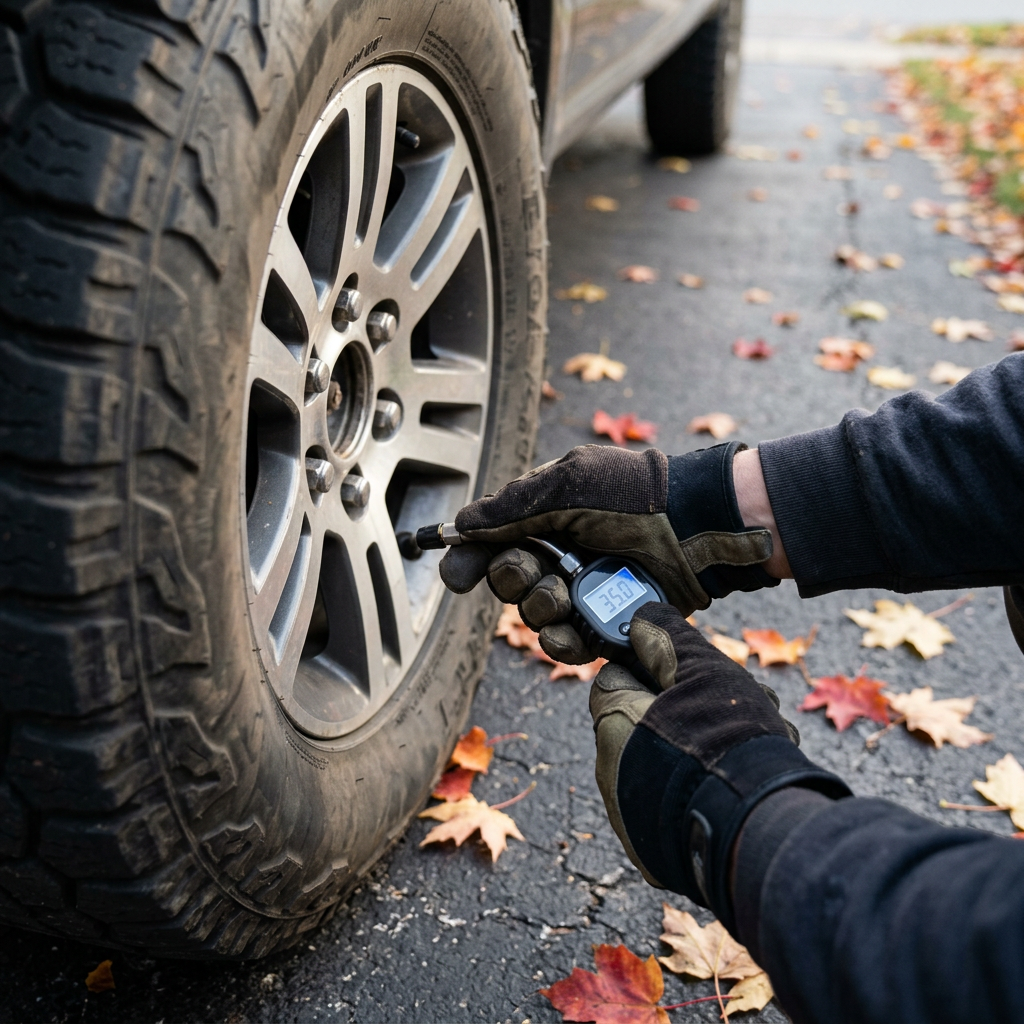
For standard 2027 Ford F-150 trim levels equipped with factory OEM tire dimensions (such as 265/60R18 or 275/60R20), the factory-recommended cold tire inflation pressure is typically 35 PSI (pounds per square inch) for both front and rear tires.
The Physics of Cold Air Pressure: As outdoor temperatures drop in autumn, air molecules contract inside your tires. For every 10°F drop in ambient temperature, your tire pressure drops by approximately 1 PSI. Moving from a mild September day (70°F) to an early freezing October morning (30°F) can decrease tire pressure by 4 PSI automatically.
Always check tire pressure in the morning when tires are cold (vehicle parked for at least 3 hours). Refer directly to the Safety Compliance Certification Label located on the driver-side B-pillar door jamb.
How Does Cold October Weather Affect Ford Tire Pressure Monitoring Systems (TPMS)?
Morning TPMS Light Trigger
Ford’s direct TPMS sensors trigger an amber dashboard warning icon when tire pressure drops 25% below specified placard pressure. Cold October night chills compress air, pulling pressure below this threshold before you drive.
Puncture vs. Temp Drop
If all four tires display low pressure readings simultaneously on your instrument cluster display, temperature fluctuation is the culprit. If only one tire shows significant pressure loss, inspect for nails or rim seal leaks.
Sensor Calibration & Service
Inflate cold tires to door jamb specs. In most Ford models, driving above 20 mph for 15 minutes resets the TPMS module automatically. If the sensor warning light stays illuminated, contact our
Parts Center or service team.
When Is the Best Time in October to Switch to Winter Tires in Northern Illinois?
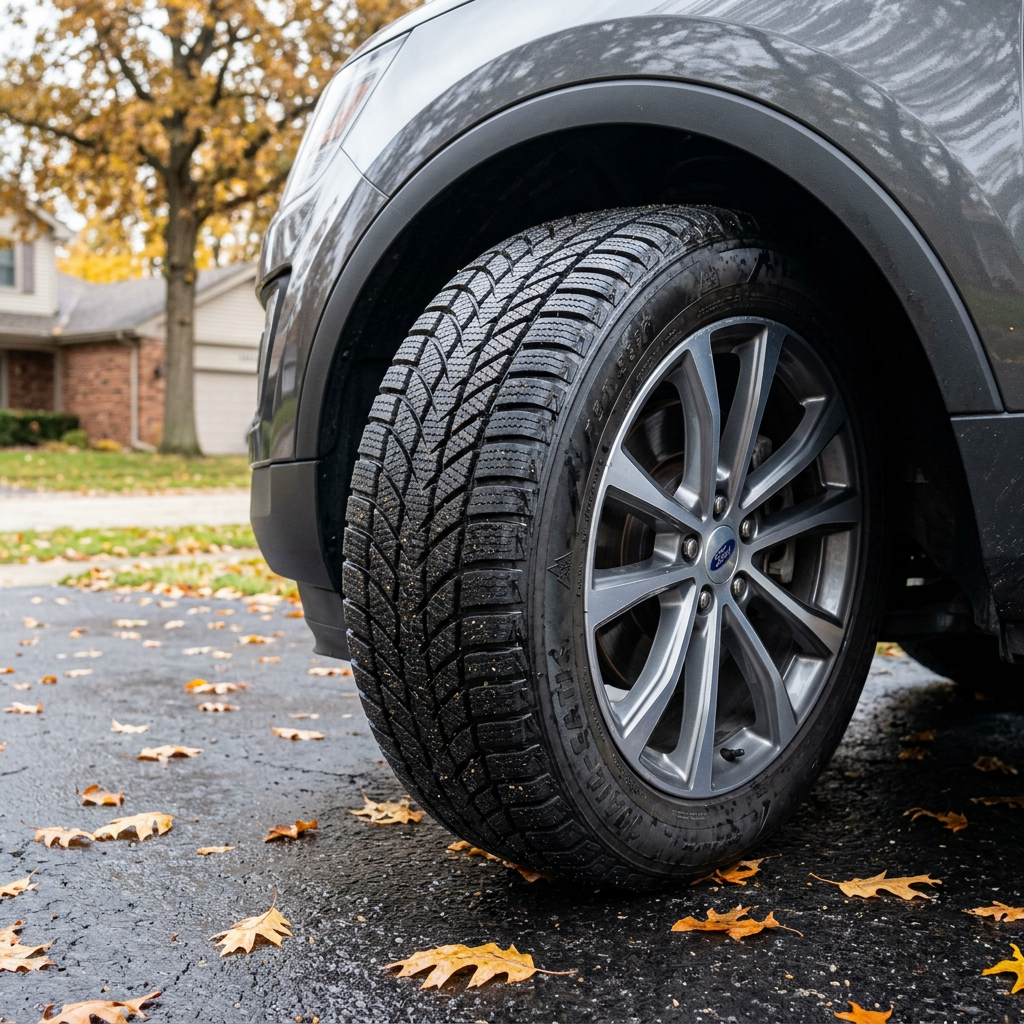
In northern Illinois, the rule of thumb for mounting winter dedicated tires is the 45°F (7°C) Threshold. All-season rubber compounds begin to stiffen and harden once ambient outdoor temperatures drop consistently below 45°F, resulting in reduced road grip and extended braking distances on dry and wet asphalt.
Winter tires (such as Michelin X-Ice or Bridgestone Blizzak) utilize specialized flexible silica compounds and high-density 3D siping engineered specifically to maintain pliability in sub-freezing temperatures. Late October is the ideal window to schedule your tire swap before the first unexpected Chicagoland snowstorm rush. Explore our
New Vehicle Inventory and
Used Vehicle Inventory for AWD-equipped Ford models.
What Is Included in a Ford Multi-Point Fall Inspection?
Electrical & Heating Checks
• Block heater electrical resistance test • Battery load & conductance capacity test • Alternator charging system output check • HVAC cabin heating & defrost operation
Fluids & Protection
• Coolant hydrometer freeze point test • Engine oil condition and level inspection • Brake fluid moisture concentration check • Sub-zero windshield washer fluid top-off
Safety & Mechanical
• Brake pad thickness & rotor surface test • Tire tread depth & cold pressure set • All-weather Wiper blade inspection • Suspension & steering boot integrity
Safety Tips for Using Block Heater Cords and Outdoor Electrical Outlets
Operating a high-draw electrical heating element outdoors requires careful electrical safety practices to prevent electrical shorts, fire hazards, or damage to your vehicle’s wiring harness.
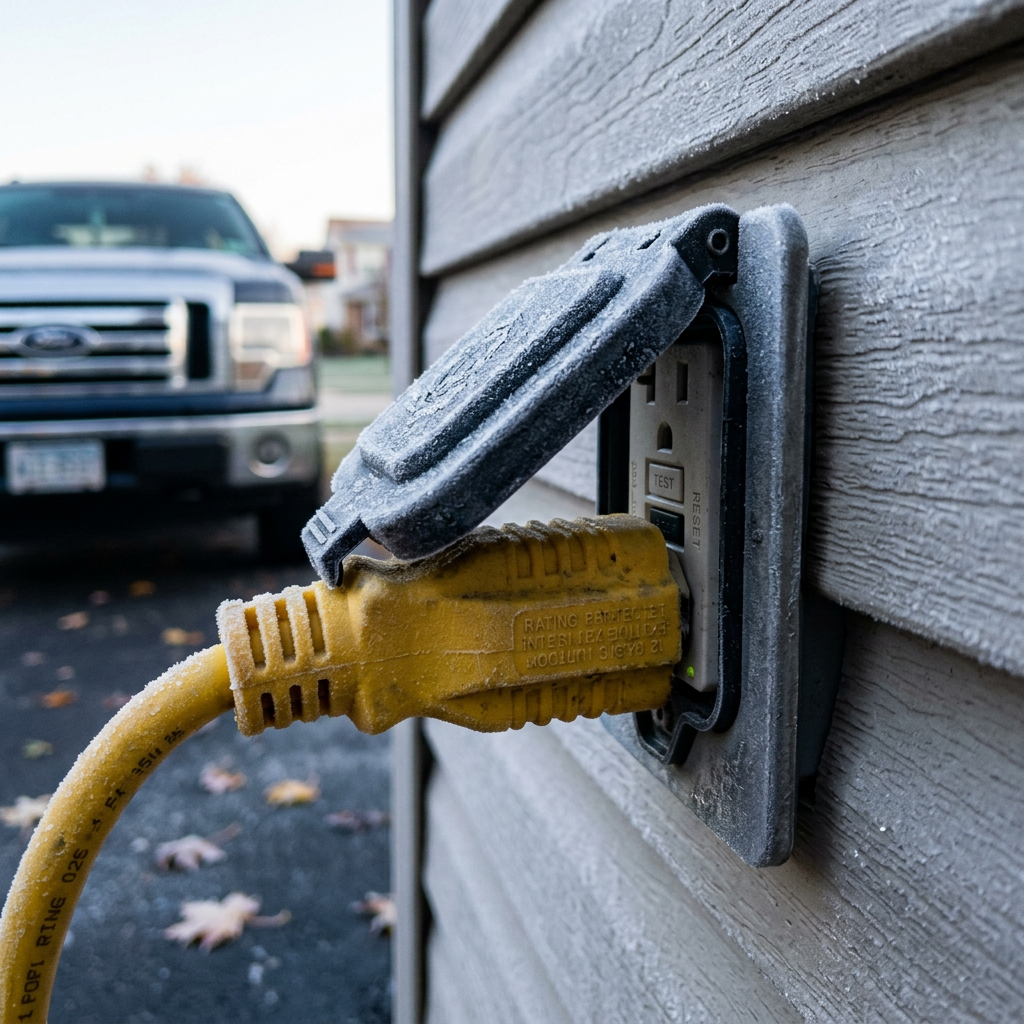
Essential Cord & Outlet Guidelines: 1. Extension Cord Wire Gauge: Use only heavy-duty, outdoor-rated 12-gauge (SJTW) extension cords rated for at least 15 amps. Standard 16-gauge light household cords will overheat under continuous heating load. 2. GFCI Protection: Always plug extension cords into a Ground Fault Circuit Interrupter (GFCI) protected outdoor electrical outlet to eliminate shock hazards in snow or rain. 3. Route Safety: Ensure the heater plug cord is routed away from hot engine components (exhaust manifolds) and moving fan blades. Always unplug before starting the vehicle!
Schedule Your Ford Winter Readiness Service at Hawk Ford of Carol Stream
Don’t wait until the first severe polar vortex locks up your engine or drains your battery. Drivers across Carol Stream, Glendale Heights, and Bloomingdale trust Hawk Ford of Carol Stream for expert automotive care. Whether you need a block heater cord inspection, fresh Motorcraft battery replacement, or winter tire mounting, our dedicated team is here to assist.
Looking to upgrade to a new winter-ready Ford truck or SUV featuring factory-installed block heaters and intelligent 4WD? Explore options to
Value Your Trade or
Apply for Credit online today.




0 comment(s) so far on When to Plug in a Ford Engine Block Heater in Illinois | Hawk Ford