What Appearance and Color Indicate Healthy Ford Engine Coolant?
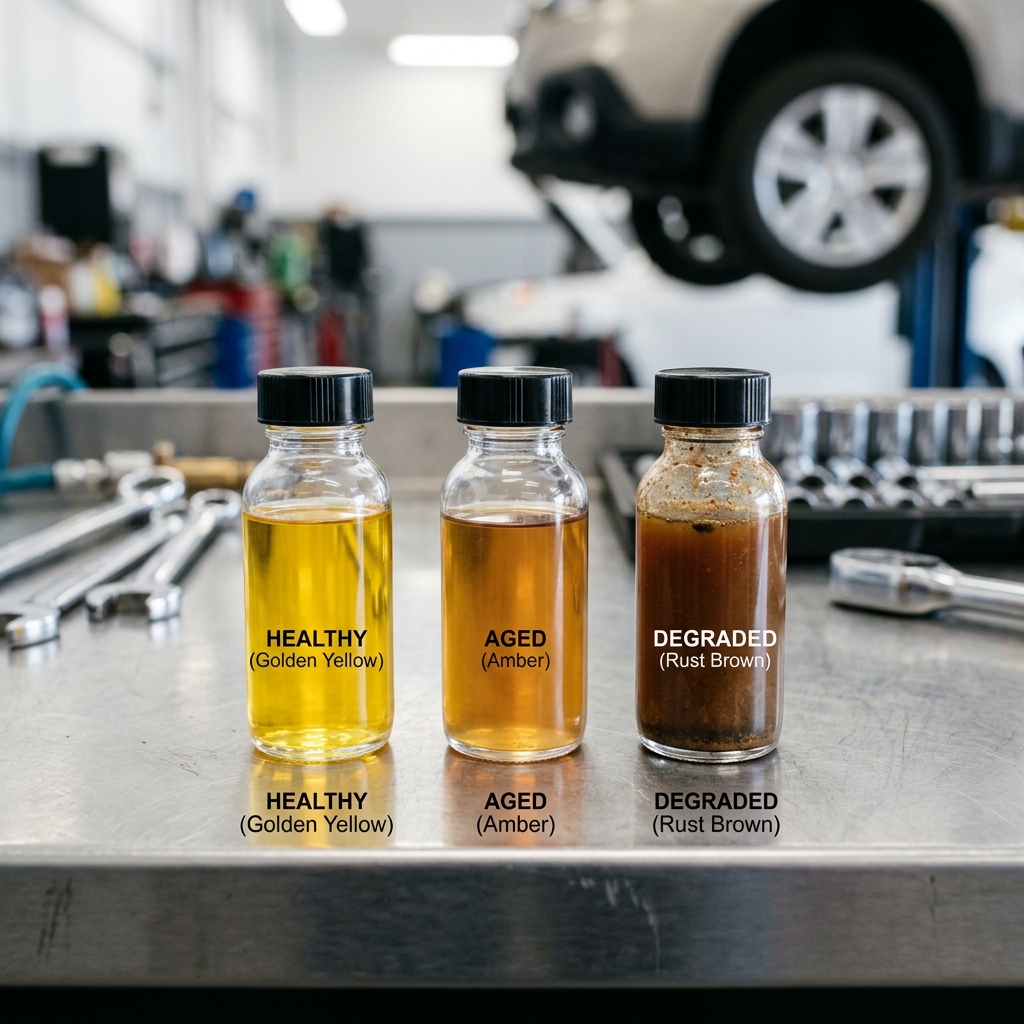
When you pop the hood of your Ford F-150, Explorer, Escape, or Mustang, examining the engine coolant reservoir is one of the fastest ways to audit your engine’s internal health. Healthy Ford engine coolant must be vibrant, completely translucent, and thoroughly free of floating debris, sludge, or oily films. Depending on your vehicle’s model year, OEM Motorcraft coolant appears as bright Yellow, vibrant Orange, clear Gold, or deep Dark Green. If your fluid appears cloudy, rust-colored, or milky, your cooling system requires immediate professional attention before overheating causes severe engine damage.
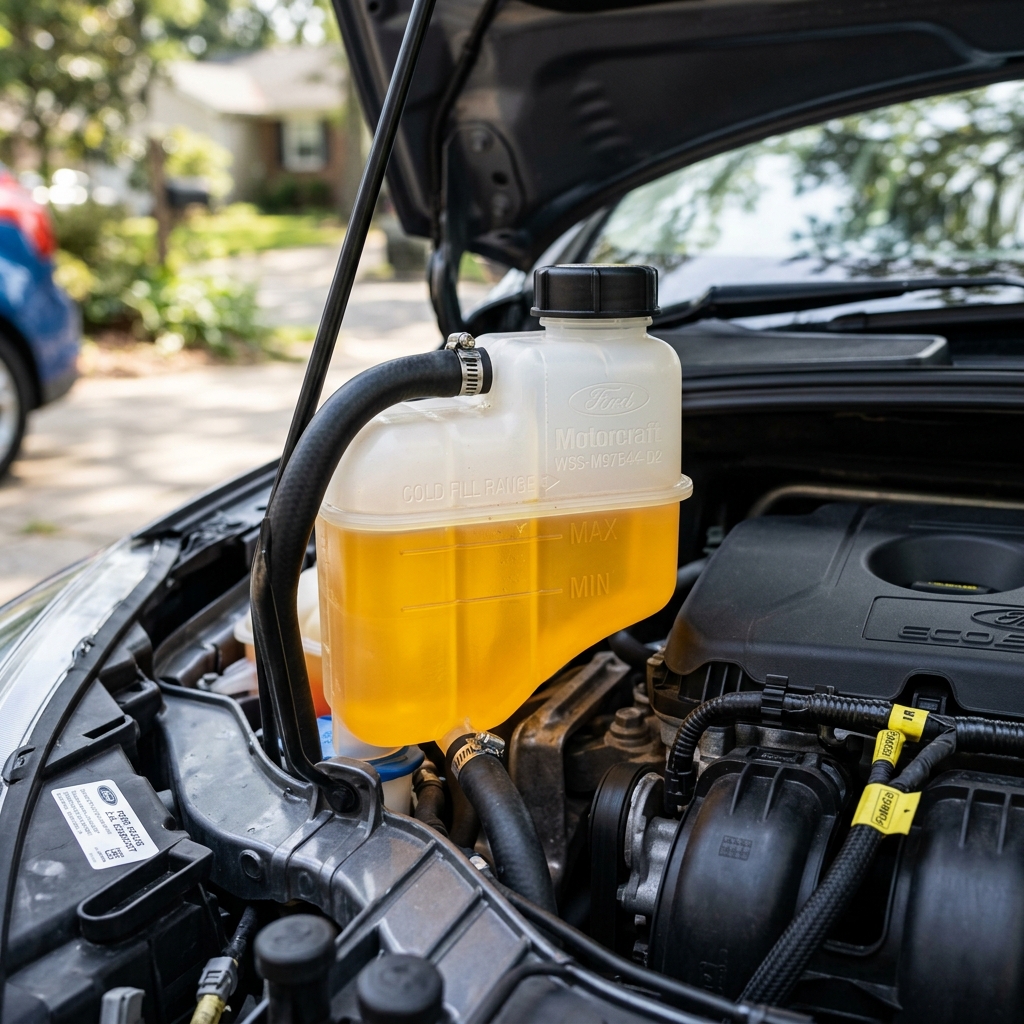
Engine coolant (frequently referred to as antifreeze) does far more than keep your engine from freezing during chilly Chicagoland winters. It regulates extreme engine temperatures under high EcoBoost engine loads, prevents internal metallic corrosion, lubricates the water pump seal, and protects sensitive aluminum cylinder heads. Knowing what healthy fluid looks like allows DuPage County drivers to catch small leaks or chemical breakdowns before facing costly highway breakdowns. At Hawk Ford of Carol Stream, our certified technicians routinely inspect coolant integrity to safeguard your engine’s longevity.
Identifying Your Specific Motorcraft Coolant Type by Ford Model Year
Ford Motor Company has refined its engine cooling technology significantly over the past two decades. Using the correct factory-specified fluid is essential because mixing different chemical formulations can lead to severe precipitation, chemical gelling, and restricted radiator flow. Legacy Ford vehicles produced between 2002 and 2011 utilized Motorcraft Gold Coolant (VC-7-B), a Hybrid Organic Acid Technology (HOAT) formulation designed to protect iron blocks and aluminum heads. From 2011 through early 2019, Ford shifted to Motorcraft Orange Coolant (VC-10-A2), an Organic Acid Technology (OAT) fluid formulated for modern EcoBoost engine heat cycles. Today, Ford specifies Motorcraft Yellow Coolant (VC-13-G) for almost all current models, providing enhanced long-term anti-corrosion protection and backward compatibility for older vehicles previously running Orange coolant.
Mixing unapproved universal coolants into your Ford’s radiator can degrade internal silicates and inhibitors. When incompatible fluids mix, they often react to form thick, jelly-like sludge that clogs narrow heater cores and engine block coolant passages. Check your owner’s manual or speak with our certified service advisors at Hawk Ford of Carol Stream to ensure you select the exact fluid specification.
If you need replacement fluids or OEM maintenance parts, our factory Parts Center carries complete stocks of genuine Motorcraft Yellow concentrate and pre-diluted 50/50 anti-freeze mixtures engineered specifically for your Ford engine.
| Ford Model Years |
Motorcraft Fluid Type |
Fluid Color |
Chemistry Type |
| 2002 – 2011 |
Motorcraft Gold (VC-7-B) |
Clear / Yellow-Gold |
HOAT (Hybrid Organic Acid) |
| 2011 – 2019 |
Motorcraft Orange (VC-10-A2) |
Bright Orange |
OAT (Organic Acid Tech) |
| 2019 – Present |
Motorcraft Yellow (VC-13-G) |
Vibrant Yellow |
P-OAT (Phosphated OAT) |
| Legacy Specialty |
Motorcraft Dark Green (VC-5) |
Dark Green |
Traditional Silicate |
Warning Signs Your Engine Coolant Has Degraded or Become Contaminated
Sludge & Grit Accumulation
Thick brown sludge coating the interior of your expansion tank or radiator cap indicates severe oxidation and chemical breakdown. As corrosion inhibitors deplete over time, rust and scale accumulate inside iron engine passages, creating gritty debris that rapidly ruins water pump seals.
Milky Emulsion (Oil Contamination)
If your coolant looks like a creamy, light brown milkshake, engine oil is mixing with your cooling circuit. This condition points to a blown head gasket, cracked cylinder head, or breached oil cooler core. Immediate service is critical to prevent total engine destruction.
Rust-Brown Discoloration
When healthy translucent yellow or orange fluid turns a murky rust brown, your coolant has gone acidic. Stop-and-go driving along North Avenue and Route 64 accelerates thermal degradation, leaving your cooling system vulnerable to rapid internal rusting.
What Maintenance Services Are Recommended for a Ford Vehicle Before a Long Road Trip?
Preparing for a extended highway journey requires verifying that your Ford can dissipate extreme heat efficiently under continuous load. Comprehensive pre-trip cooling system maintenance goes far beyond a quick visual check under the hood. Our service center performs hydrometer refractometer testing to measure exact anti-freeze and boiling protection thresholds. We perform cooling system pressure tests up to 15-20 PSI to identify hidden hairline cracks in plastic thermostat housings, radiator side tanks, or quick-connect heater hoses before they burst under highway stress.
Additionally, our technicians check belt tensioners and inspect serpentine belts driving the water pump. We test thermostat opening temperatures to ensure your engine maintains optimal thermal efficiency without overheating during prolonged grade climbs or heavy summer traffic jams.
To ensure complete peace of mind before heading out on Interstate 88 or 355, Schedule Service Now with our factory-certified Ford service department in Carol Stream.
How to Get Your Ford Labor Day Weekend Ready for Summer Driving
As end-of-summer road trips approach around Labor Day weekend, drivers in Carol Stream, Bloomingdale, and Glendale Heights face intense driving conditions. Late-summer heat spikes combined with fully loaded cargo spaces, boat trailers, or camper hitches place extreme thermal stress on modern Ford powertrains. EcoBoost engines—popular across the Ford F-150, Explorer, and Edge lineups—rely on liquid-cooled turbocharger center bearings that demand pristine coolant flow to prevent oil coking after engine shutdown.
Getting your vehicle Labor Day weekend ready involves cleaning debris from the front radiator and A/C condenser fins, inspecting cooling fan clutch operation, and ensuring your coolant expansion tank is filled exactly to the cold fill step. If you’re considering upgrading your vehicle before the upcoming holiday travel season, explore our latest
New Vehicle Inventory or evaluate high-quality pre-owned options in our
Used Vehicle Inventory at Hawk Ford of Carol Stream.
What Is Included in a Ford Multi-Point Vehicle Inspection Checklist?
Under-Hood & Fluid Clarity
Technicians evaluate engine oil quality, transmission fluid, power steering levels, washer fluid, and engine coolant freeze/boil points. We test radiator cap seals and inspect all radiator hoses for signs of internal swelling or cracking.
Under-Vehicle Systems
Our certified pros examine exhaust systems, driveshafts, steering linkages, constant-velocity (CV) boots, suspension shocks and struts, and check for underlying oil or coolant leaks along engine oil pans and water pump housings.
Brakes, Tires & Electrical
We measure digital brake pad thickness, inspect rotor surfaces, perform 31-point tire wear audits across inner/outer treads, conduct 12V battery conductance health tests, and verify exterior lighting safety functions.
What Are the Recommended Tire Pressure and Tread Depth Levels for Ford Vehicles?
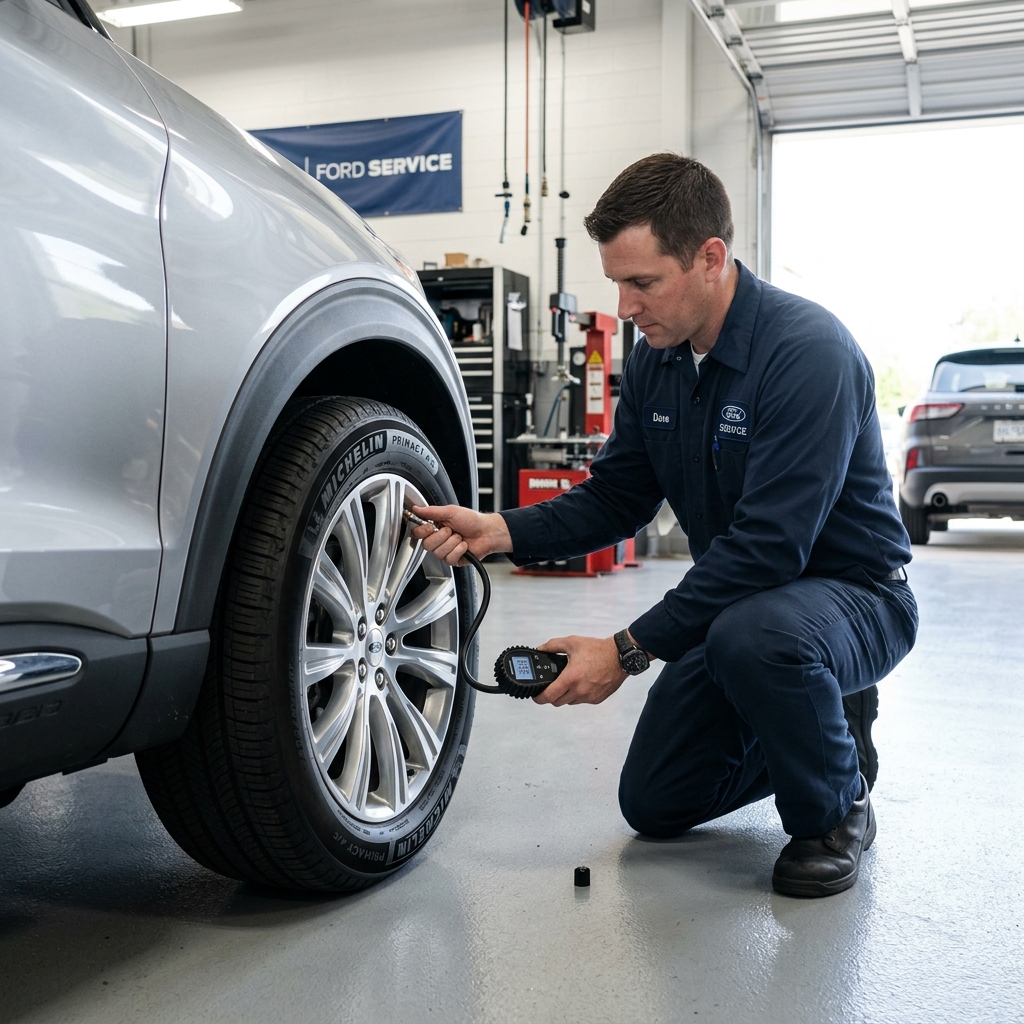
Maintaining proper tire pressure and tread depth is directly tied to engine cooling efficiency and powertrain safety. Most modern Ford passenger cars and SUVs call for cold tire pressures between 32 PSI and 35 PSI (refer to the door jamb placard on your B-pillar). Under-inflated tires increase rolling resistance significantly. When rolling resistance rises, your engine works harder, causing coolant temperatures to climb rapidly during highway driving. Regarding tread depth, legal safety limits start at 2/32 inches, but replacement is strongly advised once tread reaches 4/32 inches for safe wet traction on rain-slicked suburban roads.
Are Rebate Offers or Service Coupons Available for Ford The Works Service Package?
Yes! Drivers seeking complete vehicle maintenance can save substantially with regular dealership rebate offers and service coupons on Ford ‘The Works’ service package. ‘The Works’ offers extraordinary value by combining key preventive maintenance items into a single, affordable appointment.
The Works package includes a synthetic blend Motorcraft oil change, oil filter replacement, tire rotation and pressure check, thorough brake inspection, vehicle battery test, and a complete coolant and fluid clarity check. Check our current service specials online or ask our service advisors about available FordPass Rewards points bonus rebates during your visit.
Do Ford Dealerships Offer Price Matching on Tire Sales and Routine Maintenance?
Hawk Ford of Carol Stream provides local drivers with factory-certified service at competitive community prices. Through the Ford Low Price Tire Guarantee, we match competitive quotes on eligible major tire brands including Michelin, Goodyear, Continental, and Pirelli. If you find a lower price on an exact tire within 30 days of purchase, we refund the difference.
Our price-matching commitment ensures you never have to choose between lower independent shop rates and factory-trained Ford technicians who understand your engine’s precise cooling system requirements. Whether you drive a late-model truck or a certified pre-owned SUV from our
CPO Inventory, we deliver unmatched value.
How to Safely Check Your Ford Coolant Level and Appearance at Home
Step 1: Cold Engine Safety
NEVER open a degas cap when the engine is warm or hot. Cooling systems operate under 15+ PSI of pressure; opening a hot cap causes scalding liquid coolant and steam to erupt violently. Wait at least 2 to 3 hours after driving.
Step 2: Read Reservoir Fill Lines
Locate the translucent plastic degas bottle under the hood. Inspect the liquid level relative to the molded MIN and MAX cold fill markings. The liquid line should rest comfortably between MIN and MAX when the engine is completely cold.
Step 3: Visual Clarity Inspection
Shine a flashlight through the reservoir wall. Healthy fluid shows vibrant translucent yellow, orange, or gold color. If the fluid looks cloudy, thick, dark brown, or has floating particles, schedule a service evaluation immediately.
Why Professional Coolant Flushes Outperform DIY Top-Offs for Suburban Commuters
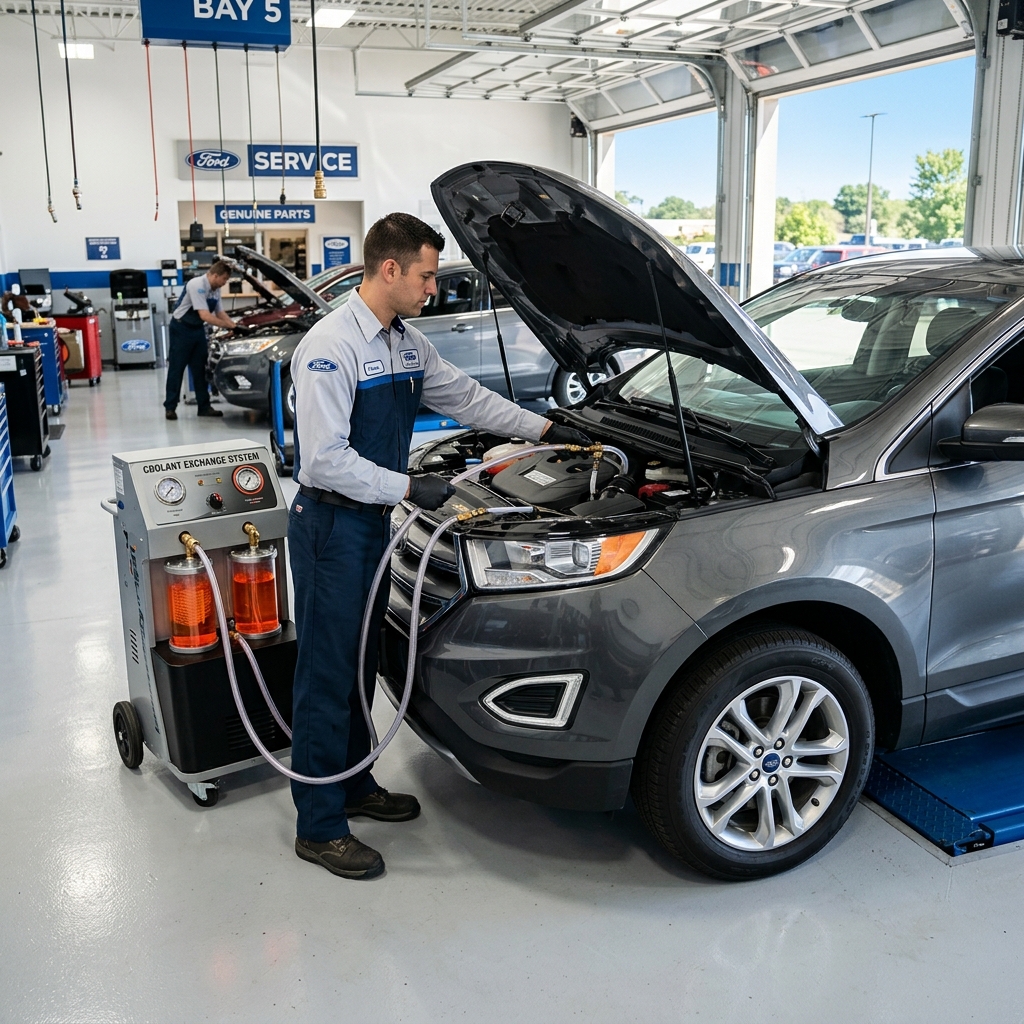
Simply topping off a low reservoir bottle with new fluid only dilutes degraded, contaminated coolant remaining inside your engine block, heater core, and radiator passages. Over time, spent coolant loses its crucial pH buffering capacity, becoming acidic and actively eroding internal aluminum cylinder head passages. A professional hydraulic cooling system flush at Hawk Ford of Carol Stream connects specialized equipment to force out 100% of old fluid, dissolved scale, and sediment. We flush the heater core and back-flush the radiator before refilling with fresh Motorcraft Yellow coolant balanced with distilled water to restore peak thermal management.
Common Causes of Low Coolant Levels in Ford EcoBoost and V8 Engines
If you notice your coolant level dropping consistently without visible puddles on your driveway, your engine may have a small pinhole leak or internal consumption issue. Common leak locations across EcoBoost and 5.0L V8 Coyote engines include:
• Water Pump Shaft Seals: Weep hole leakage occurs as pump bearings wear down over high mileage. • Plastic Radiator End Tanks: Repeated thermal expansion cycles can crack plastic seam bonds. • Quick-Connect Heater Hoses: O-ring seals inside quick-connect fittings deteriorate over time. • Turbocharger Coolant Lines: High heat near EcoBoost turbos hardens rubber feed/return hoses. • Intake Gaskets or EGR Coolers: Internal leaks allow coolant into combustion chambers.
If you suspect your current vehicle is experiencing recurring coolant issues and you’re interested in upgrading, you can easily
Value Your Trade or apply online to
Apply for Credit towards a dependable new Ford model.
Schedule Your Ford Cooling System Inspection at Hawk Ford of Carol Stream Today
Don’t wait for a dashboard warning light or rising temperature gauge to jeopardize your summer road trip or daily commute. Keep your Ford engine performing at its absolute peak with expert cooling system inspections, fluid testing, and genuine Motorcraft maintenance at Hawk Ford of Carol Stream.




0 comment(s) so far on What Appearance and Color Indicate Healthy Ford Engine Coolant?