Essential Tire Maintenance Guide for Carol Stream Drivers
Routine tire care is the single most effective maintenance strategy for drivers operating vehicles across Carol Stream, Wheaton, and the greater DuPage County area. Maintaining correct tire pressure (PSI), scheduling regular rotations every 5,000 to 7,500 miles, performing annual wheel alignments, and equipping appropriate winter tires when autumn temperatures drop consistently below 45°F maximizes tread life, dramatically improves fuel economy, and guarantees reliable traction across unpredictable Illinois road conditions.
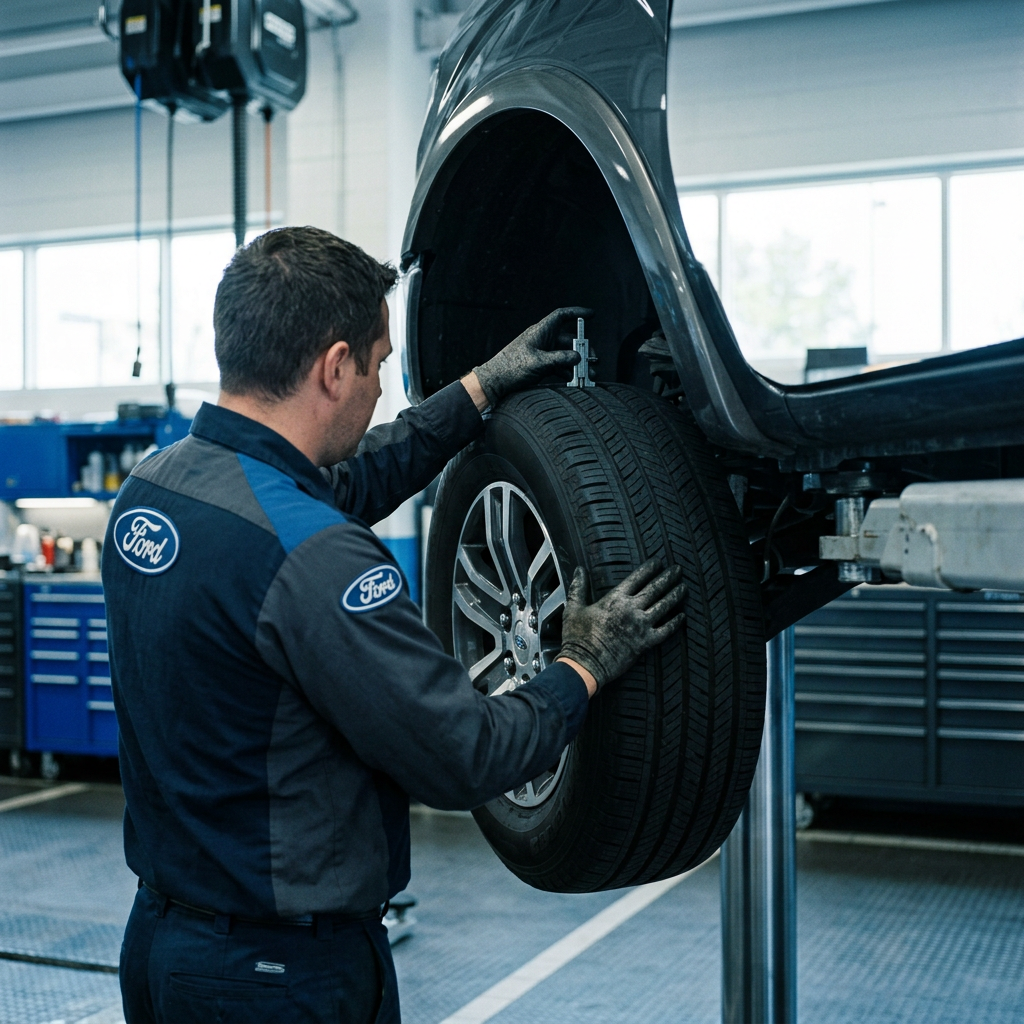
Your tires represent the sole connection between your Ford vehicle and the pavement. When tread depth diminishes or inflation pressures drift away from factory specifications, safety systems like anti-lock brakes (ABS) and electronic stability control cannot function at peak capability. Whether you are navigating traffic along North Avenue or taking long highway trips down I-355, dedicated maintenance protects your investment, boosts safety, and prevents unexpected downtime.
How do I know what tire size and load index my vehicle requires?
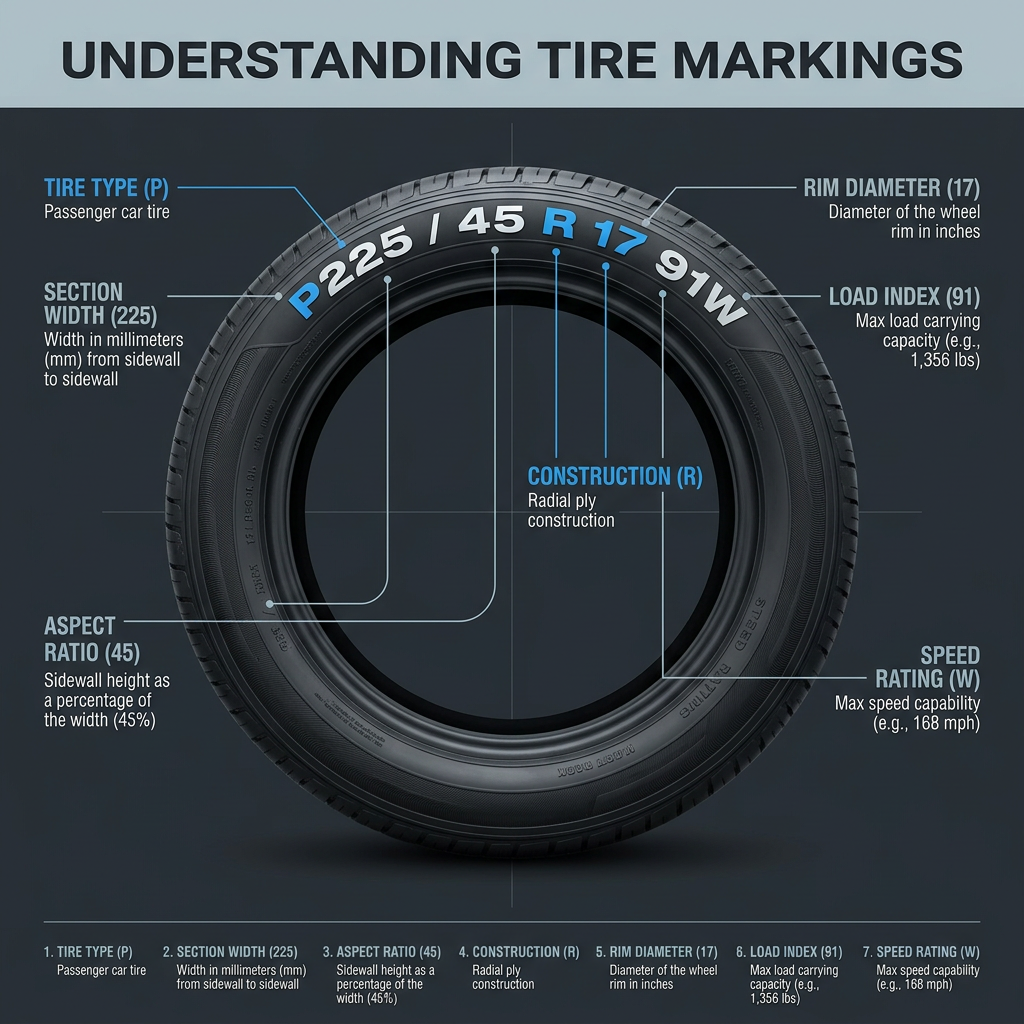
Understanding tire sidewall markings is essential when selecting replacements for your vehicle. A standard tire code such as P215/65R16 95H contains vital engineering specifications:
• P (Type): Indicates a passenger vehicle tire. LT indicates light truck.
• 215 (Width): The tire’s total width in millimeters from sidewall to sidewall.
• 65 (Aspect Ratio): The height of the sidewall expressed as a percentage of the tread width (65% of 215mm).
• R (Construction): Radial ply internal construction.
• 16 (Rim Diameter): The wheel diameter in inches required for mounting.
• 95 (Load Index): Code indicating maximum load capacity (95 represents 1,521 lbs per tire).
• H (Speed Rating): Designates maximum safe continuous speed (H is rated up to 130 mph).
Drivers in Carol Stream, Glendale Heights, and Bloomingdale should always consult the tire placard located on the driver-side door jamb or check with our team at visit our parts center before altering sizes or load ratings.
What tire rotation pattern should be used for front-wheel drive vehicles?
Front-wheel drive (FWD) vehicles place disproportionate stress on the front axle. Because front tires manage engine torque, primary braking force, and steering control simultaneously, they experience tread erosion up to 60% faster than rear tires.
The standard Industry pattern for FWD vehicles is the Forward-Cross Rotation. In this configuration, the front tires move straight back to the rear on the same sides (Left Front to Left Rear, Right Front to Right Rear). The rear tires move up to the front axle while crossing sides (Left Rear to Right Front, Right Rear to Left Front).
An alternative pattern for non-directional tires is the X-Pattern, where all four tires swap positions diagonally across axles. However, if your vehicle uses directional tires (which feature V-shaped tread channels engineered to roll in one specific direction), tires must strictly move front-to-back without swapping sides.
Rotating tires every 5,000 to 7,500 miles—or during every engine oil change—promotes uniform rubber erosion, maintains predictable vehicle handling, and preserves treadwear warranty coverage.
What is the difference between a 2-wheel alignment and a 4-wheel alignment?
2-Wheel Alignment
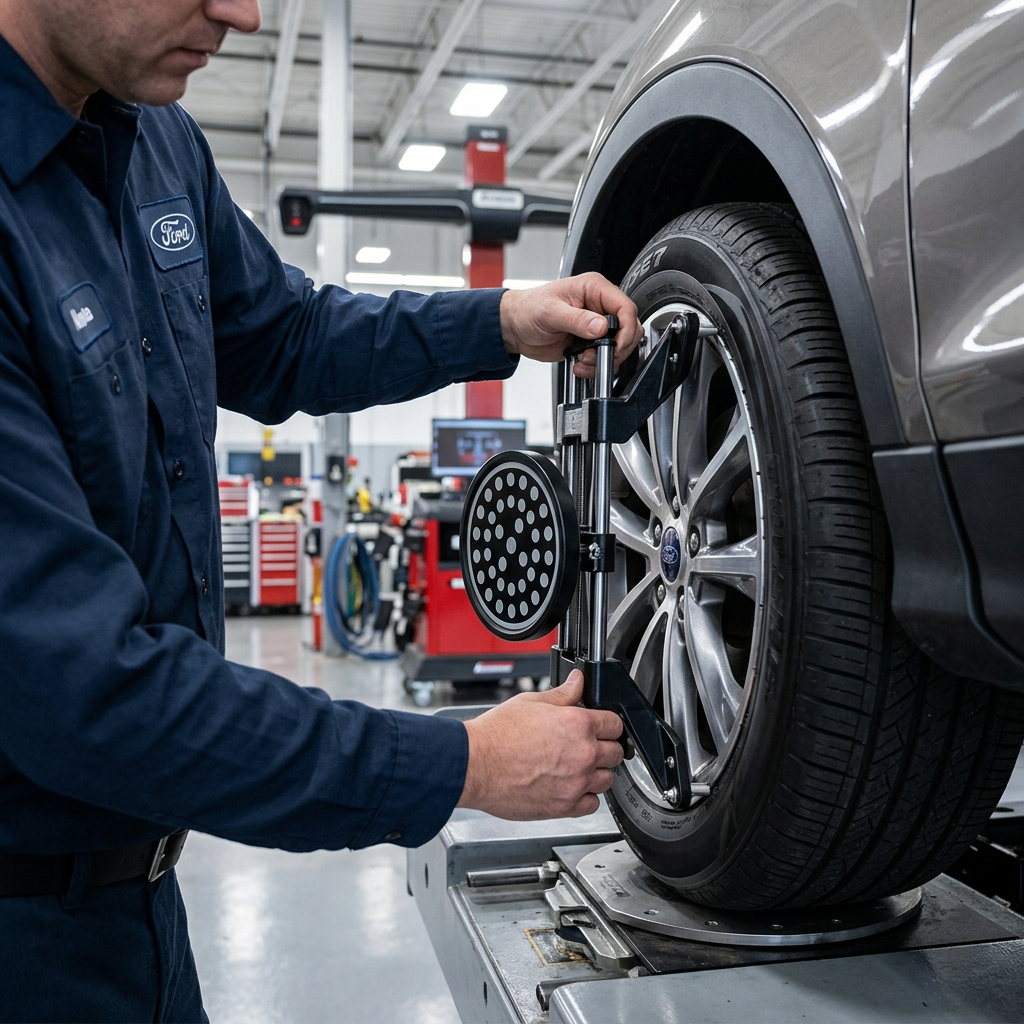
A 2-wheel alignment (front-end alignment) measures and adjusts the steering angles on the front axle exclusively. It calibrates Camber (inward/outward tilt), Toe (inward/outward direction), and Caster (steering axis pivot angle) relative to the vehicle centerline.
4-Wheel Alignment
A 4-wheel alignment inspects and calibrates all four wheels using precision computer sensors. Modern vehicles equipped with independent rear suspension or all-wheel drive (AWD) require 4-wheel alignments to ensure the rear wheels track precisely parallel with the front wheels.
Local Road Impact
Navigating seasonal frost-heaves and potholes along Army Trail Road or Gary Avenue can jar alignment angles out of tolerance. Precision calibration prevents uneven tire edge feathering, steering wheel drift, and diminished fuel efficiency.
How much does a wheel alignment cost and how often should it be done?
In Northern Illinois, professional wheel alignments typically range from $89 to $189, depending on whether your vehicle requires a standard 2-wheel alignment or a full digital 4-wheel alignment with advanced driver-assist sensor recalibration.
Automotive engineers recommend having your wheel alignment inspected every 12,000 miles or at least once per year. However, immediate inspection is necessary if you experience warning signs such as:
• The steering wheel pulling to the left or right when driving straight.
• Off-center steering wheel positioning while traveling down a flat road.
• Rapid or uneven tread wear on the inner or outer shoulders of the tires.
• Steering wheel vibration at highway speeds.
How much does professional tire mounting and balancing cost?
Professional mounting and balancing services generally cost between $25 and $45 per tire across Chicagoland dealership service centers. This comprehensive package includes dismounting old rubber, installing new tire stems or servicing TPMS sensors, precision dynamic wheel balancing, and tire recycling fees.
High-speed wheel balancing places small counterweights on the wheel rim to eliminate minor weight imbalances. Even an imbalance of a fraction of an ounce creates harmonic oscillation, producing persistent steering wheel vibration at speeds above 45 mph.
At Hawk Ford of Carol Stream, our service facility utilizes state-of-the-art Road-Force Balancing machinery. This system applies a weighted roller against the spinning tire to simulate actual weight loads of up to 1,500 lbs.
Road-force diagnostics identify tire stiffness variations and rim runout that standard spin balancers miss, delivering exceptionally smooth, vibration-free highway cruising along I-355 and Route 64.
When should Carol Stream drivers switch to winter tires?
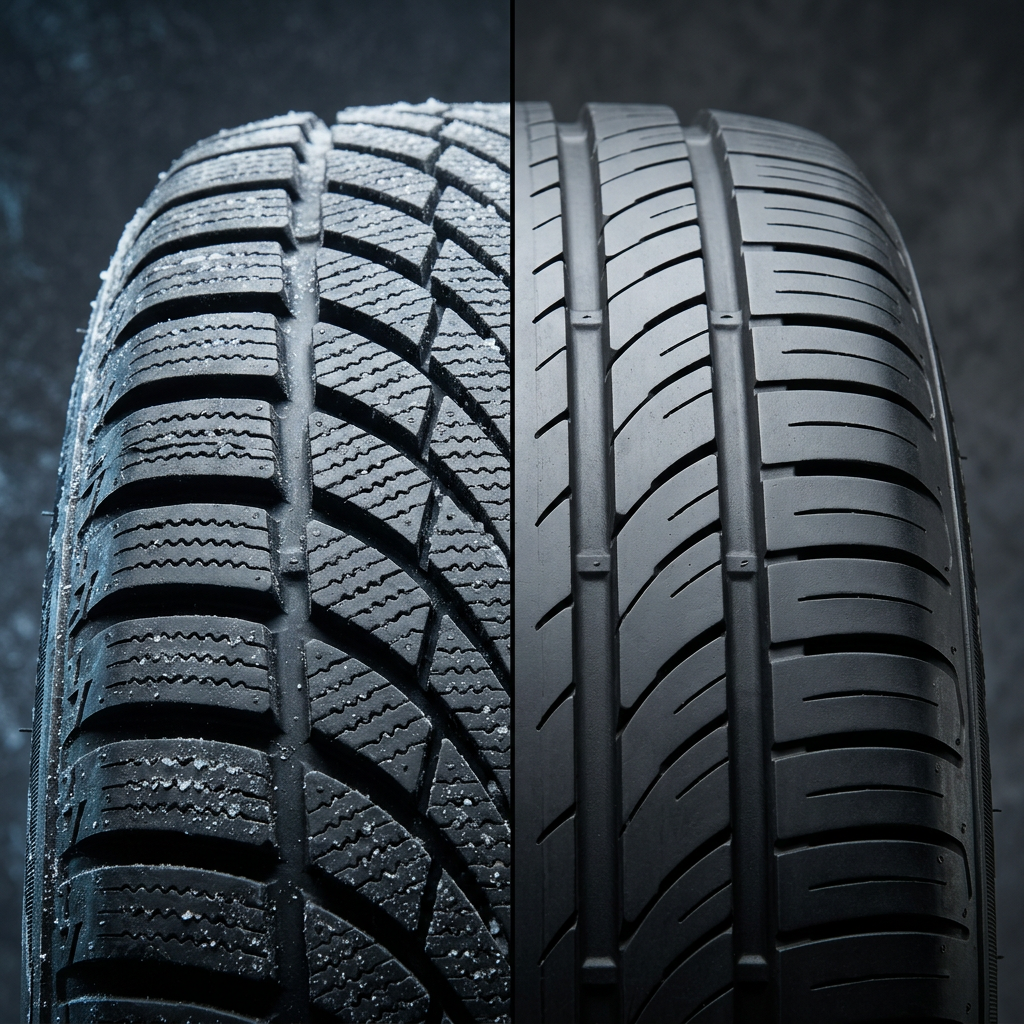
The standard rule of thumb for Northern Illinois drivers is the 45°F Threshold Rule. When autumn ambient temperatures consistently remain below 45°F (7°C)—typically arriving in early-to-mid November in Carol Stream—standard all-season tire rubber compound begins to stiffen and lose elasticity.
Dedicated winter tires are constructed using specialized high-silica rubber compounds that remain flexible in sub-freezing conditions. Combined with thousands of high-density micro-sipes and deep aggressive tread channels, winter tires bite into packed snow, slush, and black ice, reducing emergency stopping distances by up to 30 feet compared to standard all-season tires.
Can you drive winter tires all year long in Illinois?
While it is physically possible to run winter tires during warmer months, doing so is strongly discouraged by tire manufacturers and service experts due to severe tread wear penalties and safety risks.
When ambient pavement temperatures rise above 50°F during warm Illinois spring and summer months, the soft silica rubber compound of a winter tire breaks down rapidly. Driving on winter tires in warm weather can destroy an entire set’s tread depth within a single summer season.
In addition to rapid tread erosion, soft winter sidewalls suffer significant handling degradation in warm weather, creating sluggish steering responses and increased rolling resistance that lowers vehicle fuel economy.
Switch back to your dedicated all-season or performance tires each spring once daily temperatures consistently cross above 45°F.
Checking Tire Pressure and Tread Depth: A Monthly Safety Checklist
1. Cold PSI Check
Check cold inflation pressures monthly using a digital pressure gauge. For every 10°F drop in outdoor temperature during Midwest seasonal shifts, tires drop roughly 1 PSI. Always inflate tires to the manufacturer cold PSI recommendation found on your door placard.
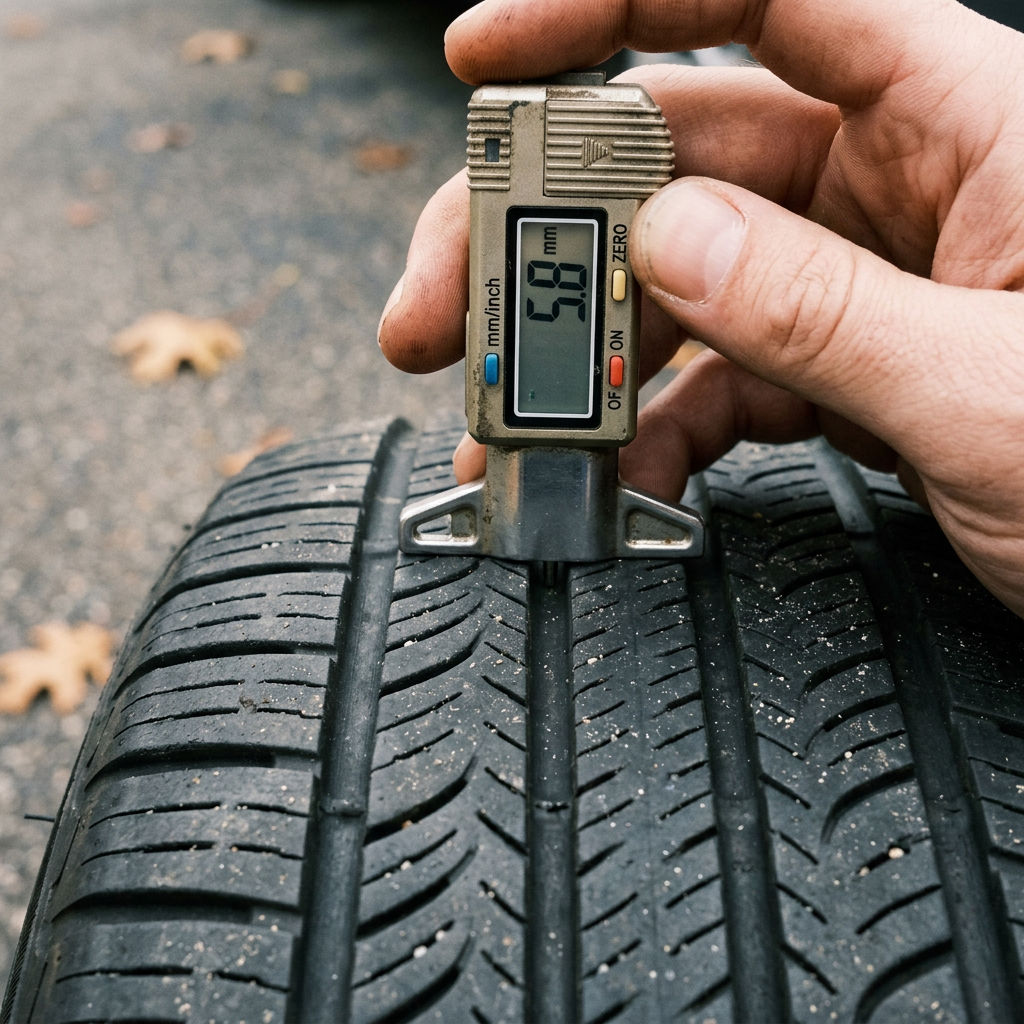
2. Tread Depth Test
Insert a penny upside down into the tread channels. If Abraham Lincoln’s entire head is visible, your tread depth is at or below 2/32″ and immediate replacement is necessary. Using a quarter provides an early warning threshold at 4/32″ for rain and slush safety.
3. Wear Pattern Inspection
Inspect the rubber surface for irregular wear. Center wear indicates chronic over-inflation; shoulder wear indicates under-inflation; cupping or scalloping signals worn shocks or struts; feathering points to misaligned toe angles.
How Local Suburban Conditions in DuPage County Affect Your Tires
Driving in Carol Stream, Glendale Heights, and Bloomingdale presents unique environmental challenges. The Midwest freeze-thaw winter cycle breaks down asphalt, creating sharp-edged potholes along major arterials like North Avenue (Route 64) and Schmale Road.
Hitting a pothole at 35 to 45 mph can snap internal tire cords, bend alloy rims, and instantly throw wheel alignment angles out of tolerance. Furthermore, heavy applications of rock salt and liquid de-icing brine accelerate rim bead corrosion, leading to slow air leaks.
Suburban commute patterns—characterized by frequent stop-and-go acceleration along commercial corridors—place continuous friction loads on tread blocks.
Regular professional visual inspections, tire pressure top-offs, and swift alignment corrections ensure your vehicle handles suburban road hazards safely throughout every season.
Selecting the Right Replacement Tires: OEM vs. Aftermarket Options
When replacing worn tires, drivers can choose between Original Equipment Manufacturer (OEM) tires engineered specifically for their vehicle chassis or high-quality aftermarket alternatives.
• OEM Tires: Co-developed by Ford chassis engineers and tire manufacturers (such as Michelin, Goodyear, or Continental). They are fine-tuned to complement your vehicle’s specific suspension tuning, noise dampening requirements, and fuel efficiency standards.
• Aftermarket Options: Offer alternative treadwear longevity ratings, specialized all-weather traction compounds, or budget-focused price points tailored to specific driving habits.
Schedule Certified Professional Tire Care at Hawk Ford of Carol Stream
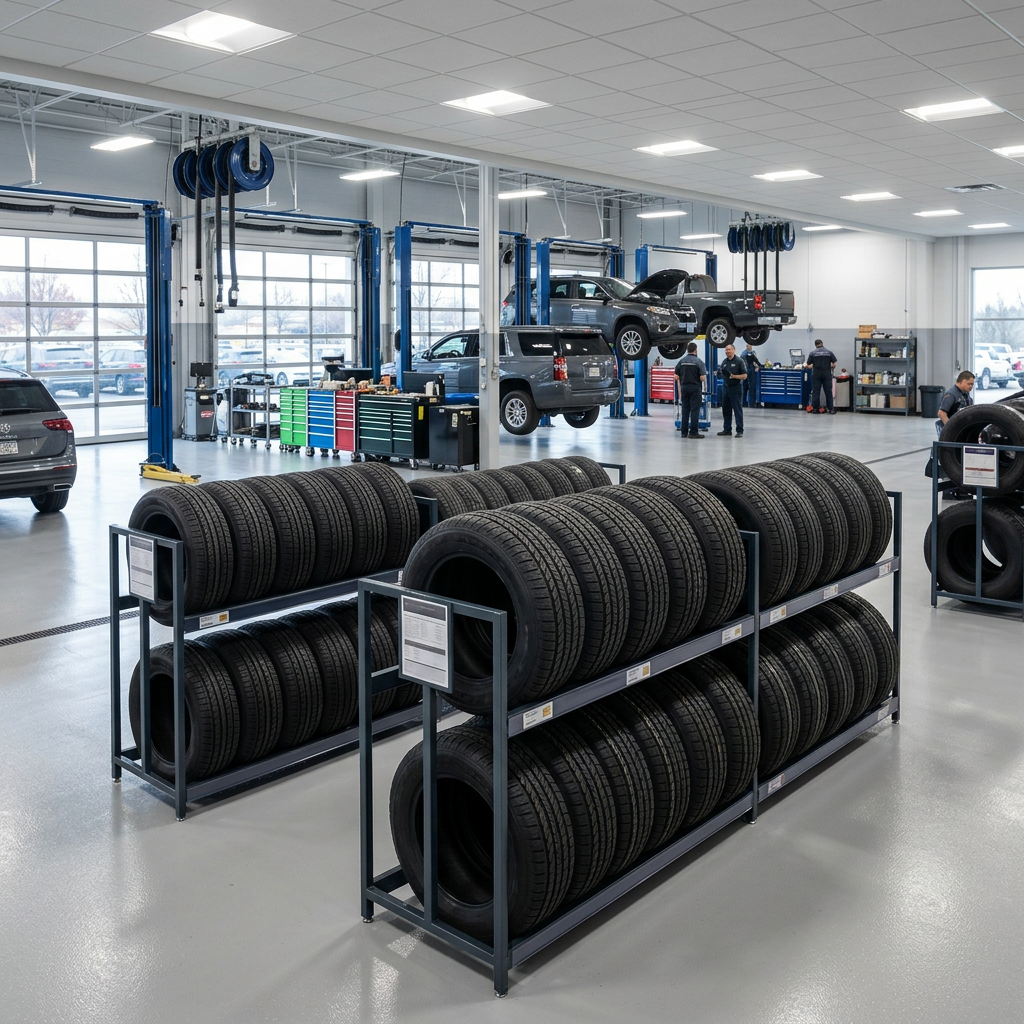
At Hawk Ford of Carol Stream, our certified factory-trained service technicians utilize advanced road-force balancing technology, laser wheel alignment systems, and genuine OEM tire options to ensure optimal performance for your vehicle. We offer competitive tire price match guarantees on major national tire brands.




0 comment(s) so far on Professional Tire Care for Carol Stream Drivers