Is a Used Ford Ranger More Affordable to Maintain Than an F-150?
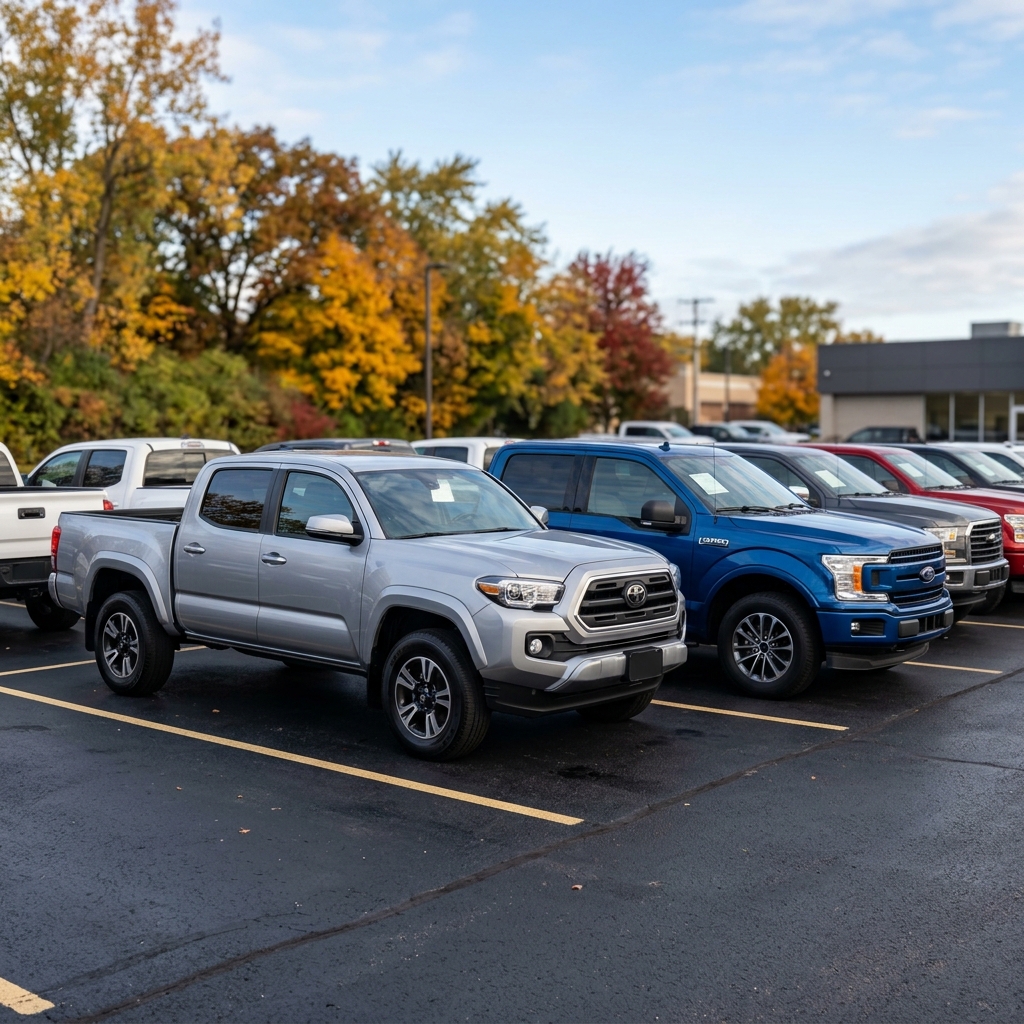
When evaluating pre-owned pickup trucks, long-term ownership expense is often just as critical as the initial sticker price. If you are asking whether a used Ford Ranger is more affordable to maintain than a full-size Ford F-150, the straightforward answer is yes. On average, a midsize Ford Ranger costs between $150 and $300 less per year in routine maintenance, scheduled maintenance, and wearable component replacements than an F-150 under similar driving conditions.
This mechanical cost disparity stems directly from physical engineering differences. The Ford Ranger utilizes smaller tire dimensions, lighter braking hardware, lower engine fluid capacities, and a streamlined 2.3L EcoBoost four-cylinder powertrain layout. Conversely, the full-size Ford F-150 is engineered to haul heavier payloads and tow up to double the capacity of its midsize sibling. As a result, its braking systems, heavy-duty tires, transmission cooling requirements, and multi-cylinder engines (such as the 3.5L EcoBoost V6 or 5.0L Coyote V8) demand larger fluid volumes and costlier replacement components. Below, the team at Hawk Ford of Carol Stream breaks down exact cost vectors, mechanical comparisons, and operational facts to help you choose the best used truck for your budget.
Annual Maintenance & Repair Cost Comparison: Ranger vs. F-150
To understand where the maintenance savings come from, we must look at scheduled routine service over a standard 12-month or 12,000-mile driving period in Northern Illinois. Wearable items like brake pads, brake rotors, engine oil, filters, and tires form the foundation of ongoing operational costs.
Because the Ranger weighs roughly 1,000 pounds less than a standard-cab or SuperCrew F-150, its chassis components experience significantly lower daily friction and mass stress. This extended component longevity translates directly into fewer garage visits and lower parts expenses during routine factory-recommended service intervals.
| Service Item / Component |
Used Ford Ranger (Avg Cost) |
Used Ford F-150 (Avg Cost) |
| Synthetic Engine Oil Change (6.2 qt vs 7.7-10 qt) |
$65 – $85 |
$95 – $135 |
| Front Brake Pads & Rotor Replacement |
$320 – $450 |
$420 – $620 |
| Set of 4 All-Terrain Tires (Installed) |
$750 – $1,050 |
$950 – $1,500+ |
| Spark Plug Service (4-Cyl vs 6/8-Cyl) |
$160 – $220 |
$240 – $380 |
| Estimated Annual Routine Total |
$550 – $750 |
$750 – $1,100 |
Tires, Brakes, and Fluids: Why Full-Size F-150 Parts Cost More
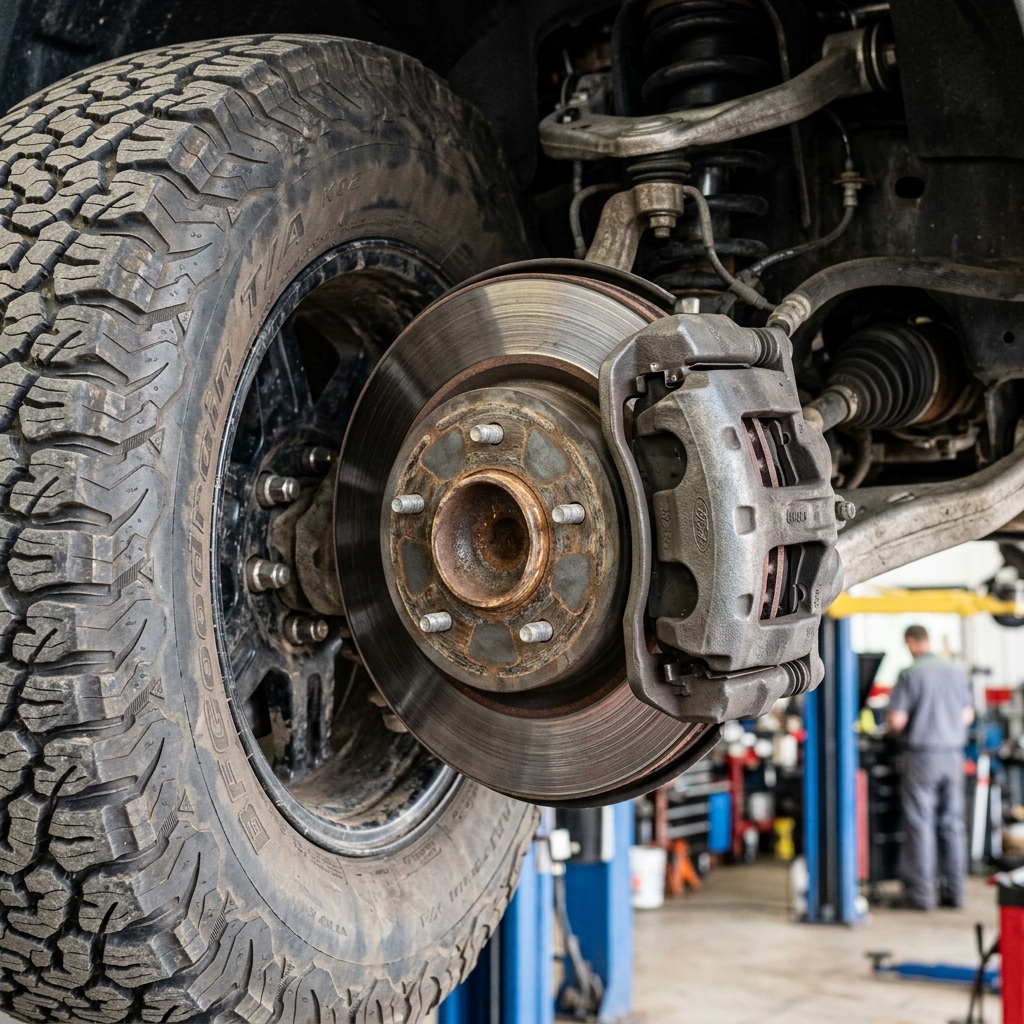
1. Tire Dimensions & Rubber Mass
A used Ford Ranger typically rides on 16-inch to 18-inch wheels with standard P-metric light truck tires. In contrast, modern pre-owned F-150 models frequently feature 18-inch, 20-inch, or optional 22-inch wheels requiring heavy E-load rated rubber. Replacing a set of four premium 20-inch F-150 tires can run $300 to $500 higher than a full set for a Ranger.
2. Brake Rotors & Surface Area
Stopping a 5,000+ lb full-size truck demands heavy-gauge iron. The F-150 features massive 13.8-inch front brake rotors and heavy-duty calipers. The Ranger utilizes 12.2-inch rotors, which cost significantly less in raw materials and manufacturing. This difference lowers basic brake pad and rotor replacement costs by roughly 25% to 35%.
3. Engine & Drivetrain Fluid Volumes
Fluid service adds up quickly. The Ranger’s 2.3L EcoBoost takes 6.2 quarts of full synthetic motor oil. An F-150 with a 5.0L V8 or 3.5L EcoBoost requires 7.7 to 8.8+ quarts. Furthermore, the larger front and rear differentials and transfer cases on 4×4 F-150 trucks require greater fluid capacities during major service intervals.
Powertrain Reliability: EcoBoost 2.3L vs. F-150 Engine Options
Under the hood, the used Ford Ranger keeps things simple yet powerful with a single standardized engine option: the proven 2.3L EcoBoost turbocharged four-cylinder. Engine hardware simplicity often correlates with reduced service complexity. For instance, when servicing ignition components, replacing four spark plugs and ignition coils on a 2.3L Ranger takes half the labor time and hardware costs compared to replacing eight plugs on an F-150 5.0L V8.
The Ranger’s 2.3L EcoBoost engine features a single twin-scroll turbocharger, high-pressure direct injection, and dual overhead camshafts with Ti-VCT. It generates 270 horsepower and 310 lb-ft of torque—offering sports-car-like quickness in a midsize pickup body while maintaining accessible repair costs.
The Ford F-150 offers a diverse lineup of powertrains: the 2.7L EcoBoost Twin-Turbo V6, the high-output 3.5L EcoBoost V6, the naturally aspirated 5.0L Coyote V8, and the 3.5L PowerBoost Hybrid. While these engines offer unmatched towing numbers, servicing twin-turbo setups or complex hybrid battery systems down the line can lead to higher specialized labor costs.
At Hawk Ford of Carol Stream, every pre-owned truck engine undergoes comprehensive pressure testing, computer diagnostics, and fluid analysis to ensure complete long-term peace of mind.
Do Used Ford F-150 Trucks Hold Their Value Well Over Time?
Resale Value Comparison
A common question from truck buyers is: Do used Ford F-150 trucks hold their value well over time? The answer is a resounding yes. The F-150 has been America’s best-selling truck for decades, creating massive nationwide demand in the secondary market that keeps depreciation exceptionally low.
Maintenance Offset Factor
Even though an F-150 costs $200-$300 more annually in routine maintenance, its high resale retention often balances the ledger. Over a 3- to 5-year ownership period, an F-150 may retain 3% to 5% more of its initial purchase price than a midsize truck, offsetting higher routine maintenance costs when you trade in.
Ranger Market Stability
The Ford Ranger also commands remarkable resale values due to high consumer demand for nimble, fuel-efficient midsize trucks. Both models represent strong financial investments compared to standard passenger sedans or budget crossovers.
Fuel Economy and Operational Costs: Ranger, F-150, Edge, and Explorer
Beyond service shop invoices, daily fuel expenditure is a major factor in overall ownership affordability. A pre-owned Ford Ranger 4×4 delivers an EPA-estimated average of 20 MPG city / 24 MPG highway. In contrast, a typical pre-owned Ford F-150 4×4 with a 3.5L EcoBoost or 5.0L V8 yields roughly 17 MPG city / 23 MPG highway. Over 15,000 miles of driving per year, the Ranger can save the owner $300 to $500 in annual fuel bills alone.
Comparing Ford SUV Efficiency: Used Edge vs. Used Explorer
Shoppers frequently ask:Which vehicle achieves better fuel economy, a used Ford Edge or Ford Explorer?
The used Ford Edge achieves noticeably superior fuel economy compared to a used Ford Explorer. As a two-row midsize crossover with a lighter curb weight, the standard 2.0L EcoBoost Ford Edge delivers around 21 MPG city / 29 MPG highway.
The three-row Ford Explorer, while spacious and powerful, carries extra curb weight and larger dimensions. A 2.3L EcoBoost Explorer averages around 20 MPG city / 27 MPG highway, while V6-equipped Explorer variants drop closer to 18 MPG city / 24 MPG highway. If fuel economy is your top priority when choosing a family transport vehicle, a pre-owned Ford Edge offers a distinct edge in monthly pump costs.
What Warranty Protection Comes with a Gold Certified Used Ford?
Uncertainty surrounding unexpected breakdown repairs can make buying a used vehicle stressful. This brings up an essential question: What warranty protection comes with a Gold Certified used Ford, and how can it factor into overall affordability?
When you select a Ford Blue Advantage Gold Certified pre-owned Ranger or F-150 at Hawk Ford of Carol Stream, you receive manufacturer-backed coverage that effectively insulates you from major mechanical repair bills during your early ownership years. Gold Certified protection includes:
• 12-Month / 12,000-Mile Comprehensive Limited Warranty: Covers over 1,000 components including electrical systems, steering, air conditioning, tech features, and brakes.
• 7-Year / 100,000-Mile Powertrain Limited Warranty: Covers engine internals, transmission, transfer case, and drive axle assemblies.
• 172-Point Rigorous Quality Inspection: Performed by factory-trained Ford technicians before the vehicle ever touches the sales lot.
• 24/7 Roadside Assistance: Includes flat-tire changes, battery jump-starts, towing, and fuel delivery.
• 22,000 FordPass™ Rewards Points: Redeemable toward your first two complimentary scheduled maintenance visits at our dealership.
Towing and Payload Needs: When the F-150’s Higher Capacity Justifies the Maintenance
While the midsize Ford Ranger is more economical to maintain, maintenance costs should not be considered in isolation. You must weigh operational expenses against your actual work and lifestyle requirements.
The pre-owned Ford Ranger boasts a maximum towing rating of 7,500 lbs and a maximum payload capacity of roughly 1,860 lbs when properly equipped with the factory tow package. For standard utility trailers, small speedboats, pop-up campers, ATV haulers, and home renovation runs, the Ranger offers plenty of power without the bulk or maintenance costs of a full-size truck.
However, if you pull a heavy travel trailer, double-axle horse trailer, or commercial equipment over 8,000 lbs, an F-150 is essential. A pre-owned F-150 equipped with the 3.5L EcoBoost or 5.0L V8 offers maximum towing limits between 10,000 and 14,000 lbs and payloads up to 3,325 lbs.
Operating a midsize truck near its upper thermal limits regularly causes accelerated transmission and brake wear. If you haul heavy loads continuously, the extra $200-$300 spent annually maintaining an F-150 is money well spent to avoid overloading a smaller powertrain.
Exploring Used Ford Value and Affordability Across Compact Trucks and SUVs
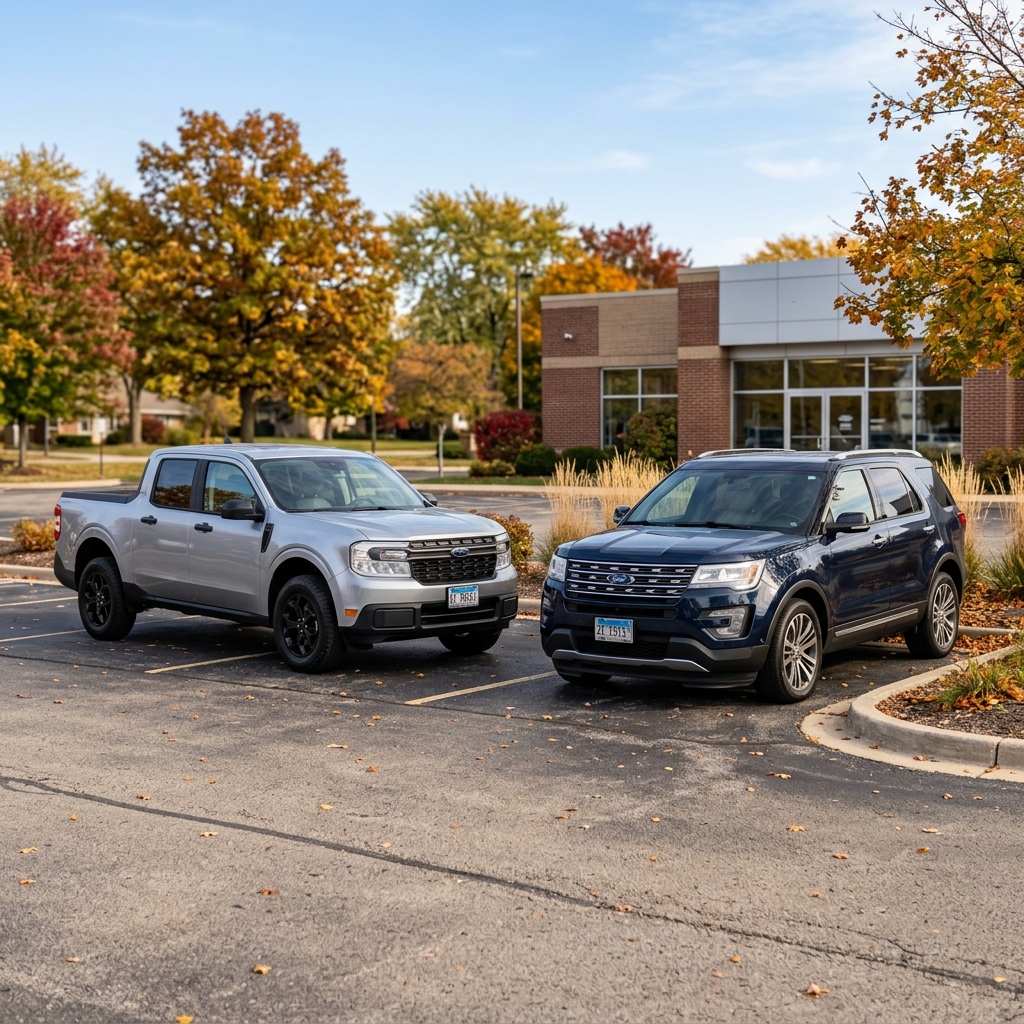
Ford Maverick Payload
Buyers looking for high efficiency often ask: What is the payload capacity of a used Ford Maverick? A pre-owned Ford Maverick offers a standard payload capacity of 1,500 lbs across both Hybrid and 2.0L EcoBoost models. This unibody truck delivers impressive light utility with compact car maintenance pricing.
Best Explorer Value Years
Shoppers wondering which year of used Ford Explorer offers strong value for budget buyers should consider model years 2017 through 2019(late 5th generation) or 2021. The 2017-2019 models feature mature 3.5L V6 engine refinements, while 2021 models offer the modern RWD platform at accessible pre-owned prices.
Overall Used Ford Strategy
Overall used Ford value and affordability strategies center on matching vehicle platform architecture directly to your routine driving needs. Choosing a compact Maverick or midsize Ranger avoids paying for full-size heavy-duty component overhead if you don’t require heavy towing capabilities.
Accounting for Advertised Prices vs. Final Quotes at Hawk Ford of Carol Stream
Budget calculations don’t stop at maintenance costs—they begin during purchase negotiations. A critical topic for smart shoppers is: How can a shopper account for the difference between an advertised used Ford price and the final quote at Hawk Ford of Carol Stream?
At Hawk Ford of Carol Stream, we prioritize upfront price transparency. When moving from an online advertised price to an itemized out-of-door quote, shoppers should account for fixed standard costs: mandatory state sales taxes, county registration fees, the standardized Illinois documentation fee, and necessary vehicle reconditioning expenses.
To streamline your final pricing quote and maximize savings:
1. Value Your Existing Vehicle: Applying trade-in equity directly reduces the total taxable amount on your purchase under Illinois tax code.
2. Review Reconditioning Value: Every used truck at Hawk Ford undergoes thorough safety inspections, fresh oil changes, re-aligned tire setups, and brake reconditioning.
3. Prequalify for Competitive Financing: Secure clear APR rates upfront to calculate your exact monthly payments.
Our sales team breaks down every line item clearly so there are never any unexpected charges or hidden fees.
Local Service & Winter Truck Care in Carol Stream, Glendale Heights, and Bloomingdale
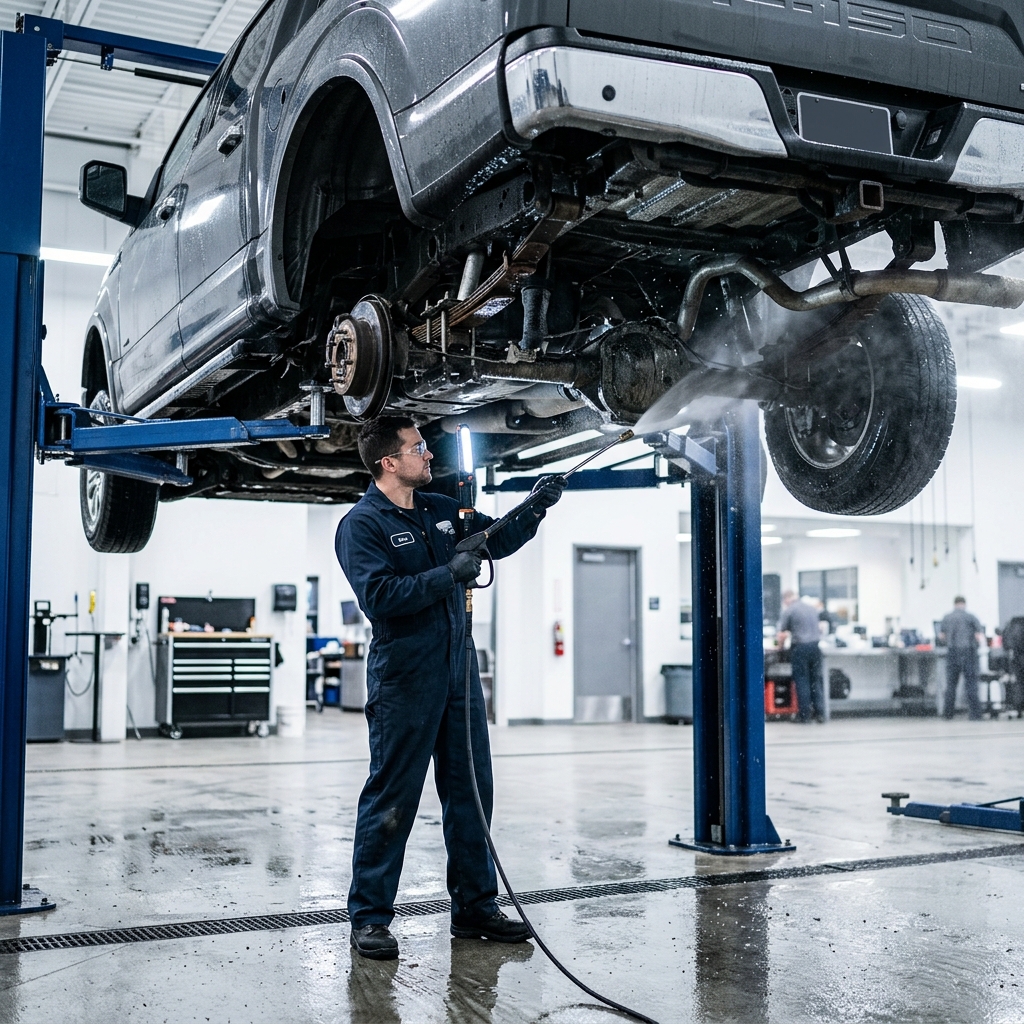
Driving in DuPage County—whether commuting down North Avenue through Carol Stream, navigating Army Trail Road in Bloomingdale, or heading through Glendale Heights—presents unique seasonal maintenance challenges. Harsh Chicagoland winters bring heavy road salt, freezing slush, and severe pothole seasons, which impact truck chassis maintenance.
Winter Truck Care Tips for Chicagoland Owners:
• Undercarriage Washing: Winter road salt creates rapid corrosion on exposed steel brake lines, leaf springs, and frame rails. Frequent underbody flushing is essential.
• Cold Cranking Amps (CCA) Testing: Cold weather drastically reduces battery performance. Make sure your battery is load-tested before winter arrives.
• 4×4 Transfer Case & Hub Service: Ensure electronic 4WD engagement switches, fluid levels, and front locking hubs are working smoothly before snow falls.
Whether you drive a compact Ranger or a heavy-hauling F-150, staying proactive with local seasonal service protects your truck’s resale value and long-term reliability.
Have questions or need expert advice? Call us at (630) 233-9696 to speak directly with our certified Ford service advisors. You can also visit our state-of-the-art facility in person: Get Directions to Hawk Ford of Carol Stream located conveniently at 175 North Ave, Carol Stream, IL 60188.
Find and Service Your Pre-Owned Ford Truck at Hawk Ford of Carol Stream
Ultimately, a used Ford Ranger is more affordable to maintain than an F-150, offering $150 to $300 in annual maintenance savings, lower tire and brake replacement costs, and better fuel economy. However, if your daily workload requires heavy towing over 7,500 lbs, the additional maintenance investment of a full-size Ford F-150 pays dividends in utility, space, and strong long-term resale retention.
At Hawk Ford of Carol Stream, our team is committed to helping you find the perfect pre-owned truck or SUV that fits both your lifestyle and your budget. Explore our wide selection of pre-owned inventory, trade in your current vehicle, or schedule routine maintenance with our factory-trained service technicians today.





0 comment(s) so far on Is a Used Ford Ranger More Affordable to Maintain Than an F-150?