How Sub-Zero Chicagoland Weather Affects Car Battery Performance: The Direct Answer
When a northern Illinois polar vortex sweeps through DuPage County, car batteries face a brutal double-whammy. At 32°F, a standard lead-acid car battery loses roughly 20% of its available cranking power. When the temperature drops to 0°F, chemical reaction speeds inside the battery drop by approximately 50%, and at -10°F or lower, your battery operates at less than 40% of its normal room-temperature capacity.
At the exact moment your battery’s energy yield drops dramatically, your engine requires significantly more electrical current to start. Cold weather thickens engine oil to a molasses-like consistency, multiplying physical internal drag on the crankshaft and pistons. A starter motor that needs 150 Cold Cranking Amps (CCA) on an 80°F summer afternoon can easily require 300 to 450 CCA to turn over a frozen engine in Carol Stream. If your battery is more than three years old or already operating at reduced charge, sub-zero weather will expose those hidden weaknesses instantly.
| Ambient Temperature |
Available Battery Power |
Engine Cranking Power Required |
| 80°F (26.7°C) |
100% |
100% (Baseline) |
| 32°F (0°C) |
80% |
135% |
| 0°F (-17.8°C) |
50% |
210% |
| -10°F (-23.3°C) |
40% |
250% |
The Electrochemistry of Cold Weather: Why Freezing Temps Kill Batteries
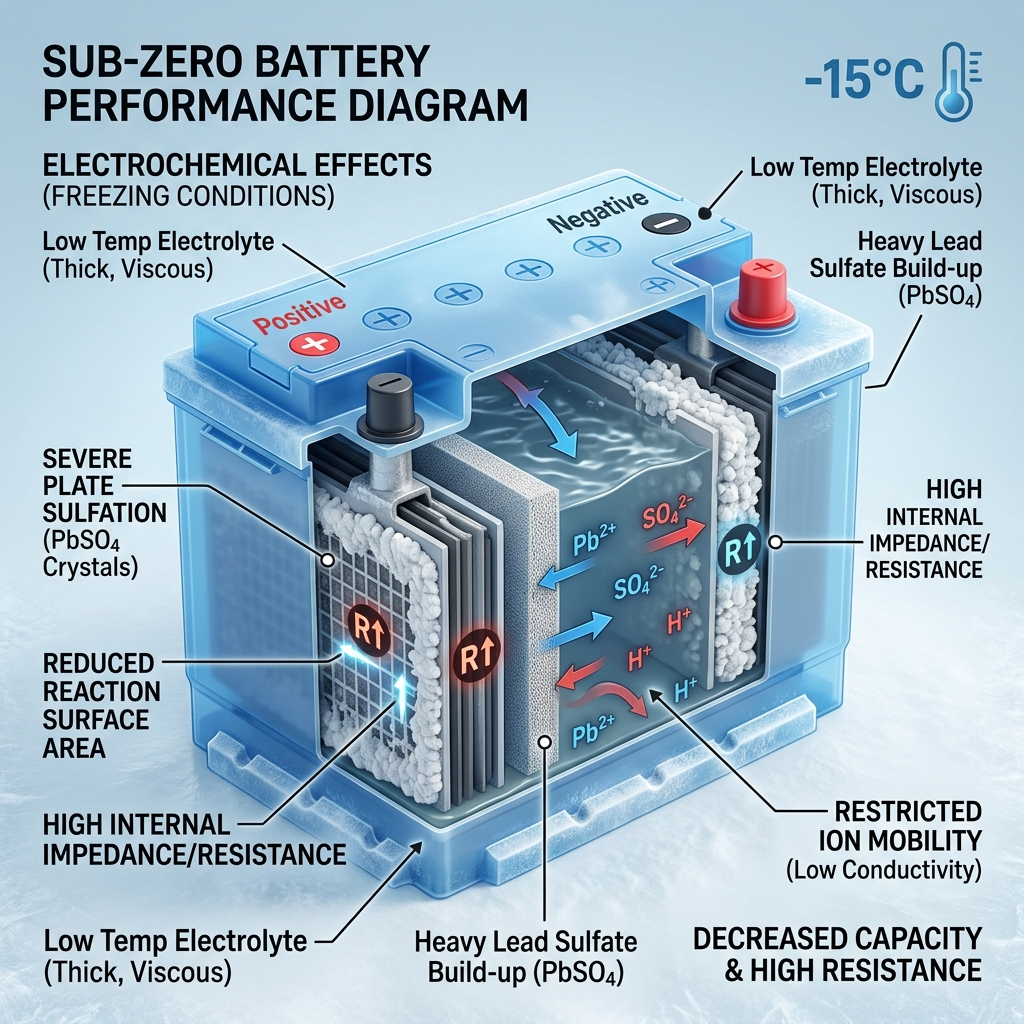
To understand why batteries fail in Chicagoland winters, you have to examine the chemistry inside lead-acid and Absorbent Glass Mat (AGM) battery cells. Standard 12-volt automotive batteries generate electricity through a chemical reaction between lead plates and a liquid electrolyte solution of sulfuric acid and water.
As ambient temperatures plummet, electron mobility slows down significantly. The electrolyte fluid thickens, increasing internal electrical resistance inside the casing. This slows the rate at which sulphate ions can move between plates to transfer electrical charge. Furthermore, severe cold increases plate sulfation risks if the battery remains undercharged, causing lead sulfate crystals to harden on internal grid surfaces.
Compounding this chemical slowdown is high parasitic battery drain during winter driving. When you start your vehicle in negative temperatures, heated leather seats, rear window defrosters, side mirror heaters, cabin blowers, and windshield wipers pull max power instantly. This heavy load severely depletes available reserve capacity before the alternator can replenish the charge.
Warning Signs Your Battery Is Failing Before the First Deep Freeze
1. Sluggish Engine Crank & Clicking
If turning the key or pushing the start button yields a slow, laboring ‘rrmmm… rrmmm…’ sound instead of an immediate engine fire, your battery is struggling to deliver adequate amperage. Rapid solenoid clicking indicates current flow is too low to engage the starter motor drive gear.
2. Dim Headlights & Instrument Flutters
When starting your vehicle at dusk, dimming halogen/LED headlights or flickering digital cluster displays indicate low system voltage. Modern Ford vehicles monitor system power closely; unexpected dashboard warnings or SYNC touchscreen resets during cranking signal severe battery stress.
3. Swollen Casing & Voltage < 12.4V
Drivers in Bloomingdale and Glendale Heights should inspect the battery case visually. Swelling or bulging sides mean severe freezing or internal plate degradation occurred. Resting open-circuit voltage below 12.4 volts measured via multimeter indicates a battery operating at under 75% total charge.
DuPage County Fall Maintenance Checklist: Preparing Your Ford for Chicagoland Winter
As autumn transitions into late fall in DuPage County, scheduling a comprehensive pre-winter vehicle check is essential for uninterrupted daily commuting. A proactive inspection catches minor degradation before zero-degree temperatures cause a sudden failure on North Avenue or Route 64.
Essential Autumn Inspection Checklist:
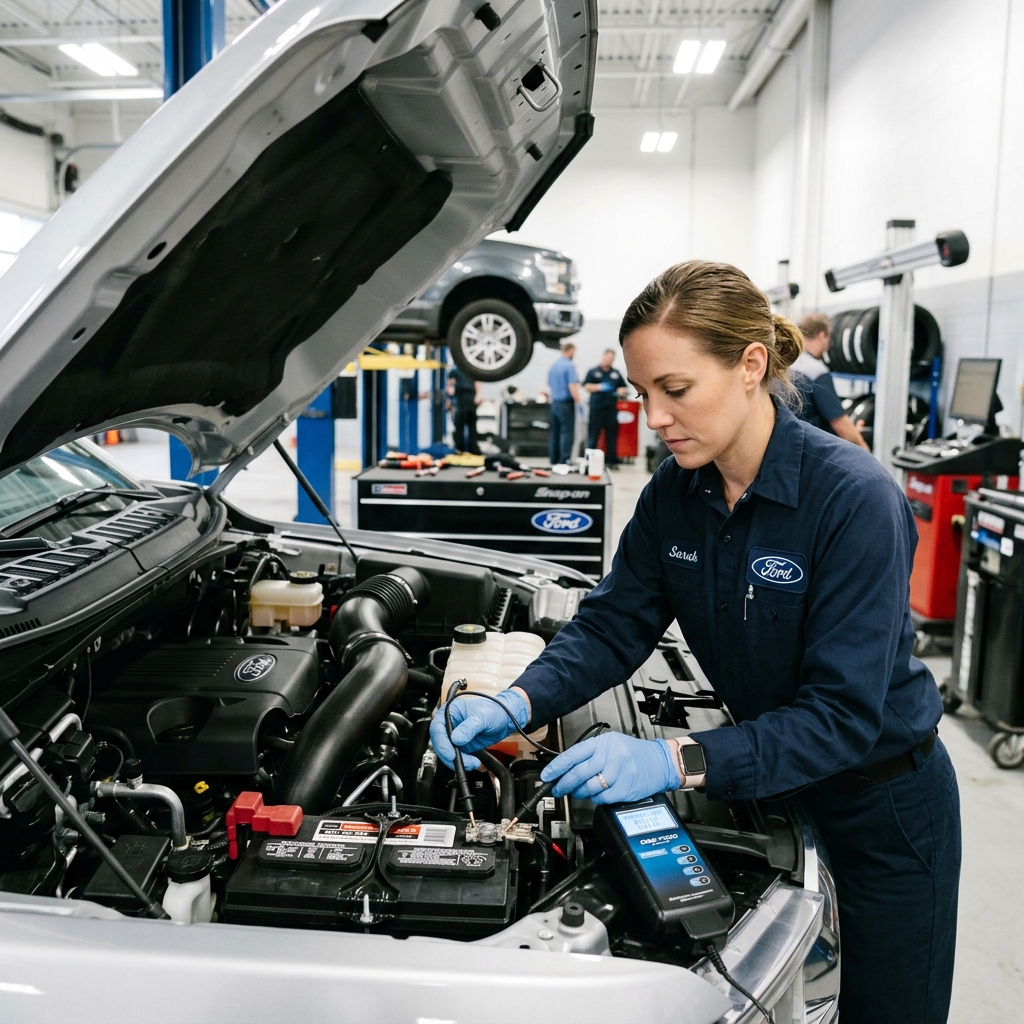
• Digital Conductance Load Test: Verifies cold-cranking amps and internal plate resistance.
• Terminal Corrosion Cleaning: Removes lead-sulfate buildup and applies dielectric anti-corrosion protection.
• Wiper Blade & Washer Jet Check: Inspects rubber edge flexibility and ensures washer fluid is rated to -20°F or lower.
• Lighting & Diagnostics Scan: Verifies headlamps, fog lights, and battery management sensor calibration.
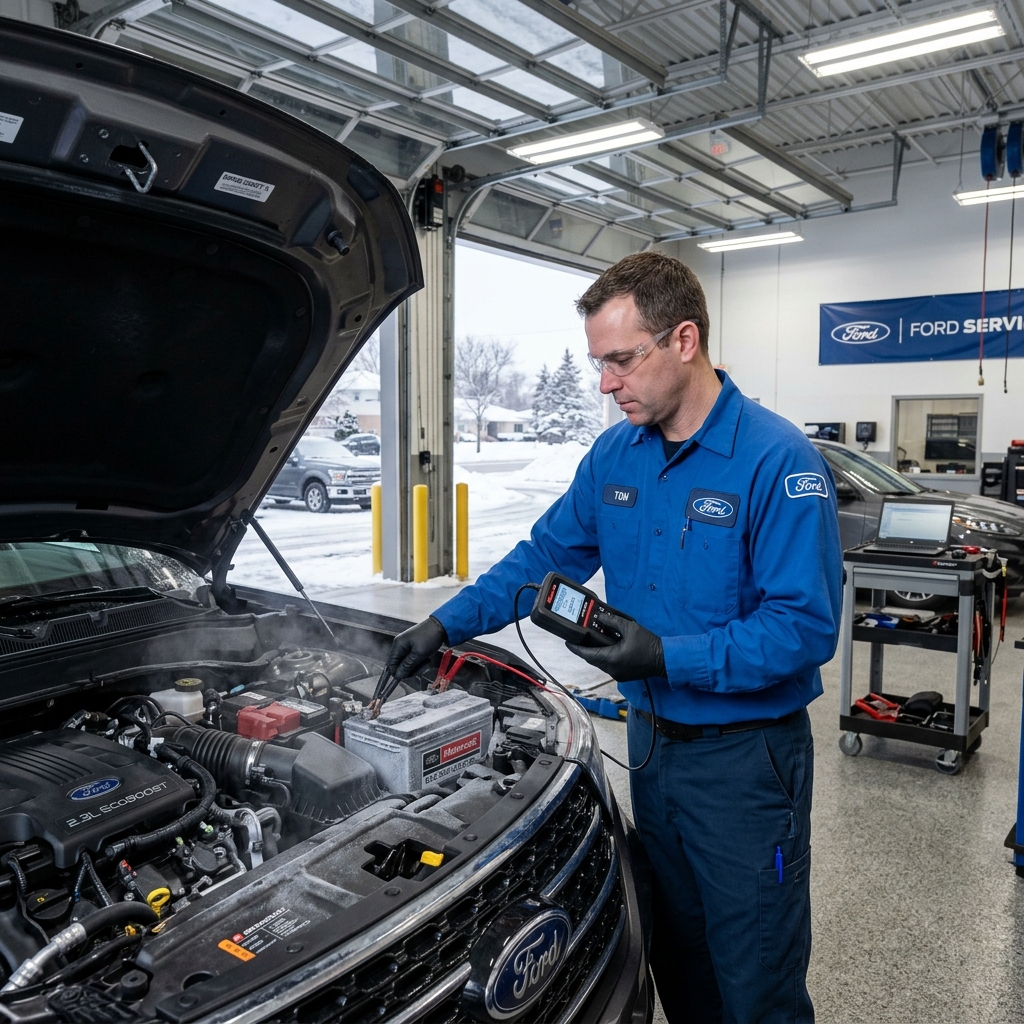
Having certified technicians evaluate your starting, charging, and climate control systems gives peace of mind when extreme weather strikes. You can review current vehicle service options directly through our
Schedule Service Now online hub.
What Basic Tools Are Needed to Inspect a Vehicle for Winter at Home?
Electrical & Battery Testers
A standard digital multimeter allows you to measure open-circuit DC voltage across battery posts. A healthy resting battery measures 12.6V to 12.8V. When idling, the multimeter should display 13.8V to 14.7V to confirm alternator health. An optical refractometer or anti-freeze hydrometer tests coolant blend concentration.
Tire Gauge & Depth Gauge
Tire pressure drops approximately 1 PSI for every 10°F drop in outside air temperature. Keep a calibrated digital tire pressure gauge in your glove box. Pair this with a tread depth gauge (measured in 32nds of an inch) to verify you have at least 5/32″ tread depth for snow and slush evacuation.
Terminal Cleaning Kit
White or greenish powder around battery posts restricts electrical current. A wire terminal brush kit, battery cleaner spray, and felt terminal washers sealed with anti-corrosion grease keep contact resistance at zero, ensuring maximum amp transfer to your starter during extreme morning freezes.
What Cold-Weather Packages and Engine Block Heater Options Are Available for Ford Vehicles?
Ford equips vehicles with engineered cold-weather solutions designed specifically for severe climates like northern Illinois. Factory option packages incorporate heavy-duty alternator upgrades, insulated battery blankets, heated wiper park areas, and engine block heaters.
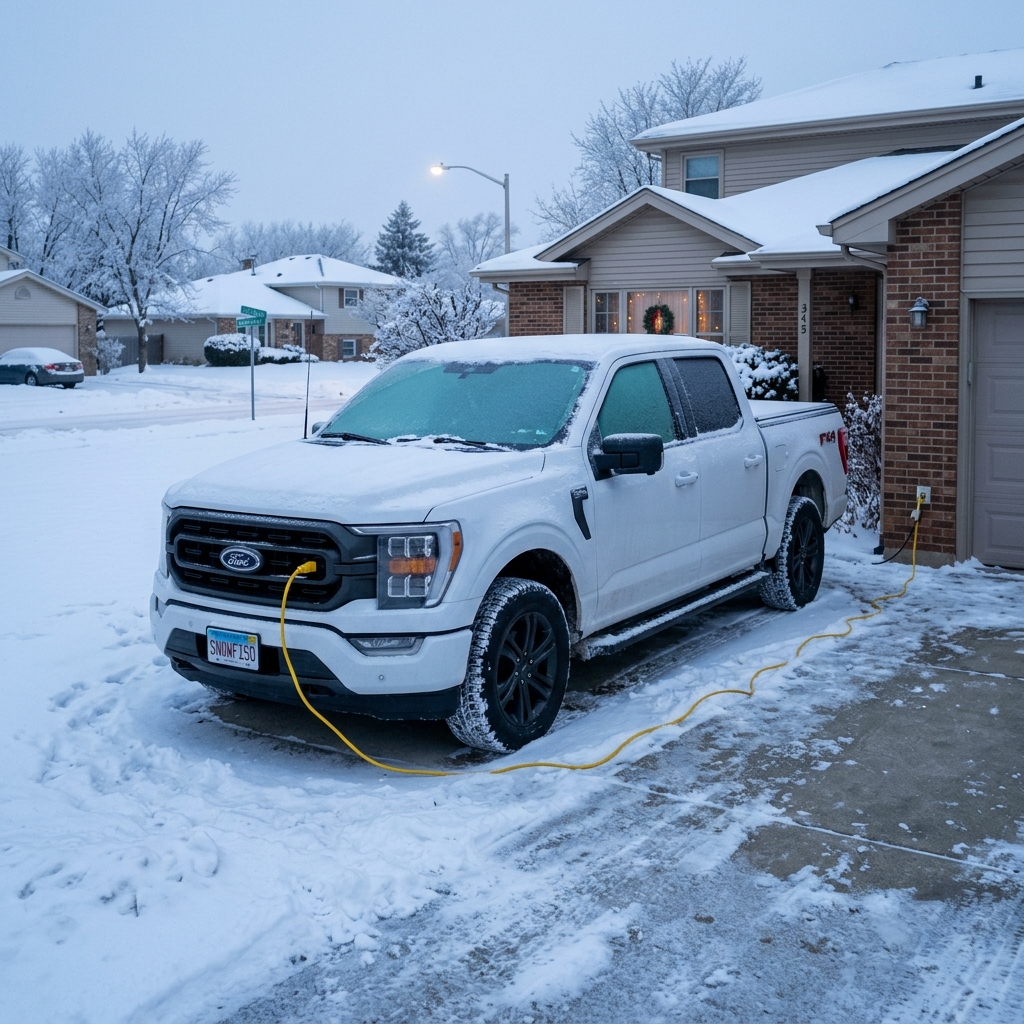
An OEM Engine Block Heater plugs directly into a standard 120V household outlet. It warms the engine coolant inside the cylinder block prior to starting. By keeping engine oil warm and fluid, block heaters reduce starter motor load by up to 60%, protect internal bearings from dry cold starts, and enable cabin heaters to deliver warm defrost air almost immediately.
For genuine Ford block heater kits, heavy-duty batteries, and winter accessories, order directly from our certified
Parts Center.
How Much Does a Ford Coolant Flush Cost in Illinois?
In the greater Chicago metropolitan area, a professional Ford coolant flush typically ranges from $150 to $250, depending on engine fluid capacity, model, and specific antifreeze formulation (such as Motorcraft Yellow Organic Acid Technology coolant). While some drivers view coolant as purely a summer cooling agent, engine antifreeze is critical for winter survival.
Fresh 50/50 prediluted engine coolant provides freeze protection down to -34°F (-37°C) and boilover protection up to 265°F (129°C). Over time, corrosion inhibitors deplete and water dilutes the mixture. If engine coolant freezes solid inside your radiator or engine block, expanding ice can crack the engine casting, rupture heater core tubes, and destroy water pump impellers, resulting in catastrophic repairs.
| Coolant Mixture Ratio |
Freeze Point Protection |
Recommended Usage |
| 30% Coolant / 70% Water |
+2°F (-16°C) |
Inadequate for Illinois Winters |
| 50% Coolant / 50% Water |
-34°F (-37°C) |
Standard Ford Factory Specification |
| 60% Coolant / 40% Water |
-62°F (-52°C) |
Extreme Arctic Sub-Zero Conditions |
Are 3-Peak Mountain Snowflake (3PMSF) Rated All-Weather Tires Good for Illinois?
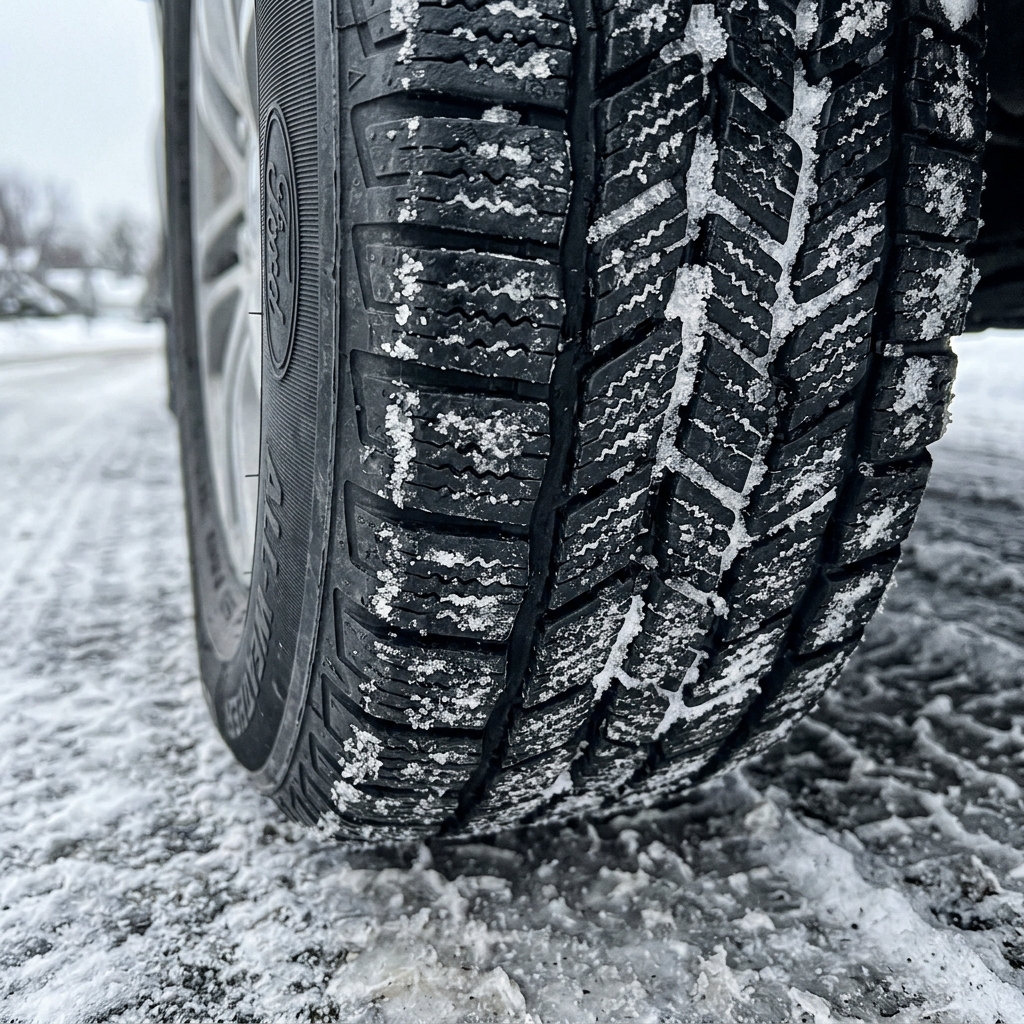
Yes, 3-Peak Mountain Snowflake (3PMSF) rated all-weather tires are an ideal choice for drivers navigating Chicagoland winter roads. Unlike standard M+S (Mud and Snow) all-season tires—which harden and lose elasticity below 45°F—all-weather tires utilize flexible silica rubber compounds engineered to maintain grip in sub-zero freezes.
On packed snow and slush-covered roads in Carol Stream, 3PMSF tires provide up to 25% to 35% shorter stopping distances compared to standard factory all-season tires. High-density 3D siping bites into icy pavement while directional tread channels evacuate slush cleanly, reducing hydroplaning risks.
Because 3PMSF all-weather tires are designed for year-round driving, local car owners gain near-dedicated winter tire safety without needing seasonal tire changeovers or off-season tire storage.
How Does Ford Intelligent AWD and 4WD Perform in Chicagoland Snow and Ice?
Active Torque Vectoring
Ford Intelligent AWD continuously monitors vehicle speed, throttle position, and steering wheel angle every 16 milliseconds. It proactively transfers torque to the wheels with maximum traction before wheel slippage even occurs on slick winter streets.
Terrain Management Modes
Selecting ‘Deep Snow/Sand’ or ‘Slippery’ mode optimizes transmission shift points, tones down initial throttle sensitivity, and adjusts traction control intervention to keep momentum steady through heavy DuPage County snowdrifts.
Voltage & Sensor Sync
Modern AWD systems rely heavily on high-speed CAN-bus electronic communication between wheel speed sensors and electronic control units. Maintaining proper battery voltage ensures these active safety systems function instantly without electrical lag.
Safe Jump-Starting Procedures and Winter Emergency Kits for Sub-Zero Days
Jump-starting modern Ford vehicles requires careful protocol to prevent voltage spikes that could damage sensitive body control modules or SYNC infotainment electronics. Connect RED jumper cable clamps to positive (+) terminals first, then the donor vehicle’s BLACK clamp to negative (-). Connect the dead vehicle’s BLACK clamp to an unpainted metal engine ground point away from the battery.
Never attempt to jump-start a frozen battery with visibly cracked or swollen casing, as doing so can trigger an internal short circuit or rupture.
Essential Winter Roadside Kit Checklist:
• Heavy-duty 4-gauge booster cables or portable lithium jump starter
• Thermal emergency blankets and insulated winter gloves
• Heavy-duty ice scraper with brass blade and snow brush
• Portable tire inflator with built-in LED flashlight
• Non-clumping cat litter or traction boards for ice recovery
• High-energy non-perishable snacks and bottled water
AGM vs. Standard Flooded Batteries for Short Commutes in Glendale Heights and Bloomingdale
Drivers who make frequent short suburban trips around Glendale Heights and Bloomingdale face unique battery challenges during winter. Short trips under 10 or 15 minutes do not allow the vehicle alternator sufficient driving time to fully recharge energy drained during a cold engine start.
Standard flooded lead-acid batteries recharge relatively slowly and suffer accelerated plate degradation when left in a chronic state of partial charge in sub-zero weather.
Why Upgrade to AGM Technology?
Absorbent Glass Mat (AGM) batteries utilize fiberglass separators to hold electrolyte fluid in place against lead plates. AGM batteries accept recharging up to five times faster than traditional flooded batteries, feature higher cold-cranking amp ratings, and provide superior resistance to vibration and extreme freeze cycles.
Schedule Your Pre-Winter Battery & Vehicle Inspection at Hawk Ford of Carol Stream
Don’t wait for the first severe Chicagoland freeze to test your battery’s limits. The factory-certified service team at Hawk Ford of Carol Stream is equipped with state-of-the-art digital diagnostic equipment, genuine Motorcraft® AGM and tested flooded batteries, and certified Ford fluids engineered specifically for your vehicle.




0 comment(s) so far on How Sub-Zero Chicagoland Weather Affects Car Battery Performance