How Many Seconds Should You Wait Before Driving After Starting a Cold Engine?
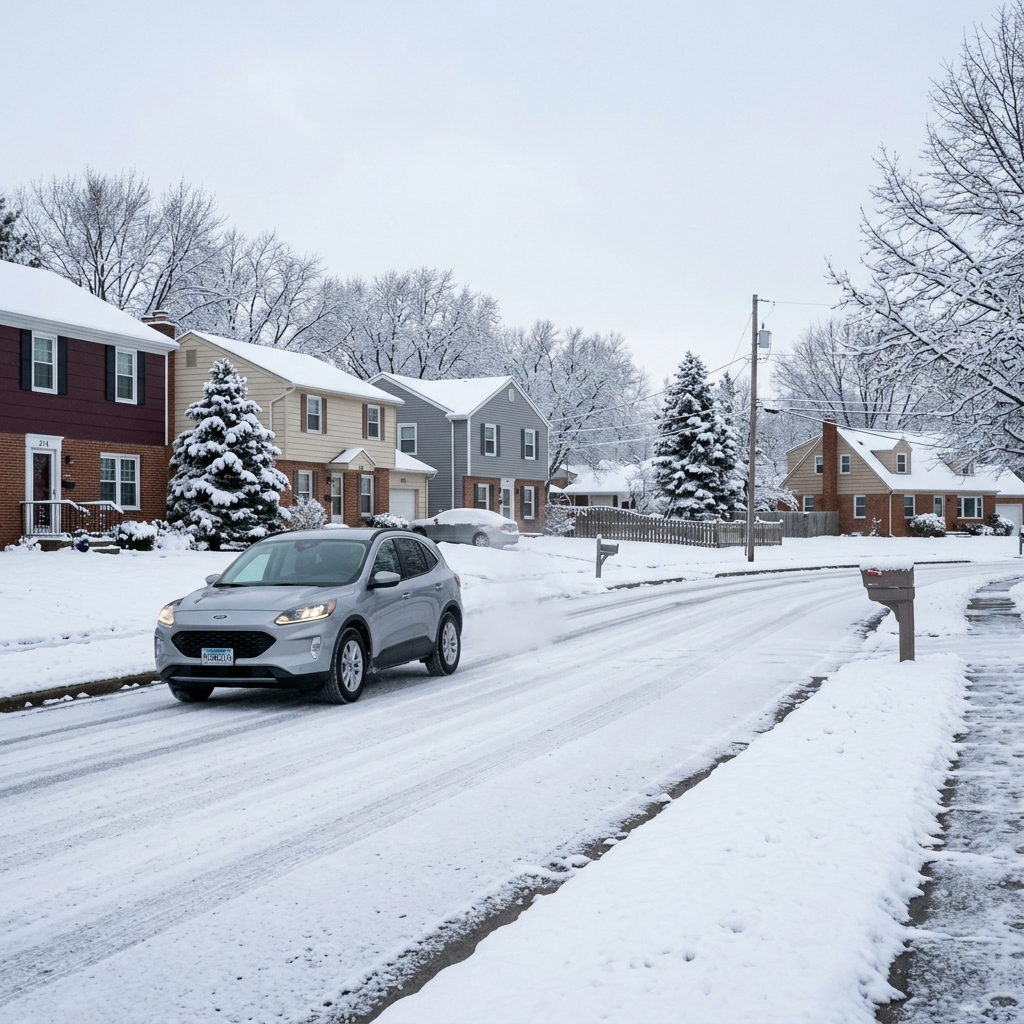
If you have ever found yourself standing on your driveway on a sub-zero winter morning in Carol Stream, watching steam billow from your tailpipe while waiting for the heater to blow hot air, you are not alone. For decades, drivers were taught that idling a car for 10, 15, or even 20 minutes before pulling onto the road was essential to protect the engine from severe friction damage. However, automotive technology has undergone a massive evolution over the last thirty years. If you are driving a modern vehicle equipped with electronic fuel injection and synthetic engine oil, the golden rule for cold starts is surprisingly simple: you only need to wait 30 seconds before driving off gently.
Those initial 30 seconds serve a crucial mechanical function: they provide sufficient time for the oil pump to draw cold, viscous engine oil out of the oil pan and pressurize the entire lubrication system. Within half a minute, vital components—including main crankshaft bearings, camshaft journals, hydraulic valve lifters, and turbocharger oil feed lines—are completely coated with protective fluid. Once that pressure stabilizes, sitting parked idling does nothing to accelerate warm-up. In fact, driving your vehicle under light engine load is the single fastest, safest, and most efficient way to bring the engine block, transmission fluid, and cabin heater up to optimal operating temperature without risking unnecessary wear.
Why Modern Fuel-Injected Engines Only Need 30 Seconds to Warm Up
The Shift from Carburetors to Electronic Fuel Injection
The widespread urban myth that cars require ten minutes of idling stems directly from the era of carbureted engines. Carburetors relied on mechanical chokes and manifold vacuum to draw gasoline into cold combustion chambers. In freezing weather, liquid gasoline would condense against the cold metal cylinder walls rather than vaporizing, causing engines to choke, stall, or hesitate unless allowed to sit and thoroughly warm up. Modern vehicles manufactured in the past twenty-five years utilize Electronic Fuel Injection (EFI) controlled by sophisticated Engine Control Units (ECUs). When you start a cold engine, sensors measure ambient temperature, intake air density, and coolant levels within milliseconds, instantly adjusting the air-fuel mixture and timing to maintain flawless combustion without stalling.
Synthetic Oils and Smarter Friction Management
Engine lubrication technology has advanced dramatically alongside fuel delivery systems. Modern low-viscosity synthetic oils, such as 0W-20 and 5W-30, are specifically engineered to pour smoothly even in sub-zero Chicagoland winter temperatures. Traditional conventional oils thickened like syrup when cold, delaying fluid pressure. Because synthetic lubricants flow instantly upon key turn, internal engine friction is drastically reduced right from the start. Sitting at idle actually delays the engine from reaching full thermal efficiency because minimal energy is being generated. By driving moderately after a 30-second pause, the engine operates under light load, warming up three times faster while minimizing component exposure to cold friction.
The Mechanics of Cold Starts: What Happens Inside Your Engine in the First 30 Seconds
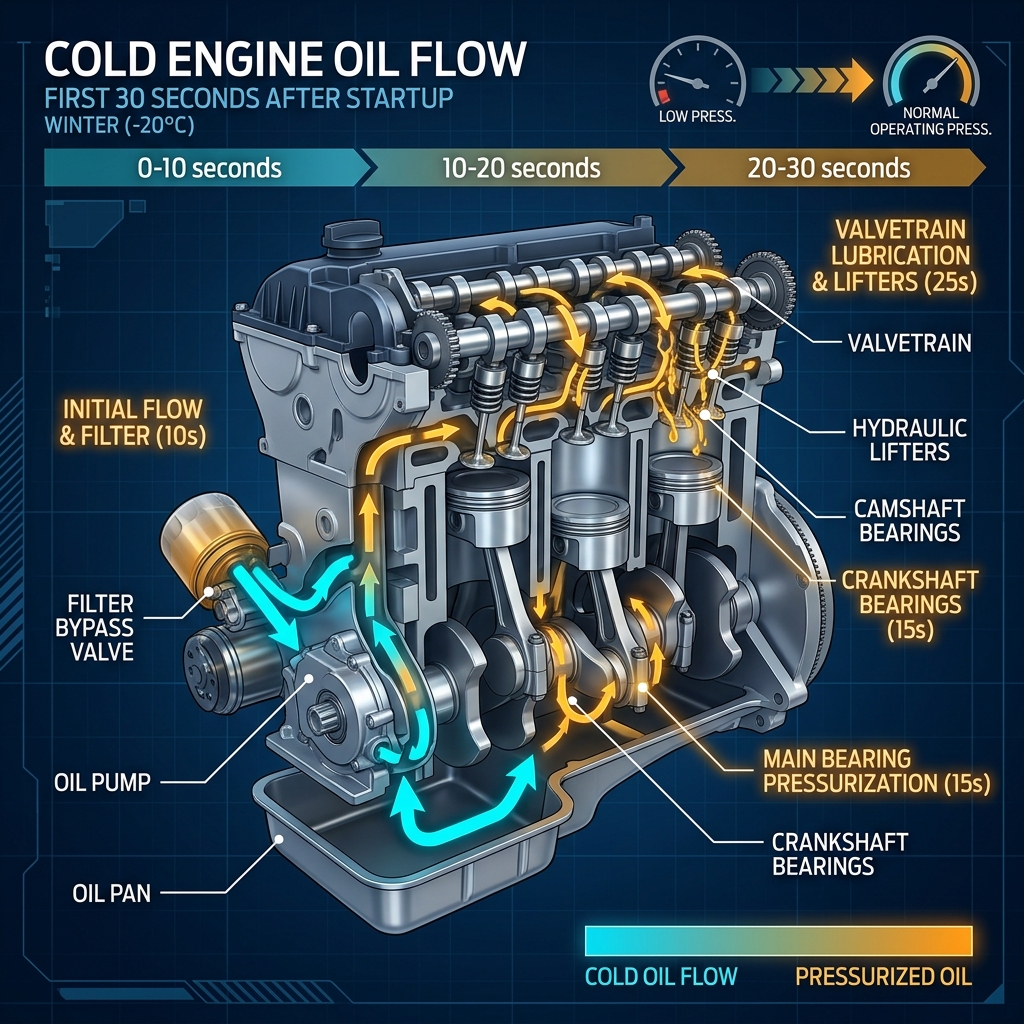
0 to 10 Seconds: Pressurization
When the starter motor turns the flywheel, the mechanical oil pump instantly pulls oil through the pickup tube in the pan. Within 3 to 5 seconds, oil travels through the oil filter, filling main galleries and establishing hydrodynamic oil films across high-load crankshaft and rod bearings.
10 to 20 Seconds: Valvetrain Flow
As oil pressure climbs above 30 PSI, fluid reaches the uppermost engine components: double overhead camshafts, hydraulic lash adjusters, and variable valve timing (VVT) actuators. Ticking sounds subside as hydraulic lifters pump full of fluid and cushion valve movement.
20 to 30 Seconds: Thermal Balance
Pistons begin expanding from combustion heat, matching cylinder bore clearances. Piston rings seat properly against honing marks, sealing combustion pressures and preventing blow-by gases. At 30 seconds, full boundary lubrication is active across all engine internals.
How Unburnt Fuel During Prolonged Cold Idling Damages Spark Plugs and Catalytic Converters
While idling your vehicle for 15 minutes on a cold morning might seem like a cozy luxury, it actively inflicts hidden mechanical damage on critical engine components. When an engine starts up cold, the ECU commands a rich air-fuel mixture—injecting extra gasoline into the cylinders to keep combustion stable until temperatures rise. If the car sits stationary at low RPMs for extended periods, this excess fuel cannot burn completely due to low chamber temperatures.
This unburnt fuel causes two primary issues:
1. Fuel Wash and Oil Dilution: Unburnt droplets wash away essential protective oil films from cylinder walls. Liquid gasoline trickles past piston rings into the crankcase, diluting your engine oil, lowering its viscosity, and reducing its ability to protect high-friction bearings. 2. Fouled Spark Plugs and Catalyst Degradation: Excessive carbon and unburnt hydrocarbons coat spark plug electrodes, leading to cold misfires and rough idling. Furthermore, unburnt gas passes downstream into the exhaust stream. When it reaches the catalytic converter, it burns on the delicate catalyst honeycomb, raising internal converter temperatures beyond design limits and leading to premature converter melt-down—a replacement job costing upwards of $1,500 to $2,500.
How Much Money Do Drivers Lose Annually from Excessive Winter Idling?
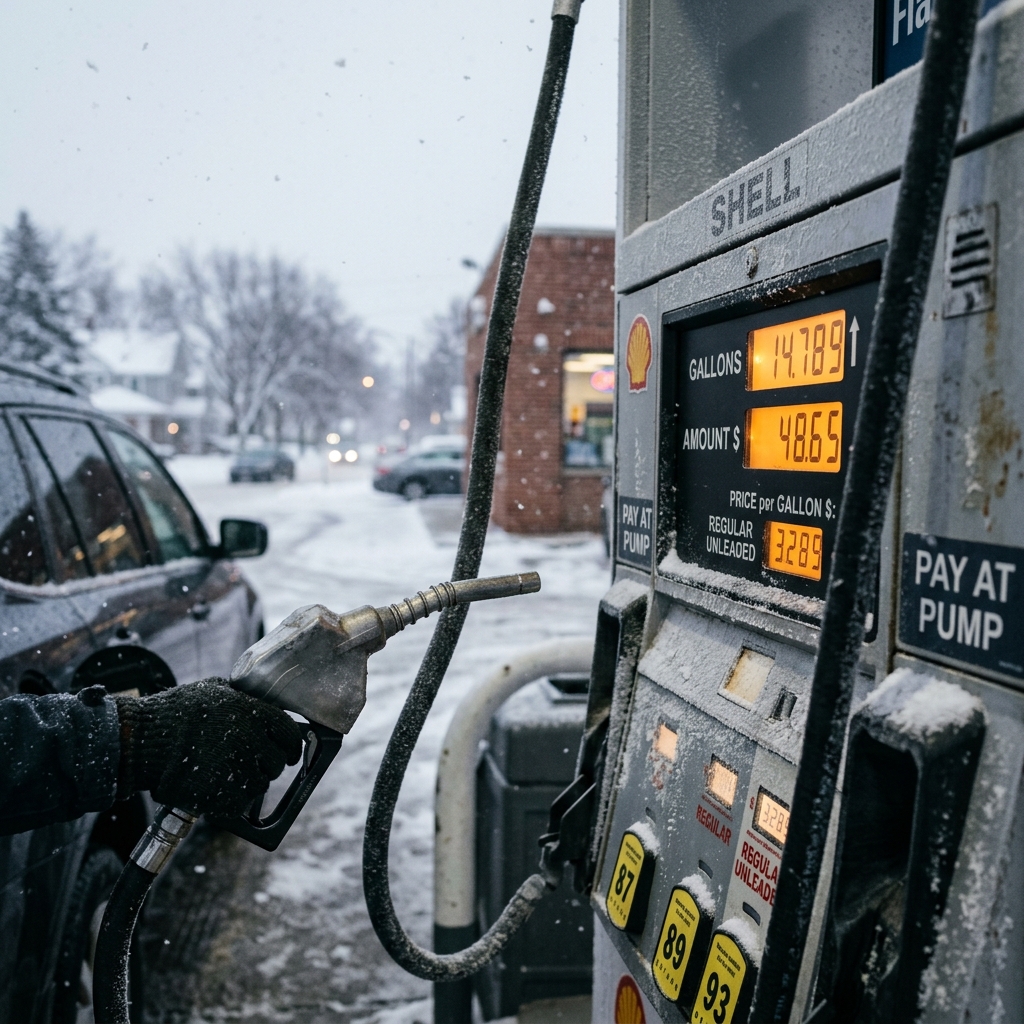
Beyond engine wear, warm-up idling burns a staggering hole in your wallet over the course of a single Chicagoland winter. On average, a typical V6 or 8-cylinder engine consumes between 0.3 and 0.5 gallons of fuel per hour of idling. If you warm up your vehicle for 15 minutes twice a day (before your morning commute and before driving home from work), you burn approximately 0.15 to 0 gallons of gas daily without traveling a single yard. Over a standard 120-day winter season in DuPage County, that equals roughly 30 to 45 gallons of burned fuel per vehicle. At average northern Illinois winter fuel prices, you are burning over $120 to $180 purely on stationary idling.
When you factor in accelerated oil degradation from fuel dilution (requiring more frequent synthetic oil changes) along with shortened spark plug lifespan, excessive idling costs the average commuter anywhere from $250 to $400 annually in avoidable fuel and maintenance costs.
Should You Warm Up a Modern Car Before Driving in Suburban Chicago Winters?
Sub-Zero Temperatures
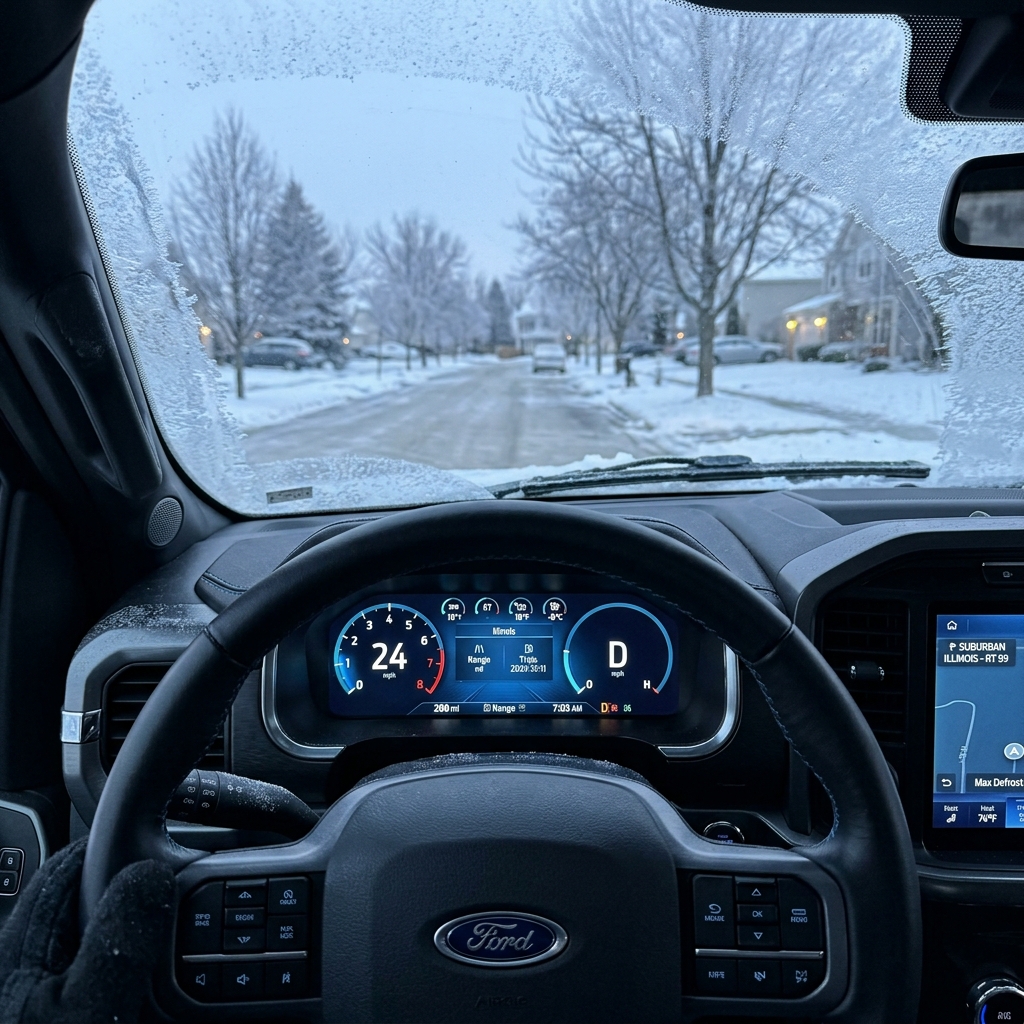
Drivers in Carol Stream, Glendale Heights, and Bloomingdale frequently endure polar vortex sweeps with temperatures dropping below 0°F. Even during sub-zero conditions, idling beyond 60 seconds is completely unnecessary for modern engines. The key is gentle driving immediately following a short start-up pause.
Drivetrain Component Warm-Up
Idling in park ONLY warms the engine block. Your transmission gears, front/rear differentials, wheel bearings, power steering, and suspension dampers remain completely freezing until the car starts moving. Gentle driving warms up the ENTIRE vehicle in harmony.
Faster Cabin Heating
If your main goal is getting warm air from your heater vents, idling is counterproductive. An engine under load generates thermal energy rapidly, sending hot coolant to your heater core in half the time compared to sitting at a cold idle on your driveway.
Remote Starter vs Engine Block Heater: Which Is Better for Cold Weather?
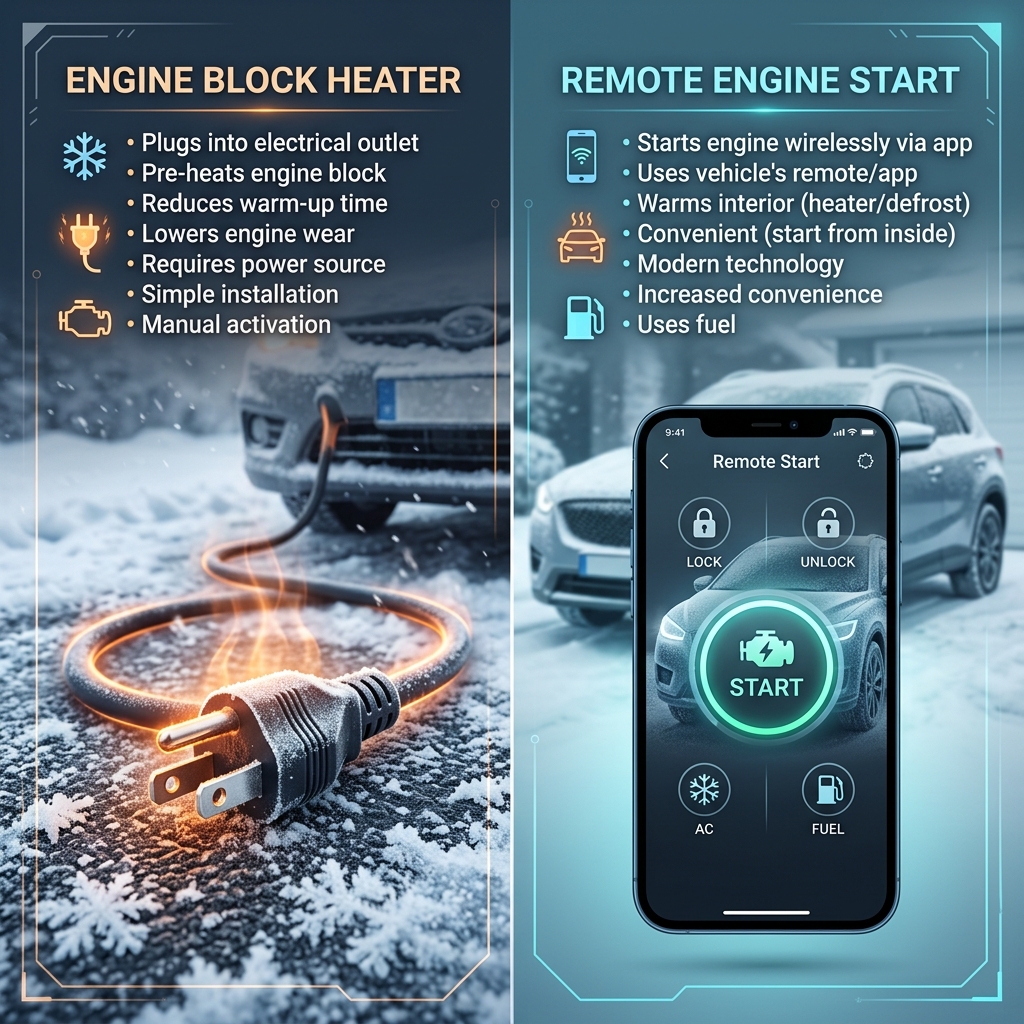
When preparing for severe Midwest winter weather, local car owners often weigh the benefits of remote engine starters against engine block heaters. While both accessories offer distinct convenience and mechanical advantages, understanding their differences will help you choose the ideal equipment for your vehicle.
Remote Starters: Designed primarily for driver comfort, remote starters allow you to start your engine and activate defrosters from inside your home. Modern Ford vehicles equipped with FordPass® Connect let you schedule remote starts directly from your smartphone. To balance cabin comfort with engine health, set your remote start timer to run for no more than 5 to 10 minutes—just long enough to clear windshield frost without inducing excessive idling. Engine Block Heaters: The ultimate mechanical protection tool for cold weather. An engine block heater plugs into standard 120V household power and warms the engine coolant directly inside the block overnight. By keeping fluid temperatures around 100°F before you turn the key, oil flows immediately, fuel injection operates in warm mode instantly, and cabin heat is available the second you turn on the fan.
How Do Engine Block Heaters Work and Do They Eliminate Warming Up?
Direct Coolant Heating Elements
Engine block heaters feature a specialized heating element installed directly into the engine cylinder block jacket, submerged in coolant. When connected to a wall outlet via an extension cord, the element uses resistive thermal energy to heat the coolant continuously or via a scheduled outdoor timer. Convection causes the warm coolant to circulate naturally through the engine block, radiating heat into the cylinder walls, oil passages, and cylinder head. This prevents the metal components from contracting in deep freezes.
Zero Warm-Up Time Required
Because an engine equipped with a block heater is already pre-warmed to near summer operating conditions, start-up friction is virtually eliminated. The ECU delivers normal summer air-fuel ratios immediately, preventing fuel wash and unburnt hydrocarbon emissions. Drivers using a block heater can literally start their engine, fasten their seatbelt, and pull away safely within 5 to 10 seconds without any initial warm-up idle delay, making it the single best investment for severe winter protection.
Safe Winter Driving Rules for the First 5 Minutes of Your Commute
1. Keep RPMs Below 3,000
For the first 3 to 5 miles of your trip, accelerate gently and avoid wide-open throttle. Keep engine speeds under 3,000 RPM while the temperature gauge gradually moves up to mid-range.
2. Avoid Heavy Towing or Loads
Do not hook up heavy trailers or load maximum payload capacity into truck beds until transmission and differential fluids have reached full thermal operating equilibrium during light driving.
3. Allow Drivetrain Fluid Flow
Automated transmissions and transfer cases contain multi-plate clutches and hydraulic valves that require warm fluid for optimal shifting. Smooth acceleration ensures seamless gear changes without slippage.
Signs Your Engine or Battery Is Struggling with Cold Weather Starts
Freezing winter temperatures act as an immediate stress test for your vehicle’s electrical and mechanical systems. Cold battery chemistry reduces available Cranking Amps (CCA) by up to 50% when temperatures plummet below 0°F. If you notice any of the following warning signs during morning starts in DuPage County, your vehicle needs professional attention:
• Sluggish or Slow Crank: The starter motor turns over slowly or makes a dragging ‘rur-rur-rur’ sound before ignition. • Loud Valvetrain Ticking: Persistent metallic ticking noises lasting longer than 30 seconds after start-up, indicating low oil pressure or clogged passages.
•
Rough Engine Idling or Sputtering: The vehicle shakes or stumbles during the first minute of driving, indicating fouled spark plugs or cold air intake leaks. •
Flashing Check Engine Light: Indicates active misfires that can destroy your catalytic converter if left unaddressed. •
Dimmed Interior Headlights: Electrical voltage drops significantly when starting, signaling an aging 12V lead-acid battery approaching end of life. Don’t get stranded in a cold parking lot.
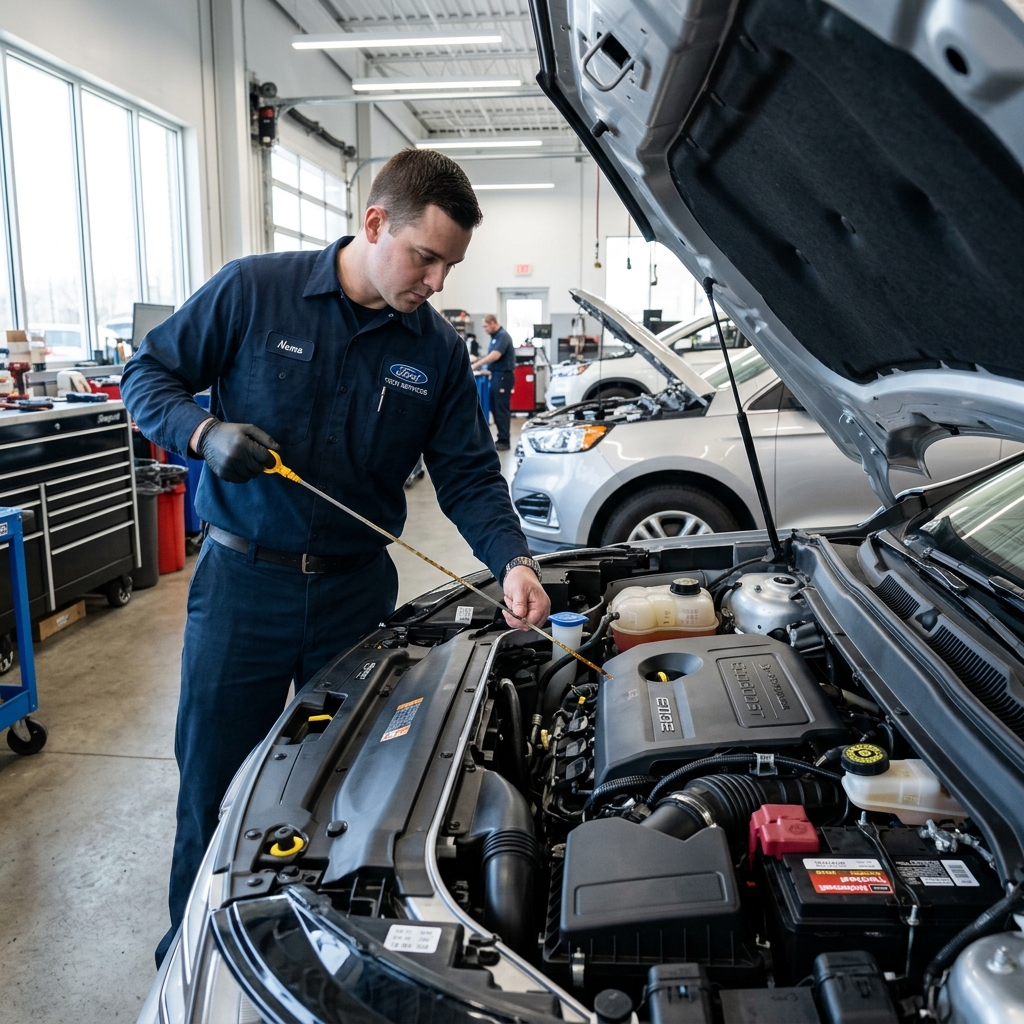
Schedule Service Now with our factory-certified technicians.
Choosing the Right Engine Oil Viscosity and Winter Maintenance Checklist
1. Winter Oil Viscosity
Check your owner’s manual for recommended winter oil ratings. Viscosity grades like 0W-20 or 5W-20 are optimized for cold flow (the ‘W’ stands for Winter). Full synthetic oils offer maximum flow speed during freezing starts.
2. Coolant Blend Ratio
Ensure your engine radiator is filled with a proper 50/50 or 60/40 mix of antifreeze and distilled water. Proper coolant concentration prevents fluid freezing, radiator cracking, and internal block damage down to -34°F.
3. Battery & Tire Pressure
Have your battery load-tested before winter arrives. Remember that tire pressure drops roughly 1 PSI for every 10°F drop in ambient temperature. Keep tires inflated to manufacturer specs for optimal traction.
Frequently Asked Questions About Engine Warm-Up and Cold Weather Driving
Do turbocharged engines require additional warm-up time?
Turbocharged engines (such as Ford EcoBoost® powerplants) operate at extremely high shaft speeds (over 100,000 RPM). While you still only need to wait 30 seconds before driving off, it is critical to drive gently and avoid heavy boost until the oil reaches full operating temperature.
How do hybrid and electric vehicles handle cold starts?
Hybrid vehicles automatically manage gas engine starts using electric motors, cycling the engine only when needed for traction or climate control. Electric vehicles (EVs) have no engine oil to warm up, but pre-conditioning while plugged in maximizes battery range in cold weather.
What is the best windshield defroster setting on cold mornings?
Set your climate control to maximum defrost, turn temperature to hot, activate the A/C compressor (which acts as a dehumidifier to strip interior moisture), and turn OFF air recirculation to pull in dry outside air.
Do diesel engines follow the same 30-second rule?
Diesel engines (like Ford Power Stroke® diesels) require waiting for glow plugs or intake grid heaters to turn off before cranking. Once started, waiting 1 to 2 minutes allows oil pressure to equalize before moving heavy loads.
Prepare Your Vehicle for Winter at Hawk Ford of Carol Stream
Whether you are looking to install a factory engine block heater, inspect your battery voltage, or upgrade to a winter-ready Intelligent AWD SUV or 4×4 F-150 truck, Hawk Ford of Carol Stream is your trusted automotive authority across DuPage County. Our factory-trained service technicians are here to ensure your vehicle starts effortlessly and runs smoothly all winter long.




0 comment(s) so far on How Long to Warm Up a Cold Engine – Hawk Ford of Carol Stream