How Ford Remote Start Works to Warm Your Vehicle on Freeze Warning Mornings
When sub-zero Chicagoland winter storms roll across DuPage County, stepping into a ice-cold vehicle is one of the most punishing experiences a driver can face. Fortunately, modern Ford engineering equips drivers with advanced Ford Remote Start technologies designed to transform freezing cabins into warm, defrosted sanctuaries long before you put your coat on. Ford Remote Start operates seamlessly through two primary channels: a dedicated radio frequency (RF) key fob signal capable of transmitting across 300 to 500 feet, or globally through the FordPass® Connect cellular modem embedded directly inside your vehicle’s telematics control unit. When triggered, the command passes through the vehicle’s Body Control Module (BCM), initializing the engine starter relay and establishing a secure ignition sequence while keeping all exterior doors locked.
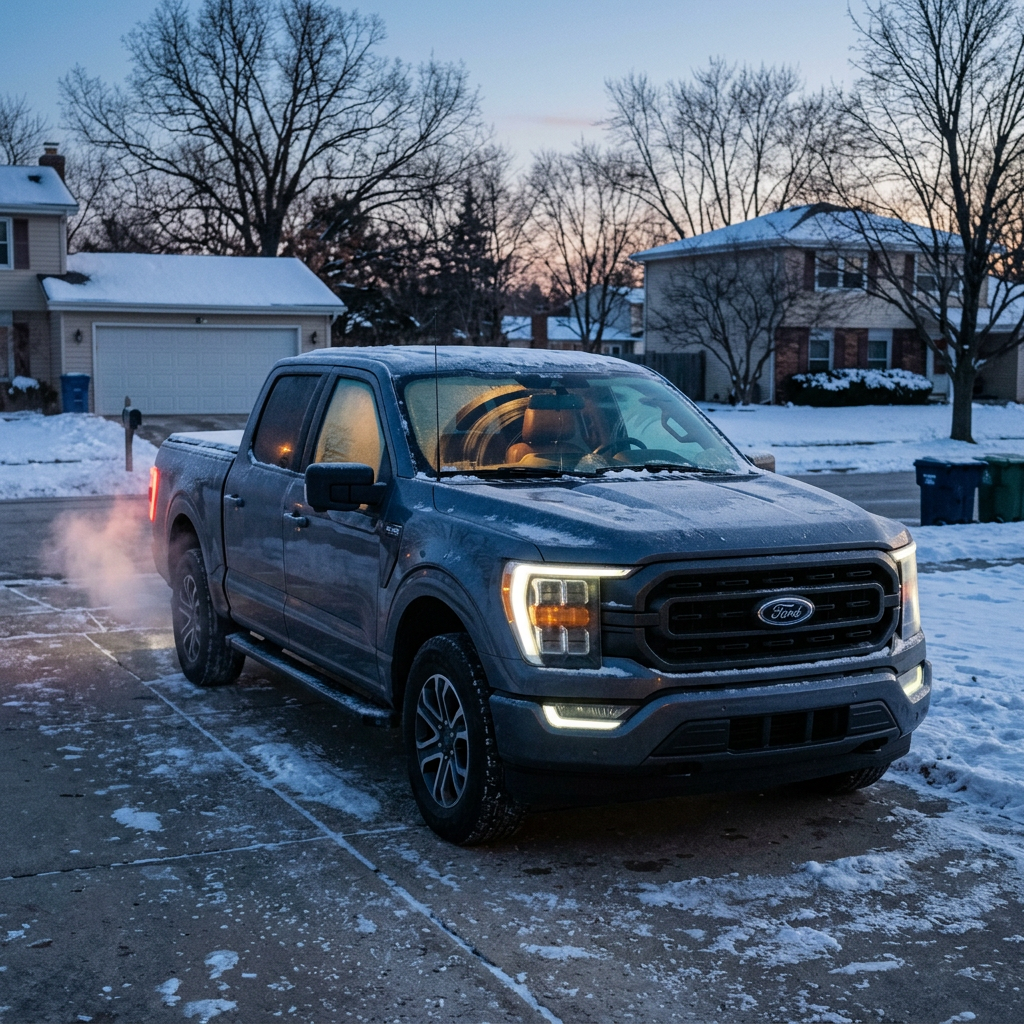
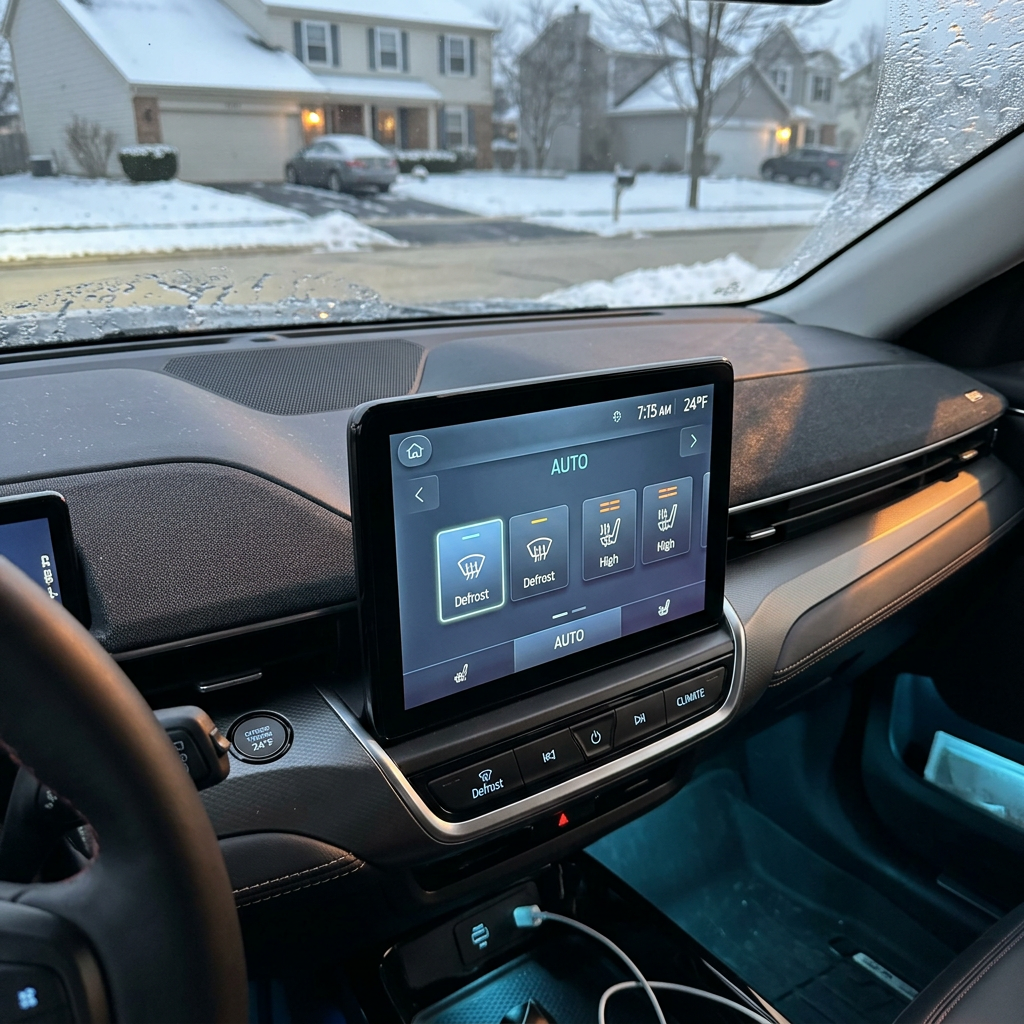
Once the engine fires, intelligent ambient temperature sensors throughout the vehicle communicate with the SYNC® climate architecture. If external temperatures register below freezing, the system automatically activates high-output windshield defrosting, side mirror thermal grids, rear glass defrosters, heated seating elements, and the heated steering wheel. Crucially, this high-tech convenience does not sacrifice vehicle security: steering locks and shift interlocks remain engaged until an authenticated key fob is detected inside the cabin. Explore our
New Vehicle Inventory to see how the latest Ford models seamlessly integrate cold-weather comfort features.
| Activation Method |
Signal Technology |
Effective Range |
Automatic Features Triggered |
| Key Fob Remote Start |
900 MHz Ultra-High Frequency RF |
300 to 500 Feet |
Engine Ignition, Cabin Heat, Rear Defrost, Heated Seats |
| FordPass® Connect App |
LTE Cellular / Cloud Handshake |
Unlimited (Global Network) |
Scheduled Start, Cabin Climate, Steering Wheel Heat, Battery Check |
Key Fob vs. FordPass App: How to Activate Remote Start on Your Ford Vehicle
Key Fob Sequence & Physical Range
Using your Intelligent Access Key Fob is the standard method for immediate vehicle pre-conditioning from inside your home in Carol Stream or Glendale Heights. To initiate start, press the Lock button once to ensure all doors are secured, followed immediately by pressing the Remote Start button (2X) twice within two seconds.
Modern Ford key fobs feature an integrated LED feedback light: a single green flash confirms the engine started successfully, while a double red flash indicates the command timed out or was blocked by safety parameters (such as an open hood or low battery voltage). Range is optimal within line-of-sight conditions up to 500 feet.
FordPass® Smartphone Activation & Scheduling
For total convenience, the FordPass® Connect smartphone app uses cloud infrastructure to send remote start signals directly to your vehicle’s onboard cellular modem. This allows you to start your vehicle from anywhere—whether you’re wrapping up work in Bloomingdale or stepping off a flight at O’Hare. Beyond instant start, FordPass enables customized scheduled starts. You can program your F-150, Explorer, or Escape to start every weekday morning at 7:00 AM automatically. The app verifies connection strength and will automatically cancel idling after 15 minutes to preserve fuel if you haven’t entered the vehicle.
What Happens Inside Your Cabin and Engine When Remote Start Is Triggered?
When Remote Start ignites your Ford engine, it does far more than turn over the crankshaft. Modern Ford SYNC® systems feature an advanced logic engine programmed specifically for thermal regulation. Inside your vehicle’s settings menu, drivers can choose between two primary climate behaviors: Automatic Mode or Last Settings. In Automatic Mode, the vehicle uses exterior temperature sensors to determine the optimal warming path. On sub-freezing Chicagoland mornings, the system automatically routes full blower fan speed directly to the windshield and front side glass to melt heavy frost and ice buildup. Simultaneously, side mirror heating elements and rear window defroster grids energize. If your vehicle is equipped with heated seats and a heated steering wheel, SYNC turns these micro-heaters on high intensity.
Security is paramount during this warmup phase. The shift lever remains locked in Park, the steering wheel remains locked, and the brake pedal functions as a kill switch. If anyone attempts to depress the brake pedal or put the vehicle into drive without pressing the physical Push-Button Start while an authorized key is inside, the engine instantly shuts down.
Should You Warm Up a Modern Ford Engine on Cold Winter Mornings Before Driving?
For decades, drivers believed that cars required 10 to 15 minutes of idle time on cold mornings before hitting the road. While this was necessary for older carbureted engines, modern Ford powertrains operate under entirely different mechanical rules.
1. Direct Fuel Injection
Modern Ford EcoBoost® and Coyote V8 engines use high-pressure direct fuel injection controlled by sophisticated Engine Control Modules (ECM). The ECM precise metering adjusts air-fuel ratios continuously based on temperature, eliminating the risk of engine stalling without needing extended warmups.
2. Rapid Oil Circulation
With full synthetic Motorcraft® engine oil, full fluid pressure reaches critical top-end components—including double overhead camshafts and turbocharger bearings—within just 30 to 60 seconds after ignition, even during sub-zero Chicagoland weather.
3. Efficient Operating Temp
Driving gently under light load generates thermal heat far faster than idling in place. Gentle driving brings the engine coolant, catalytic converters, and 10-speed transmission fluid up to optimal operating temperature up to 300% faster.
Does a Modern Ford Gasoline Engine Need a Long Idle Before Driving on a Cold Chicagoland Morning?
The short answer is
no. Prolonged idling (exceeding 10 to 15 minutes) can actually do more harm than good to your vehicle’s powertrain. When an engine idles in extreme cold, it runs richer to maintain stability. Unburnt fuel can wash down cylinder walls, slightly diluting the protective oil film and contributing to premature wear on internal bearings. Furthermore, prolonged idling causes incomplete combustion, leading to accelerated carbon accumulation on direct-injection intake valves. Additionally, standing idle warms only the engine coolant while leaving your transmission fluid, front and rear differentials, and wheel bearings ice-cold. Driving off gently after 30 to 60 seconds ensures that all dynamic driveline components warm up in sync. Our master technicians at Hawk Ford recommend using Remote Start primarily for 5 to 10 minutes—just long enough to clear ice from your windshield and take the chill out of the cabin air. Keep your engine running at peak efficiency by booking routine oil inspections with our certified technicians. If you are experiencing slow cranking or heater delays,
Schedule Service Now with our dedicated service lane.
Does 0W-20 Oil Provide Better Cold-Start Engine Protection Than 5W-30 in Sub-Zero Weather?
Engine oil viscosity ratings dictate how swiftly lubricant circulates during extreme cold-start events. Understanding the cold-flow properties of 0W vs. 5W synthetic oils is crucial for vehicles exposed to severe Illinois polar vortex conditions.
0W Viscosity Rating
The ‘0W’ designation indicates superior low-temperature fluidity tested at -35°C (-31°F). 0W synthetic oils pour effortlessly during arctic cold snaps, reducing starter motor drag by up to 25% and ensuring rapid lubrication to valvetrains upon startup.
5W Viscosity Rating
5W synthetic blends are tested at -30°C (-22°F). While exceptional for standard winter conditions, 5W oil exhibits slightly higher cold shear resistance than 0W in extreme sub-zero weather, resulting in fractionally longer flow delay to overhead cams.
OEM Factory Specifications
Always adhere strictly to the weight specified on your Ford engine oil cap. While 0W-20 offers unmatched cold flow, EcoBoost turbochargers engineered for 5W-30 require the higher kinematic viscosity protection at high operating temperatures.
| Oil Grade Specification |
Cold Pumping Limit Temp |
Cold Start Wear Protection |
Recommended Ford Applications |
| Motorcraft® Full Synthetic 0W-20 |
-35°C (-31°F) |
Maximum Rapid Flow |
Hybrid Powertrains, 2.5L I-4, Select Naturally Aspirated |
| Motorcraft® Full Synthetic 5W-30 |
-30°C (-22°F) |
High Shear Protection |
2.7L, 3.5L EcoBoost® V6, 2.0L EcoBoost® I-4 |
| Motorcraft® Full Synthetic 5W-20 |
-30°C (-22°F) |
Standard OEM Cold Protection |
5.0L Coyote V8, 3.3L Duratec V6 |
At What Cold Temperature Should You Plug In a Ford Engine Block Heater?
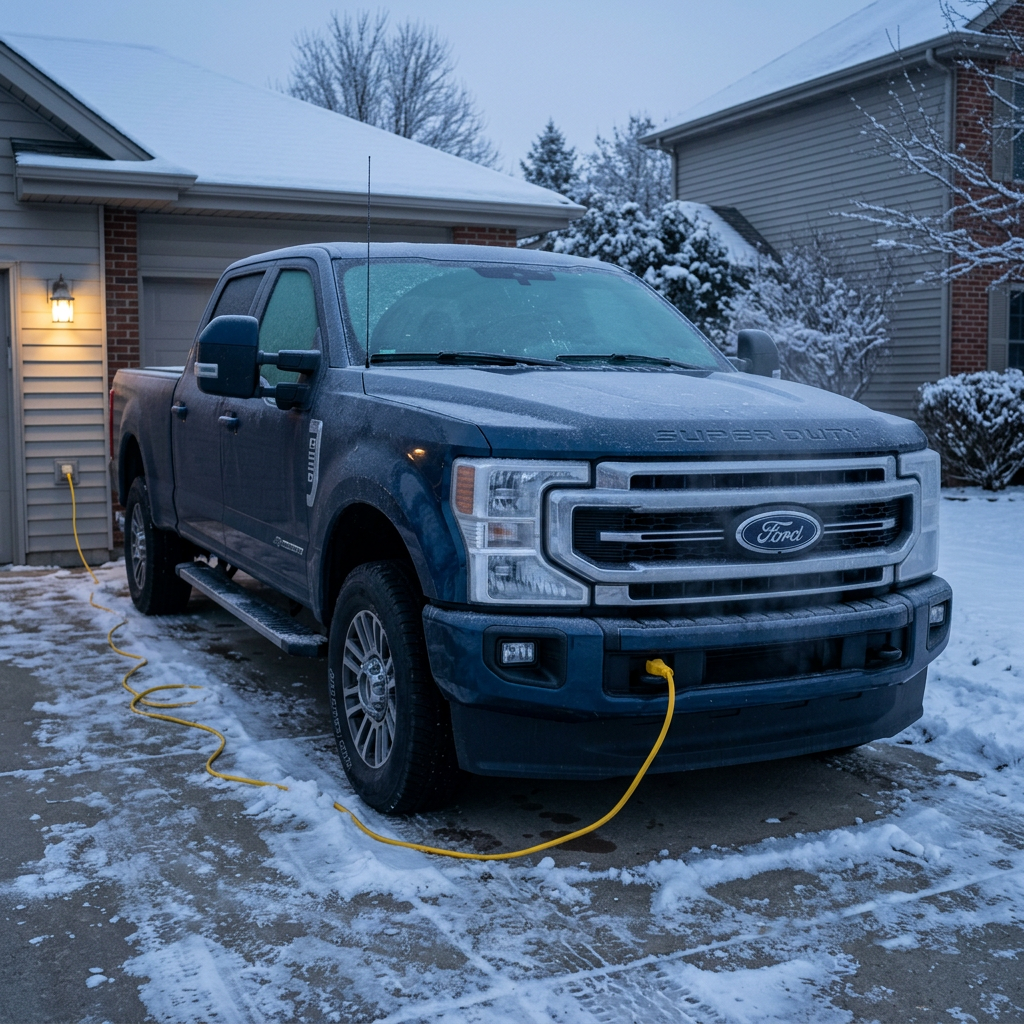
For truck owners driving Ford F-150s, Super Duty diesels, or Commercial Transit vans in northern Illinois, engine block heaters are vital winter tools. An engine block heater directly warms the engine block coolant jacket, maintaining fluid temperatures significantly higher than ambient air.
When to Plug In: OEM Ford engineering guidelines recommend plugging in your engine block heater when ambient temperatures drop to 0°F (-18°C) or lower, or when extreme wind chills create deep freeze conditions. For PowerStroke® diesel engines, plugging in at 10°F guarantees immediate glow plug ignition and prevents fuel gelling issues. Efficiency & Timer Tips: Leaving a block heater plugged in all night wastes unnecessary electricity. A heating element reaches maximum thermal equilibrium within 2 to 3 hours. We recommend connecting your outdoor heavy-duty extension cord to a heavy-duty outdoor timer set to energize 3 hours before your scheduled morning commute.
Should You Inflate Ford Tires Slightly Above Recommended PSI Before a Winter Deep Freeze?
One of the most frequent service calls we handle during sudden autumn and winter temperature drops is the illumination of the Low Tire Pressure Warning light (TPMS). Basic physics dictates that for every 10°F drop in ambient temperature, tire inflation pressure decreases by approximately 1 PSI.
If you set your tires to the recommended 35 PSI inside a warm 65°F garage, driving into a 5°F cold snap in Carol Stream will cause tire pressure to drop by 6 PSI down to 29 PSI, triggering an alert on your dashboard.
Should You Inflate 2-3 PSI Over Placard Rating? Yes, pre-emptively inflating tires 2 to 3 PSI above the driver’s door jamb placard rating before an incoming cold snap is a recognized winter practice. This safety cushion prevents under-inflation warnings during extreme cold snaps without compromising the tread contact patch or wet traction. However, never exceed the ‘Maximum Cold Inflation Pressure’ stamped directly on the tire sidewall. Visit our
Parts Center for OEM tire pressure gauges and winter maintenance supplies.
Troubleshooting Common Reasons Ford Remote Start Fails to Turn On
Pressing the key fob sequence or FordPass button only to have your vehicle remain silent is frustrating. Ford safety architecture incorporates automatic inhibitors to prevent engine start under compromised conditions.
Low 12V Battery Charge
If the Battery Monitoring System (BMS) detects a state of charge (SOC) below 60-70%, it disables non-essential electronic systems—including FordPass cellular modems and remote start ignition relays—to save cranking power.
Diagnostic Fault Codes
If an active Check Engine Light (MIL) is illuminated due to emission system faults, misfires, or sensor malfunctions, the Engine Control Module automatically blocks Remote Start activation as a protective protocol.
Safety Latches & Timers
Remote start aborts instantly if the hood latch sensor is faulty or open, low fuel drops below 50 miles estimated distance to empty, or if you have already completed 2 consecutive 15-minute remote start cycles without cycling the ignition key.
Protecting Your Ford 12-Volt Battery from Sub-Zero Voltage Drops
Sub-zero temperatures impose double strain on automotive 12-volt batteries. At 0°F, an AGM or flooded lead-acid battery loses up to 50% of its cranking amp capacity due to slowed chemical reactions within the electrolyte solution. Simultaneously, freezing engine oil thickens, requiring up to twice as much electrical energy from the starter motor to turn the engine over.
Modern Ford vehicles feature intelligent Battery Monitoring Systems (BMS) connected directly to the negative terminal post. When the BMS senses degraded battery capacity, it shuts down remote connectivity features (including FordPass start commands) to preserve whatever cranking energy remains. If your key fob response feels sluggish or your vehicle hesitates during engine turn-over, don’t wait to get stranded in the cold.
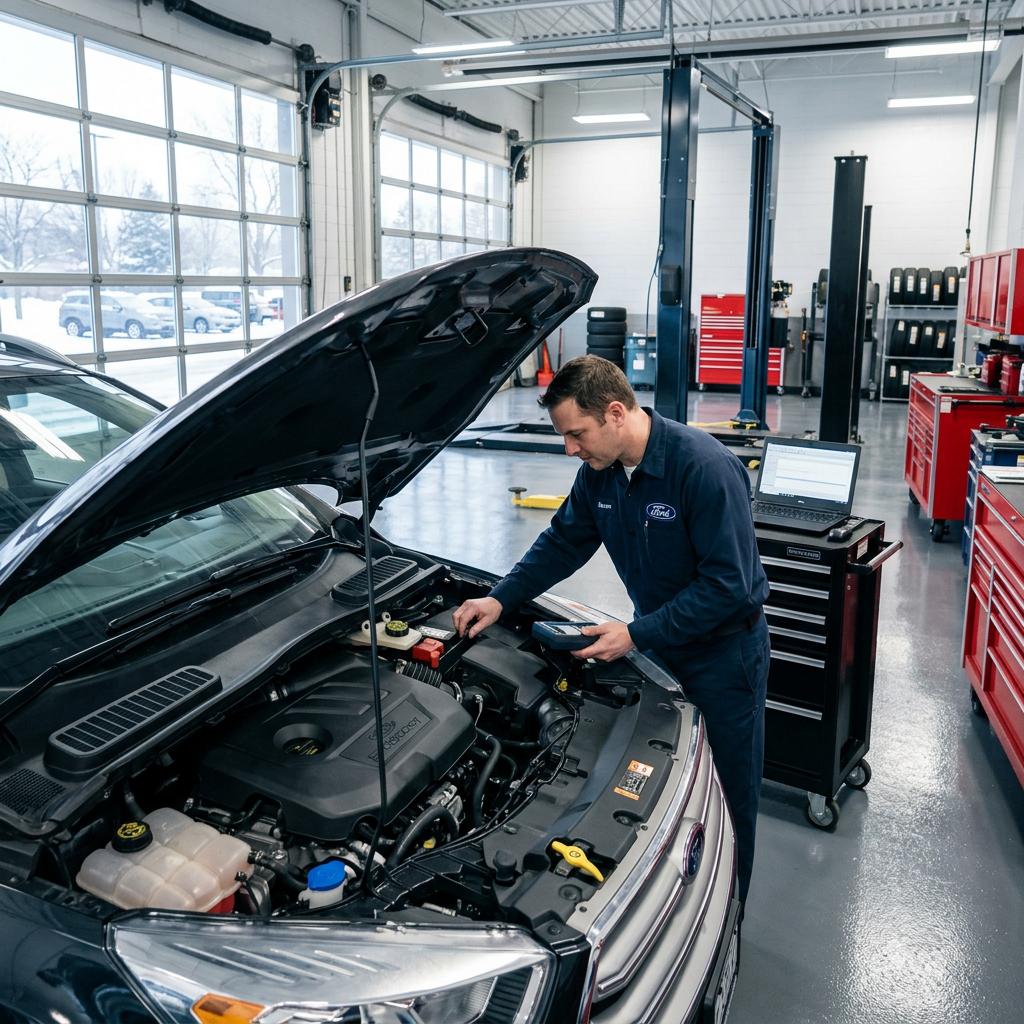
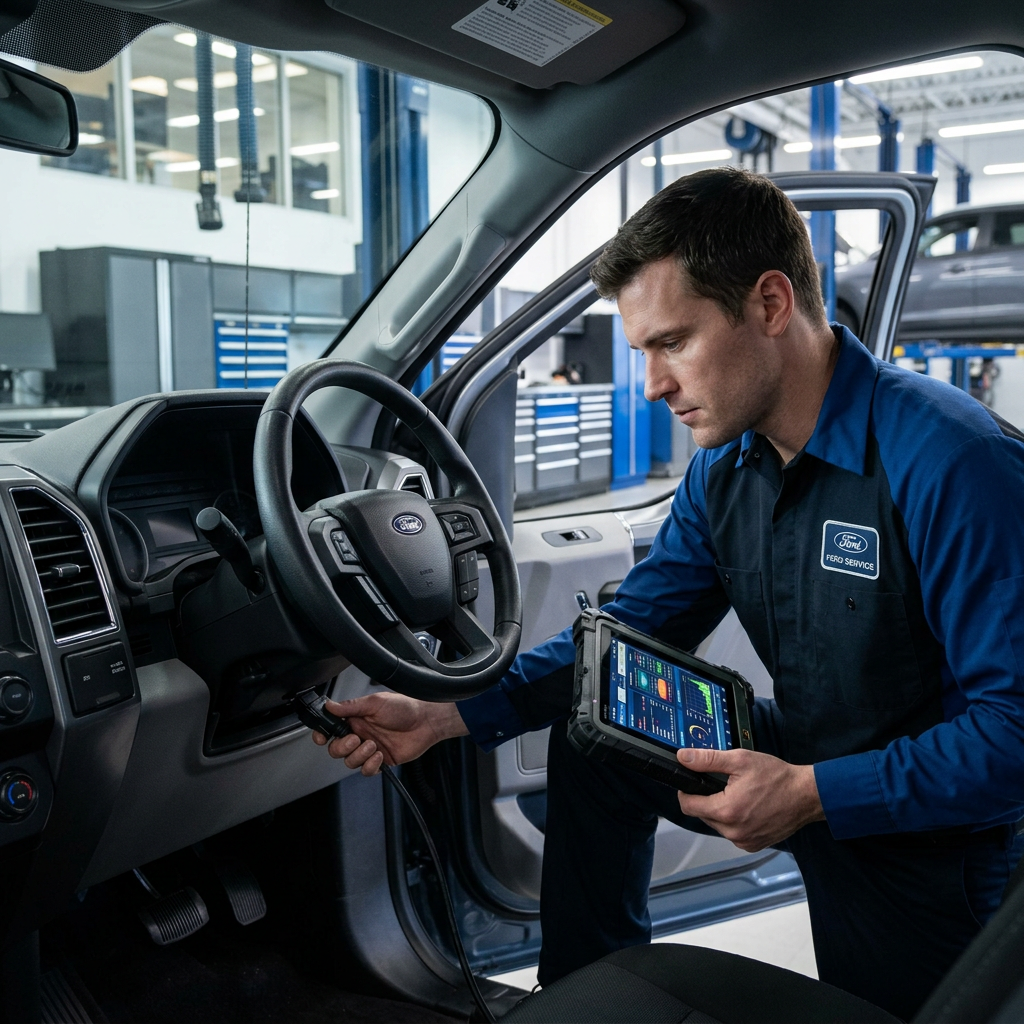
Preventative Battery Health Checks in Carol Stream: At Hawk Ford of Carol Stream, our service bay utilizes digital Conductance Battery Testers to measure cold cranking amps (CCA) and internal resistance. Replacing an aging battery before severe freeze warnings hit guarantees reliable Remote Start performance when you need it most. Need immediate battery testing or replacement?
Call us at (630) 233-9696 to speak with our service advisors today.
Essential Winter Preparation Checklist for Carol Stream, Glendale Heights, and Bloomingdale Drivers
Ensure total confidence on icy DuPage County roadways with this essential seasonal maintenance checklist tailored for Ford drivers.
Coolant & Fluid Inspection
Verify that engine coolant hydrometer testing confirms protection down to -30°F. Top off windshield washer reservoirs with winter-grade de-icing fluid rated for -20°F to prevent frozen washer lines.
Tires & Braking Systems
Inspect tire tread depth (minimum 4/32” recommended for winter slush). Calibrate tire pressures to withstand arctic cold spells and inspect brake pads/rotors for responsive stopping on slick pavement.
Remote Start & Battery Care
Replace key fob CR2032 batteries annually to maintain strong signal range. Perform digital load testing on your 12V battery and verify FordPass Connect modem pairing in vehicle settings.
Schedule Your Winter Service Inspection or FordPass Setup at Hawk Ford of Carol Stream
Don’t wait for the first severe freeze warning of the season to find out your battery is failing or your remote start needs reconfiguration. At Hawk Ford of Carol Stream, our team of factory-certified technicians is dedicated to keeping your vehicle safe, reliable, and warm throughout Illinois winters.
Whether you need a full multi-point winter inspection, OEM Motorcraft® battery replacement, wiper blade installation, or assistance pairing your smartphone with FordPass® Connect, our state-of-the-art service facility is here to serve Carol Stream, Glendale Heights, and Bloomingdale drivers.
Looking to upgrade your winter drive? Explore our Used Vehicle Inventory, evaluate your current vehicle with Value Your Trade, or pre-qualify online via Apply for Credit. Get Directions to Hawk Ford of Carol Stream located conveniently at 175 North Ave, Carol Stream, IL 60188.



0 comment(s) so far on How Ford Remote Start Works in Winter | Hawk Ford of Carol Stream