How Cold Weather Affects Your Ford Battery During a Sub-Zero Freeze
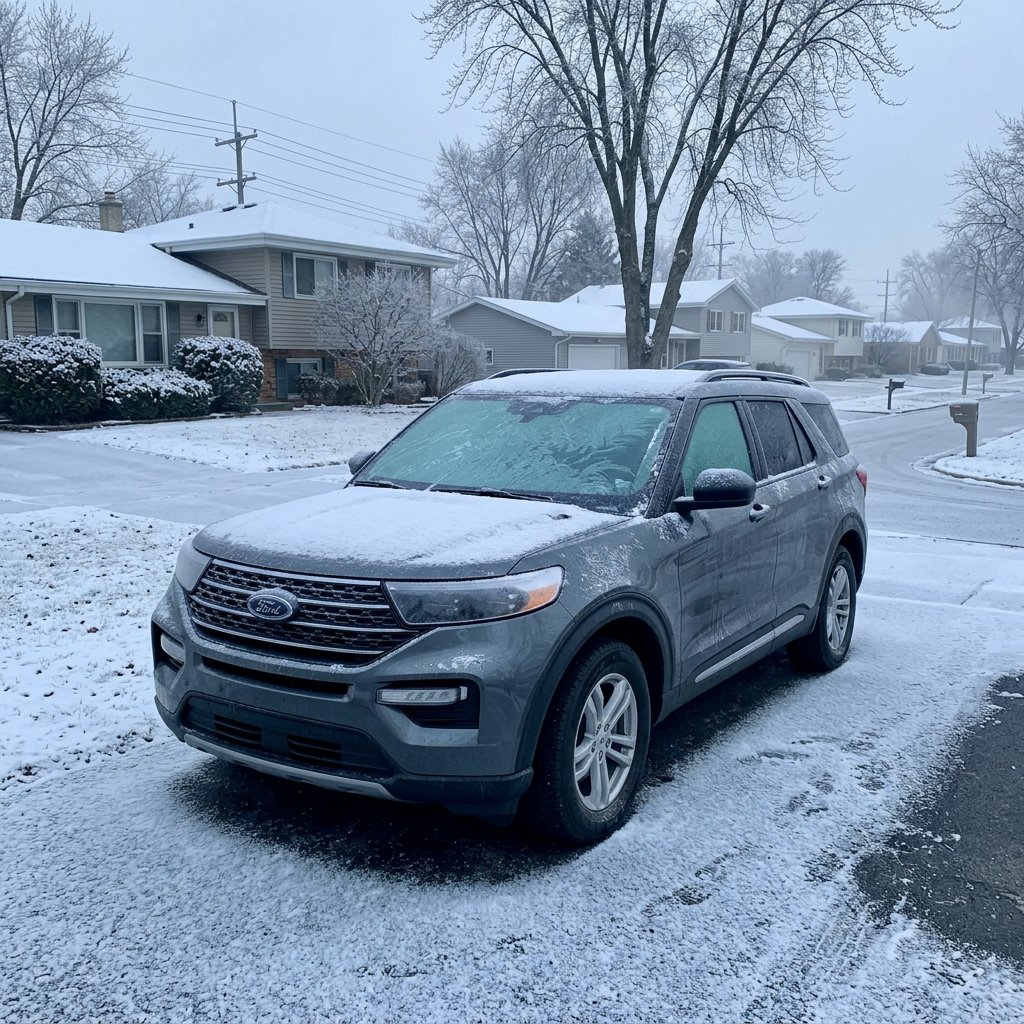
When sub-zero arctic blasts sweep across DuPage County, winter places extraordinary stress on your Ford car, truck, or SUV. If you have ever turned your ignition key or pressed the start button on a crisp -5°F morning in Carol Stream only to hear a sluggish, groaning engine crank—or worse, a rapid clicking sound—you have experienced firsthand how extreme cold paralyzes an automotive electrical system.
The science behind cold-weather battery failure is brutal but straightforward: ambient freezing temperatures drastically slow down internal chemical reactions within standard lead-acid and Advanced Glass Mat (AGM) Motorcraft batteries. At 32°F (freezing point), a typical automotive battery loses roughly 20% to 30% of its total available cranking power. When temperatures plummet to 0°F or lower, that loss spikes to an astonishing 50%. Simultaneously, freezing temperatures thicken your engine oil into a dense, molasses-like fluid. This creates a double-whammy scenario: your starter motor requires significantly MORE electrical current to turn over a cold, resistant engine precisely when your battery can deliver only HALF of its rated energy.
For suburban commuters navigating Route 64, North Avenue, and Gary Avenue through Carol Stream, Wheaton, Bloomingdale, and Glendale Heights, understanding how cold weather compromises battery chemistry, engine coolant, engine oil viscosity, and tire inflation is essential for avoiding sudden winter strandings. At Hawk Ford of Carol Stream, our certified Ford service technicians specialize in pre-winter inspections, diagnostic load testing, and genuine OEM Motorcraft replacements engineered specifically to withstand brutal Midwestern winters. Explore this comprehensive guide to winterize your Ford vehicle before the first severe freeze hits DuPage County.
Why Freezing Temperatures Drain Ford Battery Capacity and Power Output
To understand why cold weather paralyzes your Ford vehicle’s electrical system, we must look inside the battery case. Whether your vehicle utilizes a conventional lead-acid battery or an Absorbed Glass Mat (AGM) Motorcraft unit, energy is produced through a chemical reaction between lead plates and a liquid or gel electrolyte fluid solution.
1. Reduced Electrolyte Fluid Ion Mobility: Heat accelerates chemical reactions, while extreme cold retards them. As ambient temperatures drop toward zero, the liquid electrolyte solution becomes sluggish, increasing internal electrical resistance. Electrons move much slower between positive and negative plates, dropping the instantaneous Cold Cranking Amps (CCA) available to crank your starter motor.
2. Increased Engine Resistance: At 0°F, engine oil hardens and becomes thick. The crankshaft, pistons, and valvetrain require double the mechanical energy to turn over compared to a warm summer day. While your battery power plunges by 50%, your starter motor load increases by 100% to 200%.
3. Increased Parasitic Electrical Load: Modern Ford vehicles feature advanced Sync 4 infotainment, heated steering wheels, heated seats, climate control blowers, defrosters, and security sensor networks. When you start your vehicle on a sub-zero morning, all these accessories pull immediate current. An aging battery that functioned fine during mild October autumn days will suddenly collapse under this intense initial draw when temperatures plunge in late November.
Recognizing Symptoms of a Weak Battery Before the First Sub-Zero Freeze
Automotive batteries rarely fail without warning. By identifying subtle early signs of degradation during early autumn in Bloomingdale, Glendale Heights, and Carol Stream, you can replace a compromised battery before getting stranded in a frozen parking lot.
Sluggish Engine Crank
If turning your Ford’s key or pushing Start produces a slow ‘r-r-r-r’ cranking sound rather than a crisp ignition response, your battery’s internal plate resistance is high and cold-cranking amperage is severely depleted.
Dimming Screen & Lights
Dimming cabin lights, flickering interior displays, or a Ford SYNC touch screen that reboots spontaneously during engine starting indicates voltage drops below critical operational thresholds.
System Alerts & Solenoid Click
‘Battery Saver System’ messages on your Ford digital instrument cluster or a rapid metallic clicking sound from the starter solenoid indicate that voltage is insufficient to engage the starter motor gear.
Preparing Your Ford for First Freeze in DuPage County: Battery, Antifreeze, and Tire Care
Winter vehicle maintenance requires a total system approach. While a healthy Motorcraft battery supplies the essential spark, your engine coolant prevents thermal block cracking, full synthetic motor oil ensures instant top-end lubrication, and proper tire tread depth maintains traction on icy Illinois arterial roads.
At Hawk Ford of Carol Stream, our Quick Lane and Master Certified technicians perform comprehensive multi-point inspections to ensure every vital component is ready for sub-zero temperatures. From testing terminal conductance to measuring glycol freezing thresholds, scheduling a pre-freeze checkup gives you complete peace of mind.
How Do You Test Engine Coolant Freeze Protection at Home?
Engine coolant (antifreeze) isn’t just responsible for keeping your Ford engine cool during hot summer trips down I-355; it is vital for preventing freeze damage to your engine block, cylinder head, and radiator during deep winter freezes. Pure water expands by roughly 9% when freezing. If your cooling system contains pure water or a diluted mixture, freezing ice can burst engine blocks, split aluminum radiators, and rupture heater cores.
Step-by-Step DIY Hydrometer Testing:
1.
Safety First: Ensure the engine is completely cold. Never open a radiator cap or expansion reservoir when the engine is warm.
2.
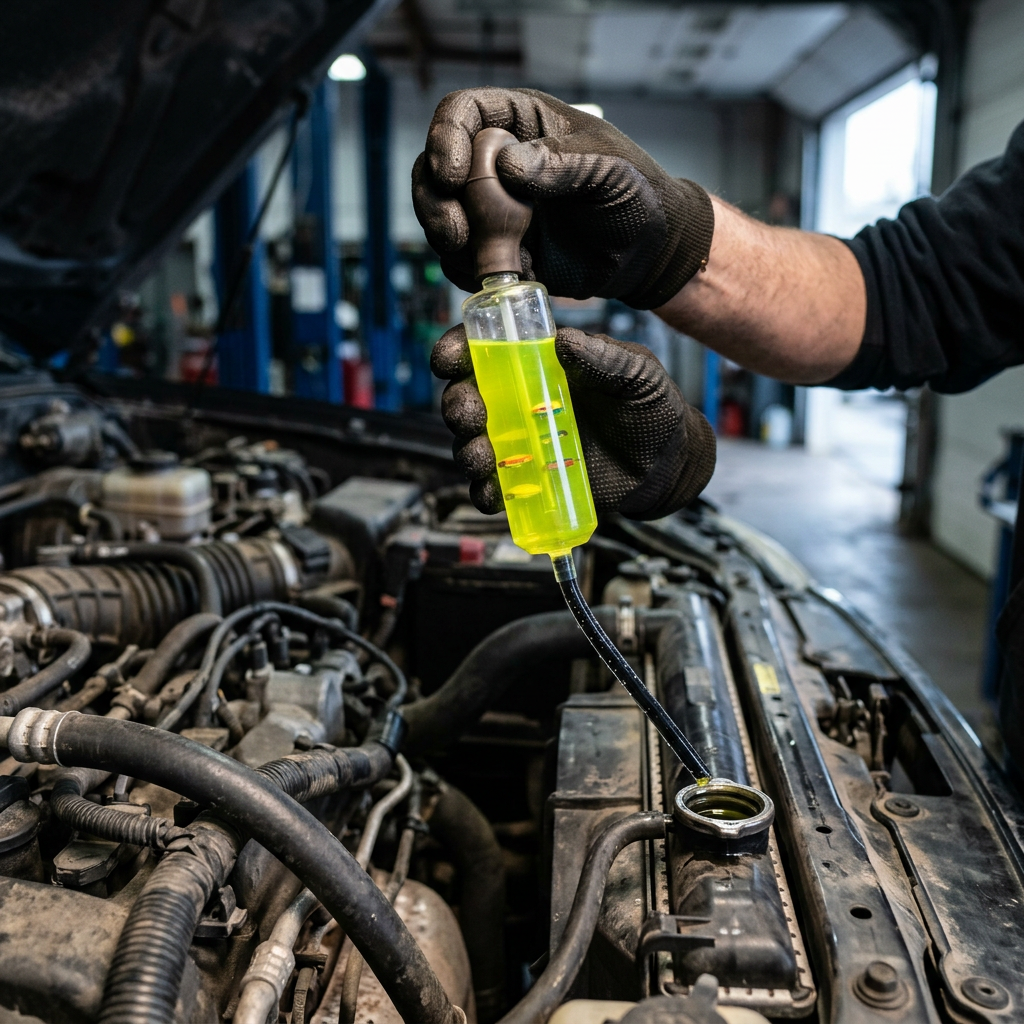
Draw Fluid: Squeeze the rubber bulb of an inexpensive automotive coolant hydrometer, insert the tube into the coolant degas bottle, and draw fluid inside.
3.
Read Floating Discs: Count the floating discs or read the specific gravity needle. A proper 50/50 mix of Motorcraft Yellow Anti-Freeze/Coolant and distilled water protects down to
-34°F (-37°C).
4.
Check Fluid Clarity: If fluid appears rusty, brown, or cloudy, anti-corrosion additives have broken down and require a system flush at our
Parts Center or service garage.
Why Is Full Synthetic Oil Better for Freezing Startup Protection?
Engine wear occurs predominantly during the initial 30 seconds after a cold start. When an engine sits overnight at 0°F in Carol Stream, conventional petroleum-based motor oil thickens significantly because natural paraffin waxes crystallize. This thick, sludge-like oil moves slowly through internal engine galleries, leaving camshafts, turbocharger bearings, and hydraulic valve lifters starved of lubrication for critical seconds.
Motorcraft Full Synthetic motor oil (such as 0W-20 or 5W-30) is engineered with uniform synthetic molecular structures that resist cold-weather thickening. Full synthetic oil pumps up to 70% faster to top-end valve train components at sub-zero temperatures than conventional oils.
Direct Impact on Battery Life:
Because full synthetic oil flows immediately, it dramatically reduces mechanical friction inside the engine during cranking. Lower mechanical friction means your starter motor requires significantly fewer electrical amperes from your cold Motorcraft battery. Upgrading to full synthetic oil effectively protects your engine hardware while reducing starter load on frozen mornings.
For EcoBoost turbocharged engines found in modern Ford F-150, Explorer, and Escape models, full synthetic oil is critical. Turbocharger shafts spin at up to 200,000 RPM and require instant oil flow even in deep freezes.
What Is the Recommended Tire Pressure for a Ford in Winter?
The Physics of Pressure Drop
For every 10°F drop in ambient temperature, your tire pressure decreases by approximately 1 PSI. When local temperatures drop from 60°F in October to 10°F in December, your tires will naturally lose 5 PSI of air pressure without any puncture present.
Proper Door Jamb Specs
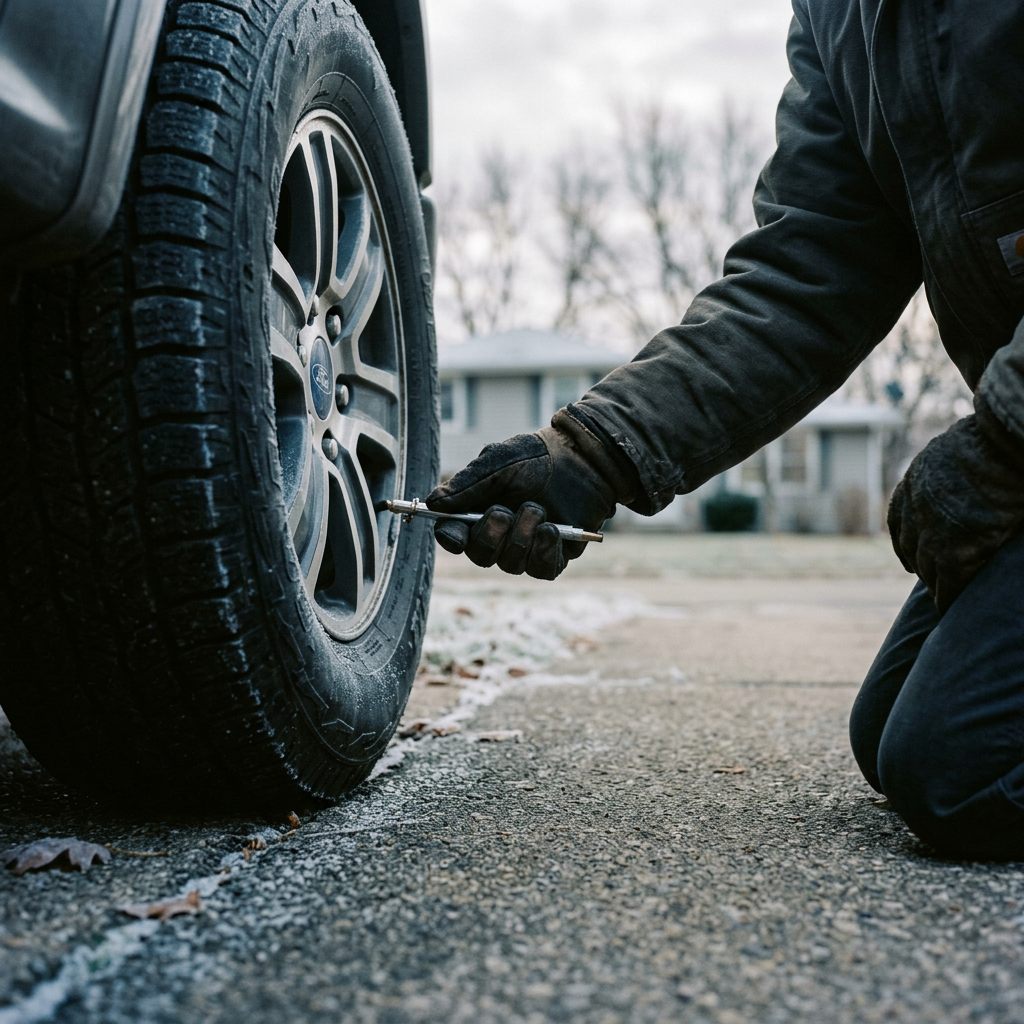
Always inflate tires according to the recommended cold tire pressure printed on the driver-side door jamb placard (NOT the max pressure molded into the tire sidewall). Check pressure in the morning before driving when tires are cold.
Schedule Professional Battery Testing and Motorcraft Battery Replacement in Carol Stream
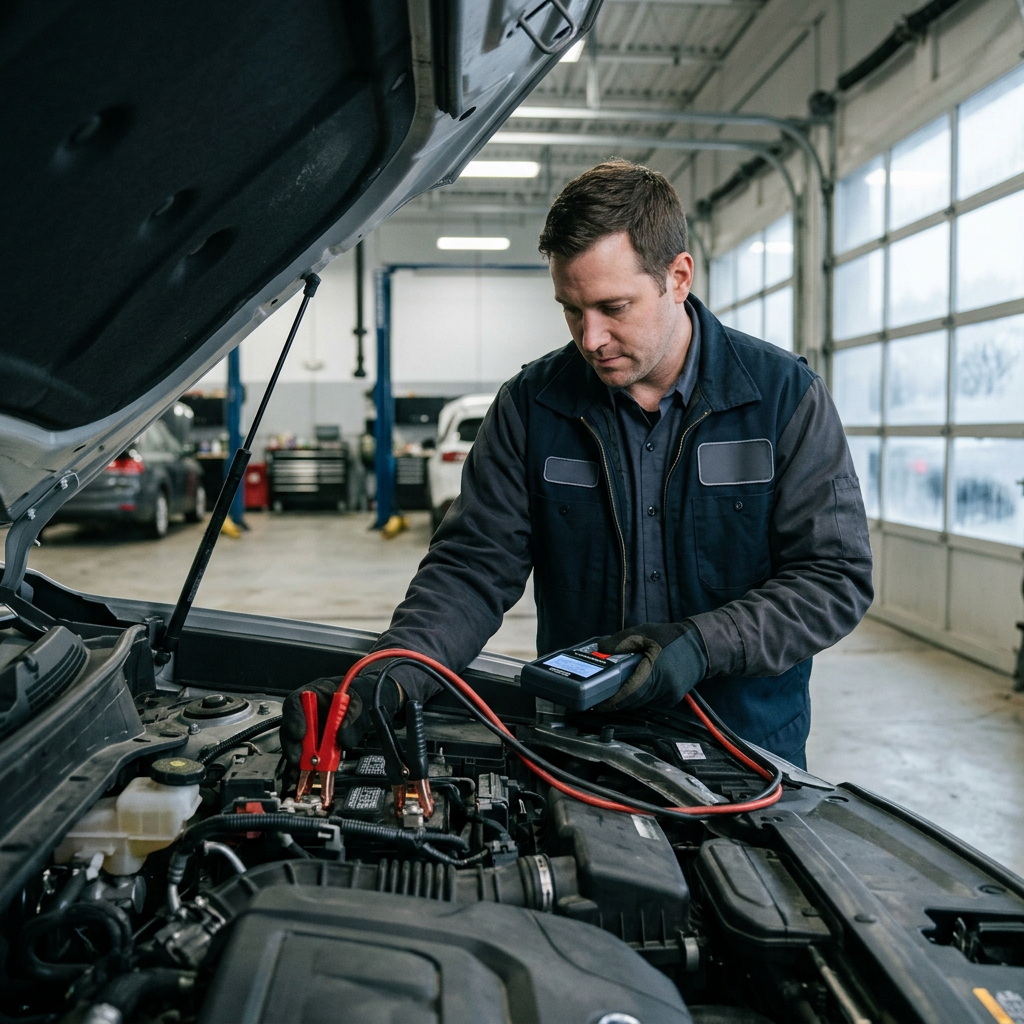
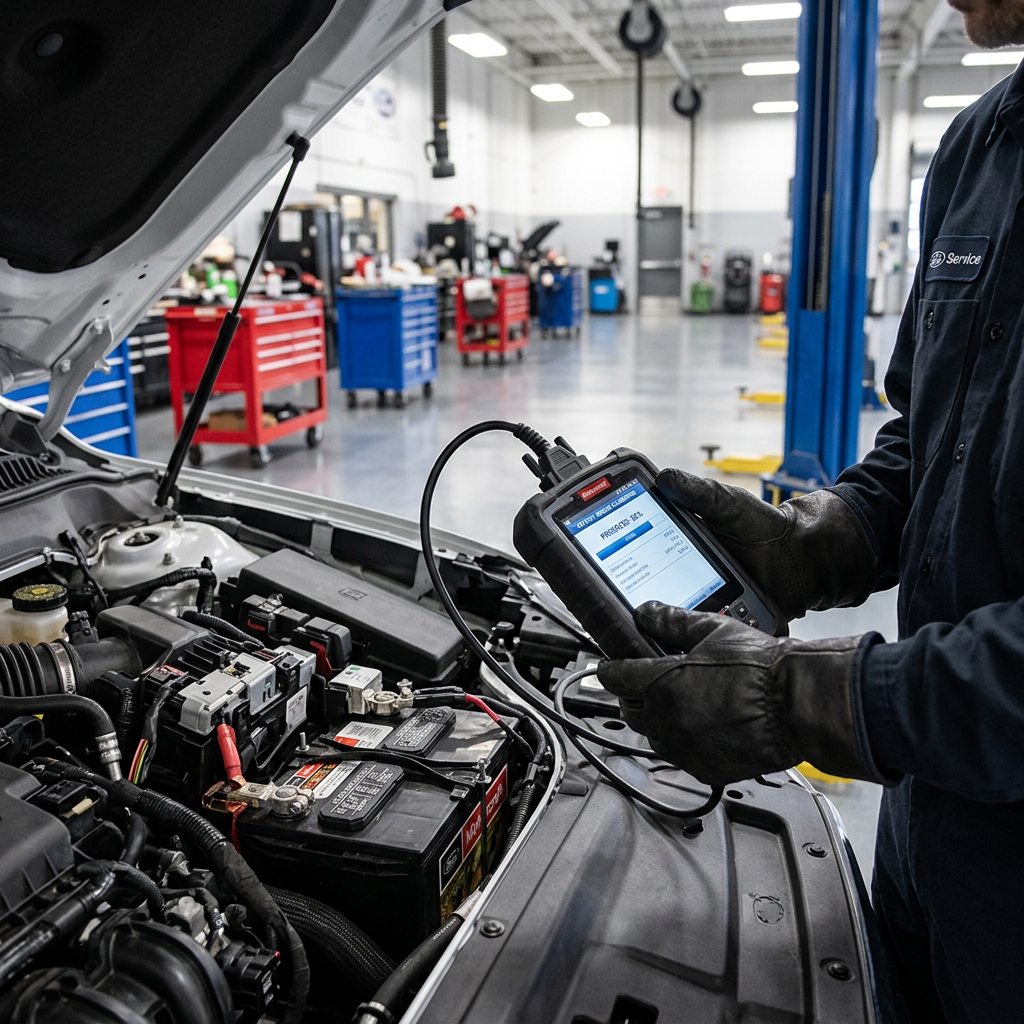
Don’t gamble with an aging battery during sub-zero Illinois weather. At Hawk Ford of Carol Stream, located at 175 North Ave, Carol Stream, IL 60188, our factory-trained technicians utilize computerized OEM Ford diagnostic equipment to test conductance, cold cranking amps, and reserve capacity.
If testing indicates your battery is end-of-life, we stock complete lineups of genuine Motorcraft Tested Tough MAX and AGM batteries backed by nationwide 36-month free replacement warranties. You can easily
Schedule Service Now or
Call us at (630) 233-9696 to set up an appointment.
At What Temperature Should Winter Tires Be Installed on a Ford?
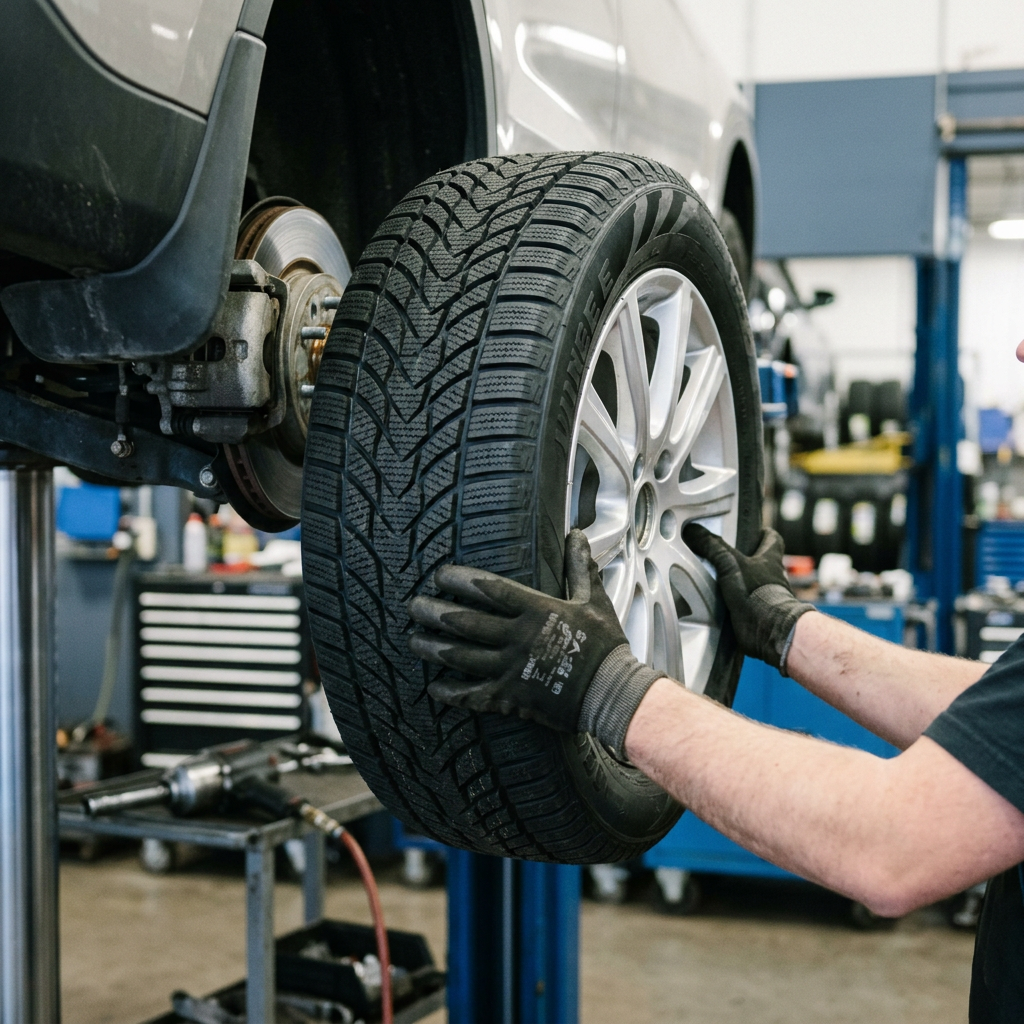
Many drivers assume winter tires are necessary only when snow covers the road surface. However, tire rubber chemistry is dictating by ambient temperature long before snow falls. The critical threshold for winter tire installation is 45°F (7°C).
All-season tire rubber compounds harden and turn rigid when temperatures dip consistently below 45°F. This hardening reduces surface contact area and grip, significantly lengthening braking distances even on completely dry asphalt. Dedicated winter tires remain soft and pliable at sub-zero temperatures, delivering up to 35% shorter stopping distances on cold pavement, slush, and ice.
What Windshield Washer Fluid Is Safe for Freeze Protection Down to -20°F?
Summer Fluid Hazards
Standard summer washer fluid contains mostly water and bug remover chemicals. In freezing temperatures, it freezes solid inside fluid lines, cracking washer pumps and bursting spray nozzles.
Winter De-Icing Formulas
Winter-grade washer fluids contain high concentrations of methanol or alcohol, protecting down to -20°F or -30°F. These formulas melt windshield ice on contact and prevent instant refreezing.
Protecting Heated Systems
Modern Ford trucks and SUVs equipped with heated windshield washer jets require winter-rated fluid to prevent chemical breakdown near heating elements while maintaining clear road salt visibility.
When Should a Carol Stream Driver Prepare a 2027 Ford for the First Freeze?
The optimal timeframe for winter vehicle preparation in Carol Stream and surrounding DuPage County is late October through mid-November, well before freezing ground temperatures arrive in December. Scheduling autumn service allows you to avoid seasonal service rushes and address minor battery or cooling issues early.
Modern 2027 Ford Battery Management System (BMS) Calibration:
Modern Ford EcoBoost, Hybrid, and EV models feature an electronic Battery Management System (BMS). When replacing a battery on modern Ford models, technicians must reset the BMS sensor module using Ford diagnostic equipment. This ensures the alternator’s smart charging profile matches the new battery’s age, preventing overcharging or early battery degradation during cold weather.
Complete Ford Winterization Checklist: Emergency Kits, Battery Care, and Local Driving Safety
1. Electrical System
• Test battery CCA & voltage
• Clean terminal corrosion
• Verify BMS calibration
• Carry lithium jump pack
• Test alternator charge voltage
2. Fluids & Visibility
• Test coolant to -34°F
• Change to 0W-20/5W-30 synthetic
• Fill -20°F washer fluid
• Replace wiper blades
• Inspect defroster vents
3. Emergency Kit
• Heavy booster cables
• Ice scraper & snow brush
• Thermal blankets & gloves
• Tire pressure gauge
• Portable flashlight & batteries
Visit Hawk Ford of Carol Stream for Complete Winter Battery and Vehicle Care
Don’t let a sudden sub-zero freeze leave you stranded on North Avenue or Gary Avenue. At Hawk Ford of Carol Stream, our team is committed to keeping you and your family safe throughout the severe winter months. Whether you need a complimentary battery health test, a fresh Motorcraft AGM battery, full synthetic oil change, or winter tire installation, we are here to serve drivers from Carol Stream, Glendale Heights, Bloomingdale, and West Chicago.




0 comment(s) so far on How Cold Weather Affects Your Ford Battery During a Freeze