Quick Answer: Ford Winter Tire Speed Ratings, Load Indices, and Safety Standards
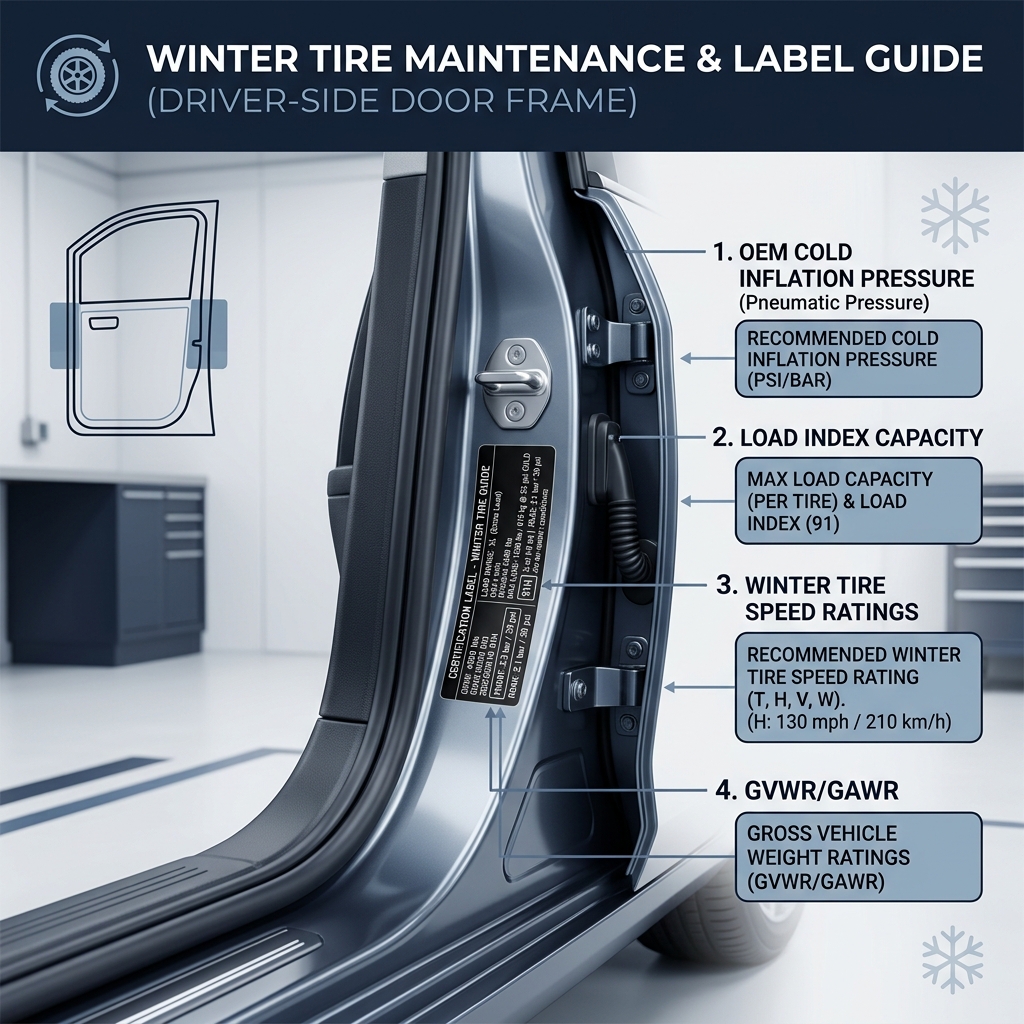
When configuring a winter tire and wheel package for your Ford vehicle, understanding the critical balance between load indices and speed ratings is essential for maintaining factory safety standards, electronic stability controls, and vehicle structural integrity. The brief answer is unequivocal: Ford requires that any winter tire installed on your vehicle meets or exceeds the Original Equipment Manufacturer (OEM) load index specified on your door jamb placard. While tire speed ratings can be safely stepped down by one or two letter codes during cold weather months, lowering the load rating is never permissible under any driving circumstances.
For standard Ford sedans, crossovers, and light SUVs such as the Escape or Explorer, factory OEM load indices typically range from 99 to 105, representing maximum carrying capacities of approximately 1,709 to 2,039 pounds per tire. On heavy-duty platforms like the Ford F-150, Expedition, or Super Duty line, load indices range from 111 up to 125 or higher (capable of supporting up to 3,638 pounds per tire). Because winter travel frequently involves carrying heavy gear, negotiating unplowed snow, and towing trailers across Chicagoland highways, installing winter tires that match or exceed these exact numbers prevents severe tire overheating, internal structural breakdown, and unexpected sidewall blowouts.
Conversely, automotive industry safety standards and Ford engineering guidelines permit drivers to select a winter tire with a lower speed rating than their summer or all-season original equipment. OEM tires on modern Ford vehicles often carry high-performance speed ratings such as
V (149 mph), W (168 mph), or Y (186 mph). However, dedicated winter tires prioritize maximum physical grip over extreme high-speed thermal resistance. Stepping down to a
T rating (118 mph) or H rating (130 mph)—or even a
Q rating (99 mph) for aggressive studded or deep-snow tires—is completely safe for daily winter commuting along I-355, North Avenue, and Gary Avenue in Carol Stream, provided drivers respect the reduced continuous velocity capabilities. If you ever have questions regarding your platform’s exact thresholds, feel free to
Call us at (630) 233-9696 to speak directly with our factory-trained tire specialists.
What Tire Speed Ratings and Load Indices Are Required for Ford Winter Wheel Setups?
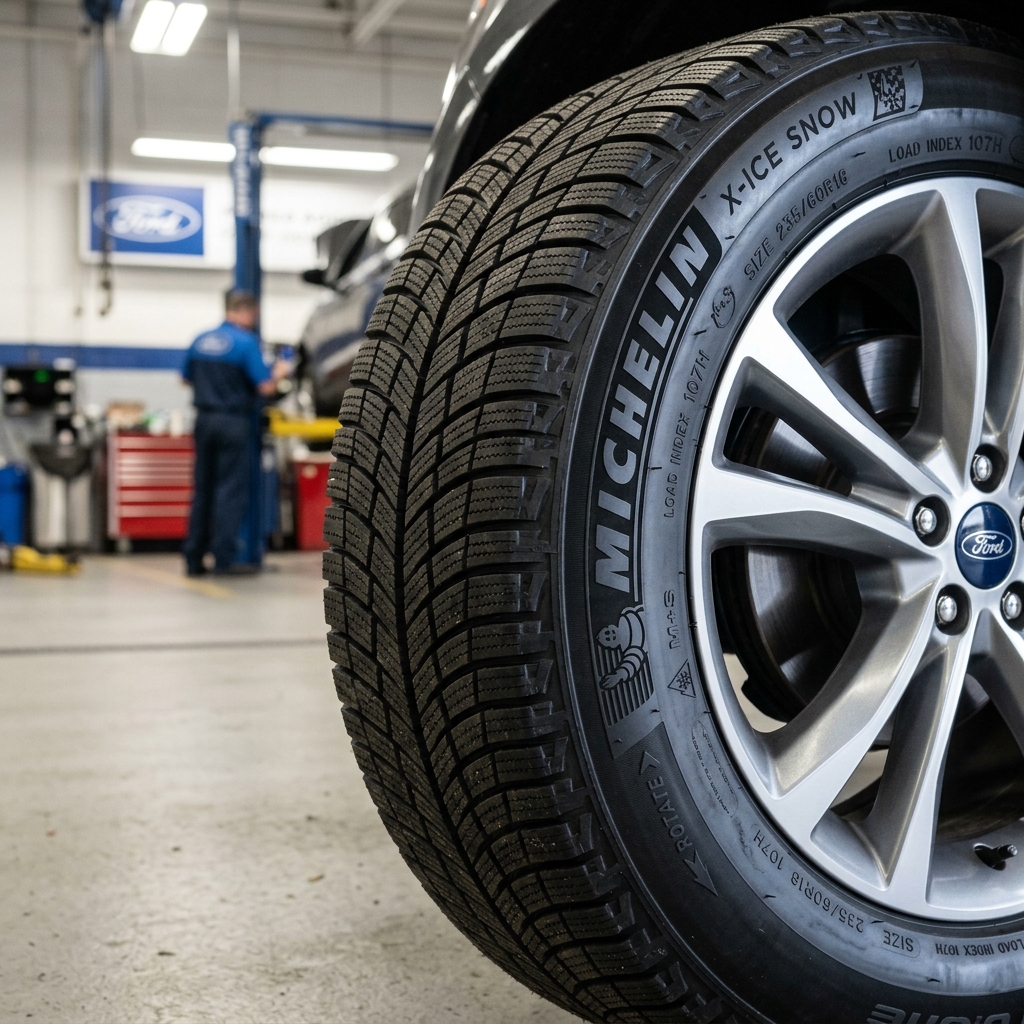
To accurately decode the information molded into your Ford tire sidewall, you must understand how ISO metric sizing codes translate into physical weight limits and thermal boundaries. A typical tire specification reads as 235/55R19 101H. In this sequence, ‘235’ represents the tire section width in millimeters, ’55’ is the aspect ratio percentage, ‘R’ designates radial construction, and ’19’ is the wheel diameter in inches. The final alphanumeric sequence— 101H—contains the vital load index and speed rating.
The numerical component (101) represents the Load Index. This code maps directly to an industry standard table that defines the precise maximum weight the tire can support when inflated to the vehicle manufacturer’s recommended cold pressure. A load index of 101 correlates to 1,819 pounds per wheel. Multiply that figure by four wheels, and your total platform weight capacity equals 7,276 pounds. This total capacity must accommodate the vehicle’s base kerb weight, full passenger loads, cargo, dynamic weight transfer during emergency braking, and the downforce exerted by attached trailers.
Why is preserving load capacity so non-negotiable for winter driving? Cold temperatures naturally compress the air inside a tire cavity, causing internal pressures to drop by approximately 1 PSI for every 10-degree Fahrenheit drop in ambient temperature. If you install an under-rated winter tire with a lower load index (for example, stepping down from a required 103 index to a 97 index), the combination of reduced internal volume, heavy vehicle loads, and frozen road impacts can lead to severe inner liner fatigue, micro-tearing of internal steel belts, and total tire failure.
The letter following the load index (e.g., ‘H’) represents the Speed Rating Symbol. This letter specifies the maximum sustained velocity at which the tire can dissipate heat under full load conditions. Standard ratings include: Q (99 mph), S (112 mph), T (118 mph), H (130 mph), V (149 mph), and W (168 mph). For winter applications, stepping down to a T or H rating allows manufacturers to utilize softer, hydrophilic rubber compounds and flexible tread blocks that maximize winter grip without failing speed compliance limits.
| Ford Model Family |
Typical OEM Rim Size |
Min. OEM Load Index |
OEM Speed Rating |
Safe Winter Speed Rating |
| Ford Escape / Bronco Sport |
17″ – 19″ |
99 – 102 (1,709-1,874 lbs) |
H / V |
T (118 mph) or H (130 mph) |
| Ford Explorer / Edge |
18″ – 21″ |
103 – 107 (1,929-2,149 lbs) |
V / W |
T (118 mph) or H (130 mph) |
| Ford F-150 / Expedition |
18″ – 22″ |
111 – 116 (2,403-2,756 lbs) |
S / T / H |
S (112 mph) or T (118 mph) |
| Ford Mustang (S550 / S650) |
18″ – 20″ |
96 – 101 (1,565-1,819 lbs) |
W / Y |
H (130 mph) or V (149 mph) |
| Ford Mustang Mach-E |
19″ – 20″ |
103 – 105 XL (1,929-2,039 lbs) |
V / W |
H (130 mph) or V (149 mph) |
How Winter Tire Speed Ratings Impact Ford Driving Dynamics in Chicagoland
T-Rated: Deep Snow & Ice
T-rated winter tires (capped at 118 mph) represent the traditional benchmark for maximum snow and ice traction. Tire engineers formulate T-rated tires with soft, highly flexible rubber compounds enriched with hydrophilic silica. This composition allows the tread blocks to stay pliable even when Chicagoland temperatures drop well below 0°F. The lower speed rating reflects a softer carcass construction and multi-directional siping density designed to scoop slush and bite directly into hard-packed ice. Drivers notice exceptional traction on unplowed neighborhood roads in Carol Stream, though steering response on dry interstate tarmac feels slightly softer.
H/V-Rated: Performance Winter
For drivers who spend significant time commuting at higher highway speeds along I-290, Route 83, and I-355, H-rated (130 mph) and V-rated (149 mph) performance winter tires deliver a refined compromise. These tires feature stiffer sidewall inserts, reinforced shoulder blocks, and intermediate compound density. While they relinquish a tiny fraction of extreme bite on pure sheer ice compared to T-rated options, they maintain crisp turn-in responsiveness, high speed directional stability, and shorter dry-pavement stopping distances when suburban highways are clear and cold.
Chicagoland Commuting Realities
Selecting between T, H, and V ratings comes down to your primary daily driving routes in DuPage County. If your routine involves rural roads, early morning residential commutes before municipal plows clear the pavement, or severe lake-effect snowstorms, a T-rated tire offers unbeatable security. If your commute consists predominantly of treated expressway lanes where pavement is dry 70% of the winter, an H-rated or V-rated tire provides superior steering precision while preserving total thermal safety.
Does Ford Intelligent All-Wheel Drive Eliminate the Need for Specialized Winter Tires in DuPage County?
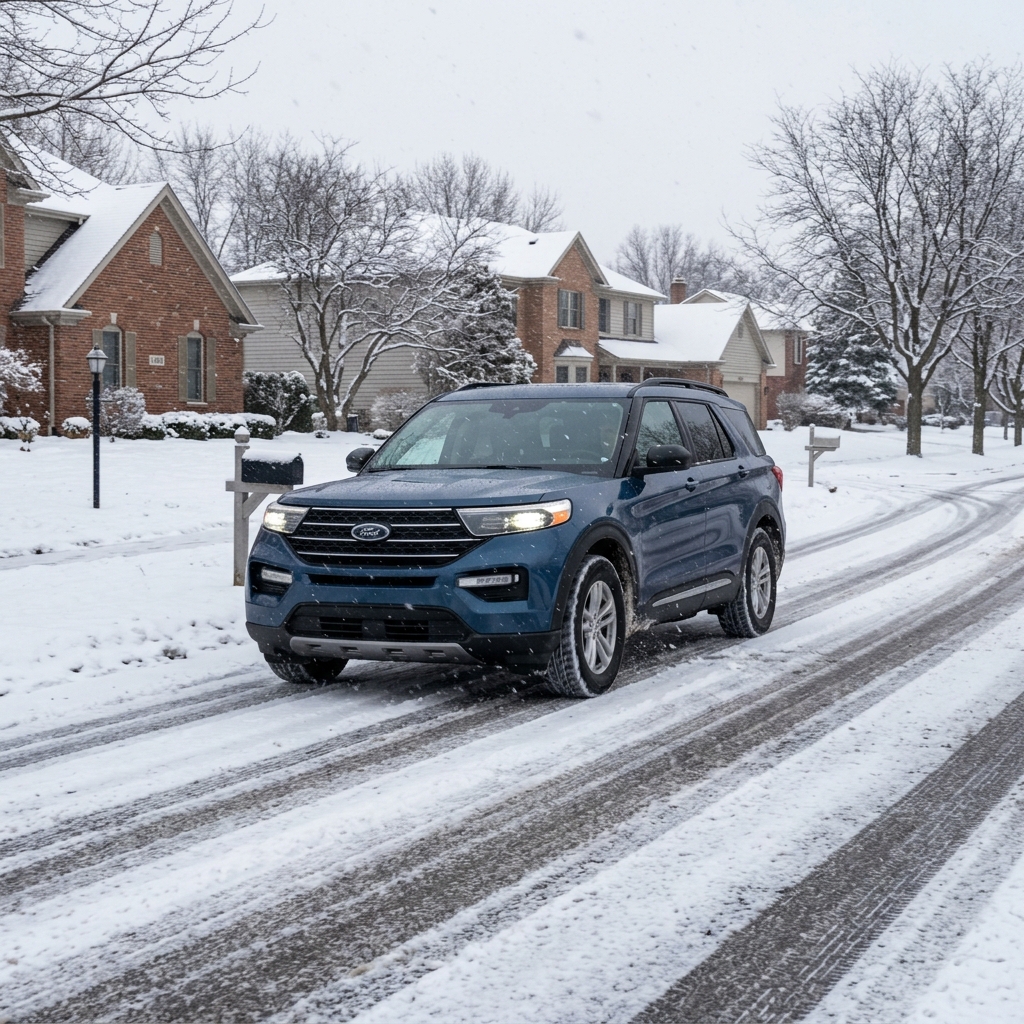
One of the most persistent dangerous myths among suburban Chicago drivers is that equipping a vehicle with Ford Intelligent All-Wheel Drive (AWD) or 4×4 capability negates the need for winter tires. While Ford’s advanced drivetrain algorithms continuously monitor wheel speed, steering angle, and throttle position to distribute engine torque to the wheels with the most grip, drivetrain technology can only distribute traction—it cannot create traction where none exists.
All-wheel drive assists solely with acceleration and forward momentum. It provides zero assistance when you press the brake pedal or turn the steering wheel into a emergency bend. When stopping on ice or compacted snow, a front-wheel-drive Ford equipped with certified winter tires will consistently stop in significantly shorter distances than an all-wheel-drive Ford equipped with standard factory all-season tires.
Standard all-season tire tread compounds harden into rigid, glass-like plastic when ambient temperatures drop below 45°F (7°C). Once hardened, the tread blocks cannot conform to micro-irregularities in frozen pavement. Specialized winter tires retain deep flexibility at sub-zero temperatures, using millions of microscopic zig-zag sipes to create mechanical grip on sheer ice. Combining Ford Intelligent AWD with dedicated winter tires creates the ultimate winter dynamic: flawless off-the-line acceleration paired with absolute control during emergency braking and cornering.
What Tire Tread Depth and Compound Are Necessary for Driving a Ford on Icy DuPage County Roads?
Navigating winter weather across Carol Stream and the greater DuPage County region demands an understanding of tire degradation thresholds. While legal minimum tread depth across North America is 2/32 of an inch for standard summer driving, that depth is completely inadequate for winter safety. Once a winter tire wears down past 6/32 of an inch, its ability to channel heavy snow slush, prevent hydroplaning on freezing rain, and grip icy road surfaces decreases exponentially.
Most premium winter tires feature a dual-compound design. The outer 50% to 60% of tread depth consists of a highly specialized hydrophilic silica-infused winter compound equipped with high-density 3D active siping. Below that layer lies a stiffer base compound designed for structural durability. When your winter tire reaches 5/32 to 6/32 of an inch, you have effectively worn away the active winter compound layer. At this stage, tread voids can no longer evacuate wet winter slush along North Avenue, causing the tire to ride up on top of snow accumulation rather than cutting through to raw asphalt.
We recommend using the standard ‘Lincoln Quarter Test’ to monitor your remaining winter tread depth. Insert a quarter upside down into your tread grooves with George Washington’s head facing you. If the top of Washington’s head is completely covered by tread, you possess at least 4/32 of depth. However, if you place a quarter into the tread and the top of Washington’s head is visible, your tire has fallen below 6/32 of an inch and should be replaced prior to facing heavy Chicagoland blizzards. Our certified master technicians at Hawk Ford of Carol Stream can quickly perform precision depth gauge inspections across all four tread ribs.
Chicagoland Fall Maintenance Checklist: Preparing Your Ford for DuPage County Road Salt and Cold Weather
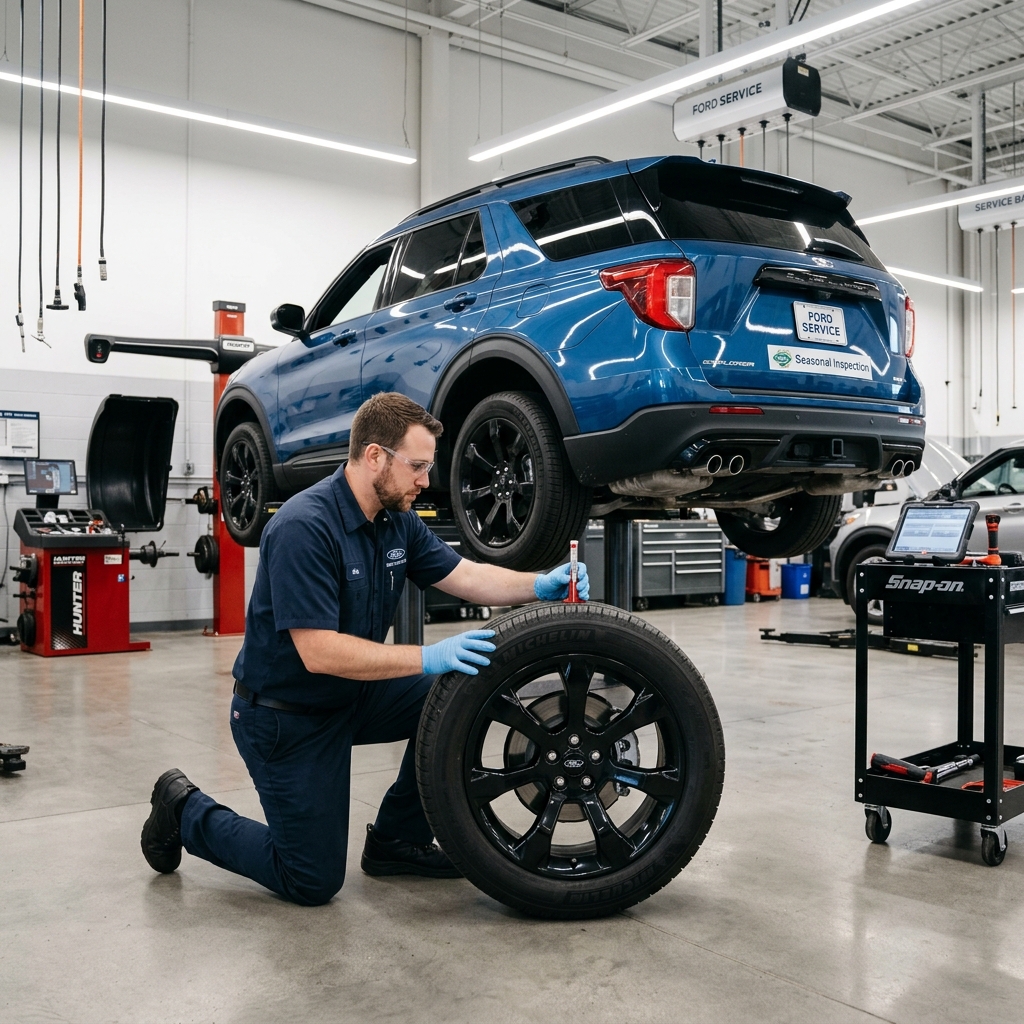
1. Battery & Electrical System
Freezing winter temperatures reduce a 12V automotive battery’s available cranking power by up to 50% while simultaneously requiring double the energy to turn over cold engine oil. A professional conductance test measures Cold Cranking Amps (CCA) and internal reserve capacity. Inspect terminal posts for white or blue oxidation and ensure ground straps are tight to prevent sudden no-start conditions during extreme cold snaps.
2. Fluids & Wiper Systems
Drain summer windshield washer fluid and replace it with a low-temperature winter de-icing blend rated to -20°F or -30°F. Summer washer fluids freeze instantly upon contacting cold glass, blinding your vision. Install fresh beam-style winter wiper blades with enclosed silicone boot linings that prevent ice buildup inside structural hinges. Verify engine coolant/antifreeze concentration measures a 50/50 mix protective down to -34°F.
3. TPMS & Brake Hydraulics
Recalibrate Tire Pressure Monitoring System (TPMS) sensors following tire swaps to ensure early warnings when cold weather causes pressure drops. Inspect brake pads, rotors, and slider pins. Highway road salt brine accelerates pin seizure and caliper binding. Fresh brake fluid flush removes absorbed water vapor, preventing line freeze-up during sub-zero operations.
Which Fall Checks Should Carol Stream Drivers Prioritize on a 2027 Ford Before Cold Weather Arrives?
Modern 2027 Ford models incorporate ultra-sophisticated digital architectures, advanced radar systems, high-voltage electrification modules, and interconnected driver-assist sensors. Pre-winter prep on these advanced platforms extends far beyond traditional oil changes and mechanical checks.
Ford Co-Pilot360 Sensor Calibration: Radar arrays mounted behind the front grille and optical cameras positioned behind the windshield control Adaptive Cruise Control, Pre-Collision Assist, and Lane-Centering algorithms. Ice, road salt grime, and winter road splash can blind these sensors. Fall maintenance should verify internal heating elements in the camera housings function correctly and sensor calibration profiles are updated via Ford diagnostic software.
Battery Management System (BMS) Recalibration: 2027 Ford gas, hybrid, and electric vehicles utilize an intelligent BMS to monitor battery state-of-charge, internal resistance, and health parameters. When replacing or servicing a winter battery, a technician must trigger a BMS reset so the charging system adapts its alternator output curve to ambient freezing conditions.
EV Thermal Conditioning & Heat Pump Prep: For Ford Mustang Mach-E and F-150 Lightning owners, preparing for winter requires optimizing battery thermal management systems. Running a full diagnostic check on coolant loops, cabin heat pump valves, and high-voltage PTC heaters ensures pre-conditioning schedules operate at peak efficiency, protecting winter driving range when parking outdoors overnight.
Climate Control & Defroster Recalibration: Electronic blend door actuators inside the climate HVAC box must be tested for smooth movement. Faulty actuators prevent rapid windshield defrosted air routing, severely impairing visibility during sudden winter squalls.
Why Is Ceramic Coating or Wax on Exterior Ford Body Panels Recommended Before Chicagoland Winters?
Municipal road crews in Carol Stream, Wheaton, and across DuPage County rely heavily on chemical liquid de-icers, rock salt (sodium chloride), and sticky liquid magnesium chloride brine mixtures. While these compounds lower the freezing point of water on Route 64, Gary Avenue, and North Avenue, they create an extraordinarily hostile environment for your Ford vehicle’s exterior finish and metallic underbody components.
Magnesium chloride is particularly corrosive because it is highly hygroscopic—it continuously draws moisture out of the air even when temperatures are dry, maintaining an active, acid-like corrosive slush state against clearcoat paint, fender lip seams, and door rocker panels. Without paint protection, liquid salt solution penetrates microscopic pores in factory clearcoat, initiating subsurface oxidation, paint blistering, and eventual body rust.
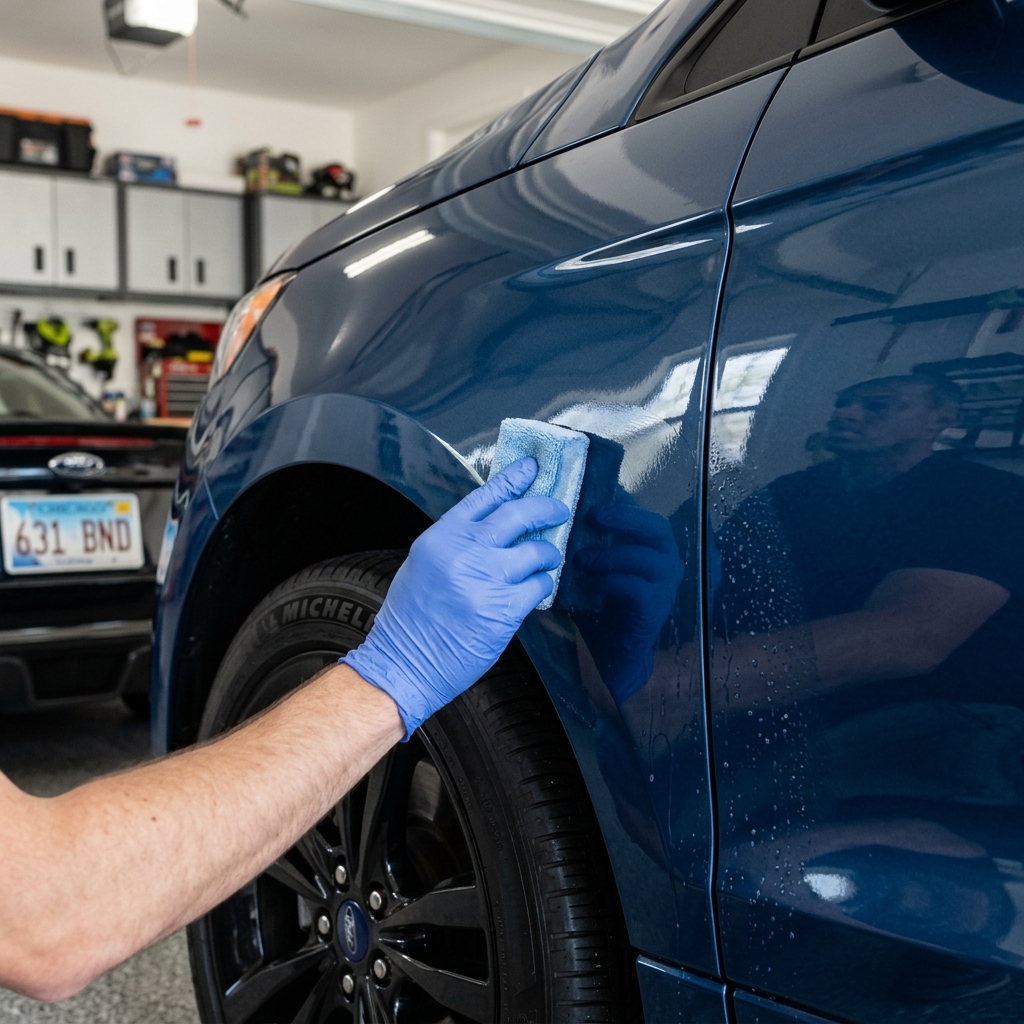
Applying a high-grade synthetic wax, polymer paint sealant, or professional 9H ceramic coating prior to the first major snowfall establishes a hydrophobic sacrificial barrier over your Ford’s paintwork. This non-porous layer prevents road salt brine from sticking to body panels, allows frozen slush to slide off effortlessly during quick touchless washes, and seals clearcoat edges around lower door seams, tailgate latches, and wheel arches against rust formation.
Ford OEM vs. Aftermarket Winter Wheels: Offset, Clearance, and Bolt Patterns
When assembling a dedicated winter wheel package, many owners opt for a secondary set of wheels so they can easily swap tire sets seasonally without dismounting rubber from delicate factory summer rims. However, selecting wheels requires strict adherence to technical fitment metrics including wheel offset (ET), center bore diameter, bolt circle pattern, and brake caliper clearance.
Downsizing Wheel Diameters (‘Minus-Sizing’): A common, highly recommended engineering practice for winter driving is stepping down one wheel diameter size—for example, replacing a summer 20-inch wheel with an 18-inch winter wheel package. Downsizing allows you to install a tire with a taller sidewall profile while maintaining the exact overall rolling diameter. A taller sidewall provides significantly greater impact absorption when driving over severe Chicagoland potholes and prevents rim cracking or tire pinching.
Preserving Wheel Offset and Scrub Radius: Generic aftermarket wheels frequently feature ‘universal’ offsets that shift the wheel center-line outward or inward. Altering factory offset by more than a few millimeters alters scrub radius geometry, causing erratic steering feedback, accelerated wheel bearing wear, and interference with Ford Anti-Lock Brake (ABS) sensor wires during full wheel lock turns.
Center-Bore Hub-Centricity: Most OEM Ford wheels are strictly hub-centric, meaning the wheel center bore fits flush over the vehicle’s hub lip to center the assembly precisely. Low-cost aftermarket wheels are typically lug-centric with larger oversize center bores. Running lug-centric wheels without precise hub-centric adapter rings leads to persistent high-speed steering wheel vibrations along highway corridors.
Brake Caliper Clearance: Modern Ford performance trims (such as Mustang GT, F-150 Tremor, or Explorer ST) feature heavy-duty multi-piston brake calipers. Generic replica wheels may match the bolt pattern but fail to offer sufficient barrel or spoke clearance, resulting in catastrophic caliper grinding. Choosing genuine Ford OEM winter wheel packages guarantees perfect offset, center-bore hub fitment, and certified brake clearance.
What Is the Cost of a Pre-Winter Inspection Package at a Ford Service Center in Carol Stream, IL?
Essential Multi-Point Check
A comprehensive pre-winter multi-point inspection package at Hawk Ford of Carol Stream typically ranges from $89 to $149, depending on promotional seasonal offers and vehicle complexity. This package includes full battery conductance testing, coolant freeze-point hydrometer testing, brake pad/rotor wear measurement, fluid top-offs, belt/hose rubber elasticity checks, and wiper system testing.
Seasonal Tire Swapping
If you already own mounted winter wheels and tires, complete changeover services (removing summer assemblies, mounting winter assemblies, adjusting inflation pressures, and performing TPMS system relearns) generally range from $60 to $100. If unmounted loose tires require full tire demounting, valve replacement, high-speed dynamic balancing, and remounting, service costs average $120 to $180.
Comprehensive Care Bundles
Combining your pre-winter inspection with a synthetic oil change, tire swap, brake inspection, and fresh engine/cabin air filters via special Ford bundle specials delivers maximum value. Contact our
Parts Center or service desk to learn about current seasonal rebates and FordPass™ Rewards points redemption options.
Winter Storage and Seasonal Tire Swapping Guidelines for Suburban Chicago Ford Owners
Proper seasonal storage of off-season tire sets (storing summer tires during winter, and winter tires during summer) is crucial to preserving tread longevity and rubber compound elasticity. Simply stacking loose tires in an unheated outdoor shed or exposing them to direct sunlight leads to premature dry rot, ozone cracking, and tread compound degradation.
Thorough Cleaning & Drying: Prior to storage, wash all brake dust, road grime, and salt residue off your wheels and tires using mild soap and warm water. Allow them to dry completely to prevent moisture from corroding metal rim surfaces or degrading inner bead seals inside storage bags.
Airtight Storage Bags & Environmental Control: Store off-season tires inside heavy-duty, opaque plastic storage bags or commercial tire totes. Vacuum-seal or tightly tape the bags closed to minimize air turnover. Store tires in a cool, dark, dry climate-controlled environment such as a basement or insulated garage, away from electric motors, furnaces, or arc welders that generate rubber-destroying ozone gas.
Proper Stacking Physical Orientation: If your tires are mounted on wheels, inflate them to recommended storage pressure (around 30 PSI) and either hang them individually from heavy-duty wall hooks or stack them flat on top of one another. Never store mounted wheels standing upright on the tread face. Conversely, if your tires are unmounted (loose rubber), store them standing upright in a dedicated tire rack, rotating them slightly once a month. Never hang or stack unmounted tires.
TPMS Sensor Re-Learn Procedure: When installing your stored winter wheel set back onto your vehicle, your Ford’s Body Control Module must re-learn the position of each TPMS sensor frequency. Our technicians utilize certified Ford OBD-II diagnostic tools to quickly trigger the automatic relearn sequence, ensuring accurate live dash pressure readouts.
Schedule Your Ford Winter Wheel Package and Pre-Winter Prep at Hawk Ford of Carol Stream
Preparing your vehicle for severe Chicagoland winter conditions requires expert attention to detail, factory-approved components, and trained technicians who understand Ford engineering inside and out. Don’t wait until the first sudden DuPage County blizzard creates hazardous black ice along North Avenue and Gary Avenue.
Whether you need to select a factory-certified Ford OEM winter wheel and tire package, verify load index compliance for heavy towing, perform digital battery diagnostic checks, or apply paint protection ahead of salt brine season, the team at Hawk Ford of Carol Stream is here to keep your family safe on frozen roads.




0 comment(s) so far on Ford Winter Tire Speed Ratings & Seasonal Prep Guide