Which SUV Offers Better Fuel Economy for Autumn Road Trips: Ford Explorer vs. Chevy Traverse?
As autumn arrives across Illinois, crisp weather and vivid foliage call drivers out onto open highways. Planning a seasonal getaway from Carol Stream to scenic spots like Starved Rock, Galena, or the Great River Road requires a midsize 3-row SUV that balances power, passenger comfort, and outstanding fuel efficiency. When comparing two of Midwest driving’s most popular contenders—the Ford Explorer and the Chevrolet Traverse—fuel economy during cool-weather highway cruising becomes a primary decision factor.
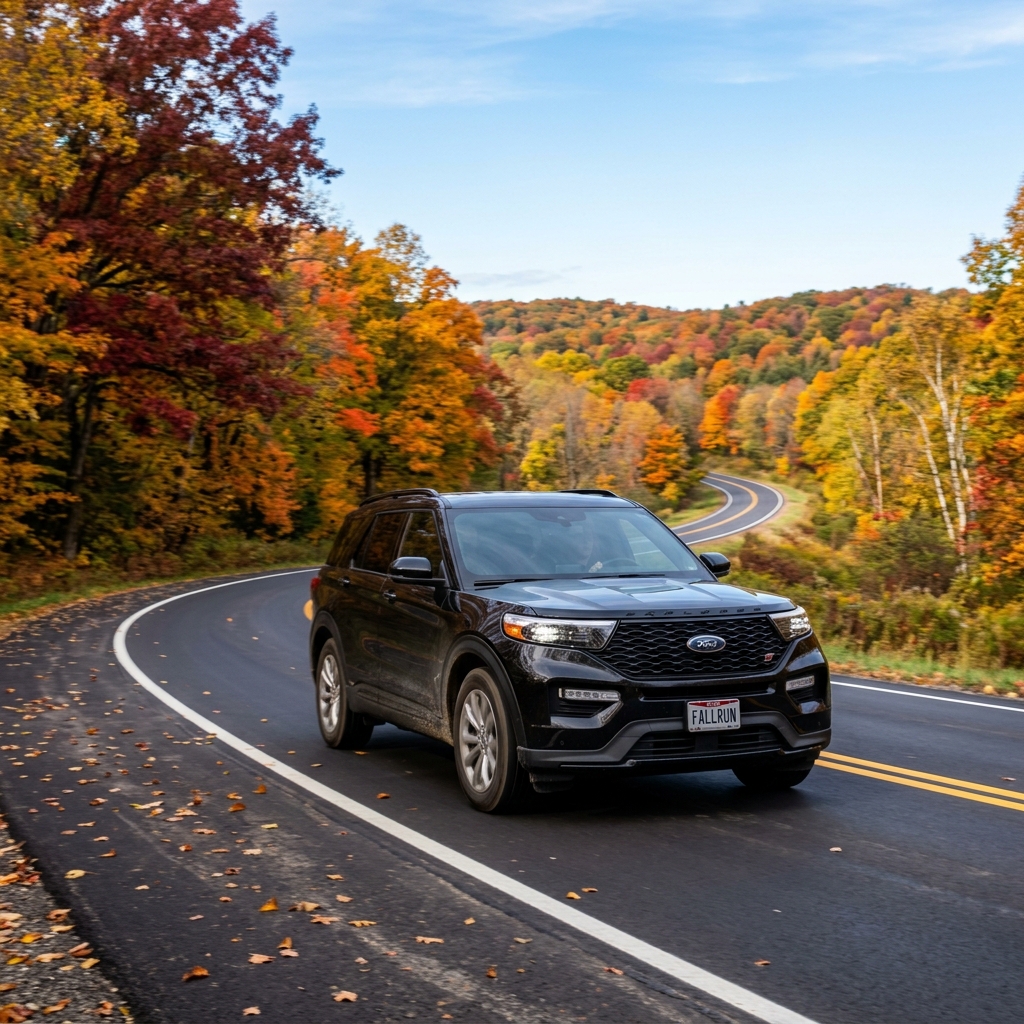
The Key Takeaway: The Ford Explorer delivers superior autumn road trip fuel economy, boasting up to an EPA-estimated 28 MPG highway in standard rear-wheel-drive EcoBoost® configurations (and even higher efficiencies across available hybrid powertrains) compared to the Chevrolet Traverse’s 27 MPG highway maximum. Coupled with Ford’s advanced 10-speed SelectShift® automatic transmission and a smart, auto-disengaging 4WD system, the Explorer intelligent powertrain minimizes engine workload across long Midwestern highway drives while maintaining exceptional wet-weather security.
Comparing EPA MPG Ratings and Real-World Highway Range for Midwest Fall Travel
When departing from Carol Stream, Bloomingdale, or Glendale Heights on a crisp fall morning, stopping frequently at gas stations interrupts the momentum of your weekend getaway. EPA ratings provide a benchmark, but real-world highway range reflects how far your family can travel on a single fuel tank when ambient temperatures hover in the 40s and 50s.
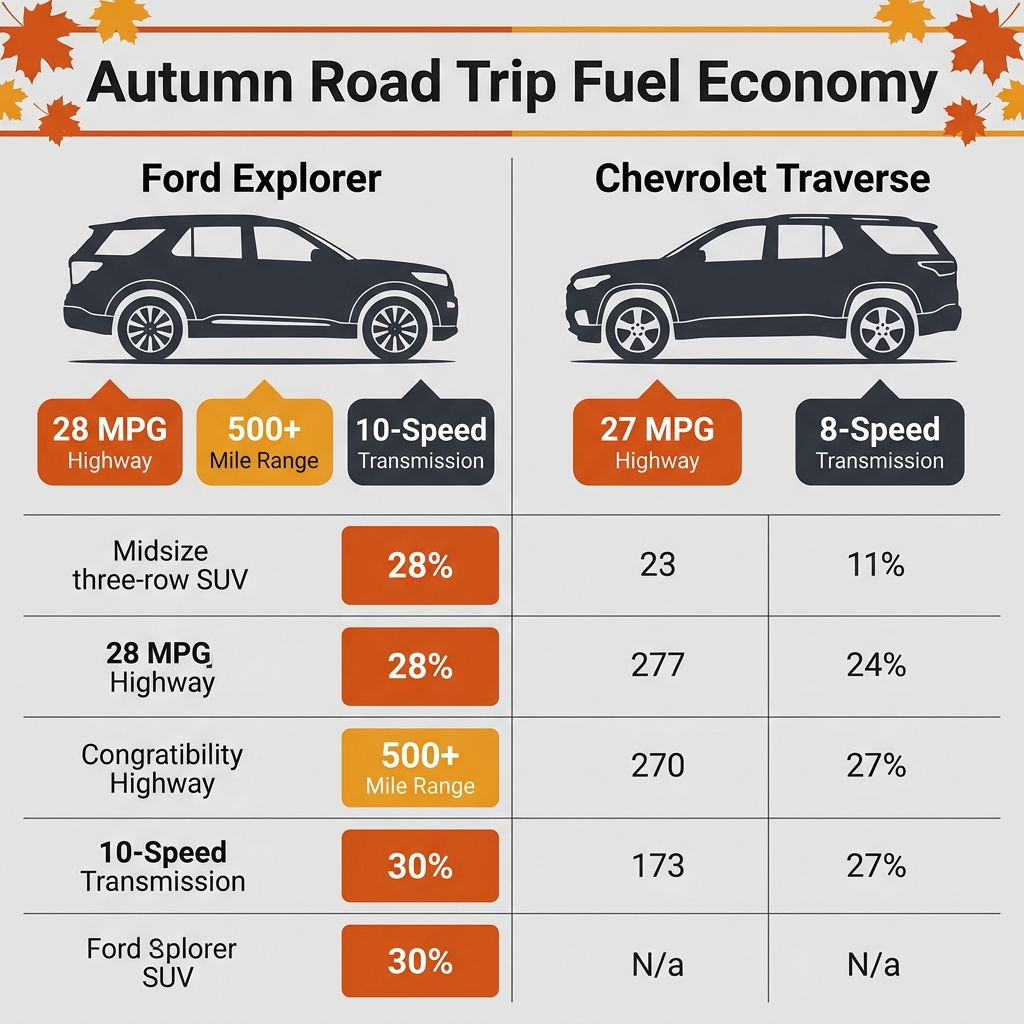
The Ford Explorer’s standard 2.3-liter EcoBoost® turbocharged 4-cylinder engine produces a brisk 300 horsepower while delivering an EPA-estimated 21 MPG city / 28 MPG highway (24 MPG combined) in RWD, and 20 MPG city / 27 MPG highway in Intelligent 4WD models. Equipped with its 17.9-gallon fuel tank, an Explorer RWD can cover over 500 highway miles per tank. For eco-conscious drivers exploring pre-owned or specialized configurations, the Explorer 3.3L V6 Hybrid expands combined highway efficiency even further.
Conversely, the Chevrolet Traverse utilizes a 2.5-liter turbocharged inline-4 engine mated to an 8-speed automatic transmission. Generating EPA estimates of 20 MPG city / 27 MPG highway (FWD) and 19 MPG city / 24 MPG highway (AWD), the Traverse consumes slightly more fuel under sustained high-speed cruising. Over a 600-mile round trip through Wisconsin or Michigan fall routes, the Explorer’s transmission gear spread and lighter chassis architecture translate into tangible pump savings.
| Specification / Metric |
Ford Explorer 2.3L EcoBoost |
Chevy Traverse 2.5L Turbo |
| Standard Engine |
2.3L Turbocharged I-4 |
2.5L Turbocharged I-4 |
| Horsepower / Torque |
300 hp / 310 lb-ft |
328 hp / 326 lb-ft |
| Transmission |
10-Speed SelectShift Automatic |
8-Speed Automatic |
| EPA Est. Highway MPG (Standard Drive) |
Up to 28 MPG |
Up to 27 MPG |
| EPA Est. Highway MPG (AWD/4WD) |
Up to 27 MPG |
Up to 24 MPG |
| Est. Max Highway Range (Single Tank) |
500+ Miles |
~470 Miles |
How Transmission and Engine Tech Drive Ford Autumn Driving Efficiency
The mechanical secret behind the Ford Explorer’s impressive autumn road trip efficiency lies within its state-of-the-art powertrain architecture. Ford’s 10-speed SelectShift® automatic transmission features wide gear ratio spans and optimized step ratios. By offering 10 distinct forward speeds, the transmission allows the engine to operate within its ideal powerband far more frequently than Chevrolet’s 8-speed setup.
At 70 mph along Interstate 88 or Interstate 90, the Explorer settles into 9th or 10th overdrive gear, allowing engine RPMs to drop significantly lower than standard cruisers. Lower engine speeds dramatically reduce internal friction and lessen fuel consumption during chilly fall weather when dense cold air demands extra energy for thermal maintenance.
Furthermore, Ford’s 2.3L EcoBoost® engine incorporates twin-scroll turbocharging and direct high-pressure fuel injection. Direct injection precise fuel metering delivers optimal combustion efficiency even as ambient temperatures plummet. Advanced thermal management systems rapidly warm the engine block to operating temperature on cold autumn mornings, shortening the inefficient warming phase.
In comparison, while the Chevrolet Traverse 2.5L engine offers ample horsepower, its 8-speed gearbox forces engine revolutions higher during high-speed cruising. Over extended autumn driving trips across rolling Midwestern terrain, the Explorer’s tighter gear spacing maintains momentum without continuous gear hunting or fuel spikes.
What Key AWD and 4WD Features Do 2027 Ford Vehicles Offer for Wet Autumn Roads?
Midwest autumn weather is notoriously unpredictable. Rainy afternoons coat highway pavement with slippery fallen leaves, while early morning temperatures frequently dip below freezing, creating dangerous black ice on bridge overpasses around DuPage County.
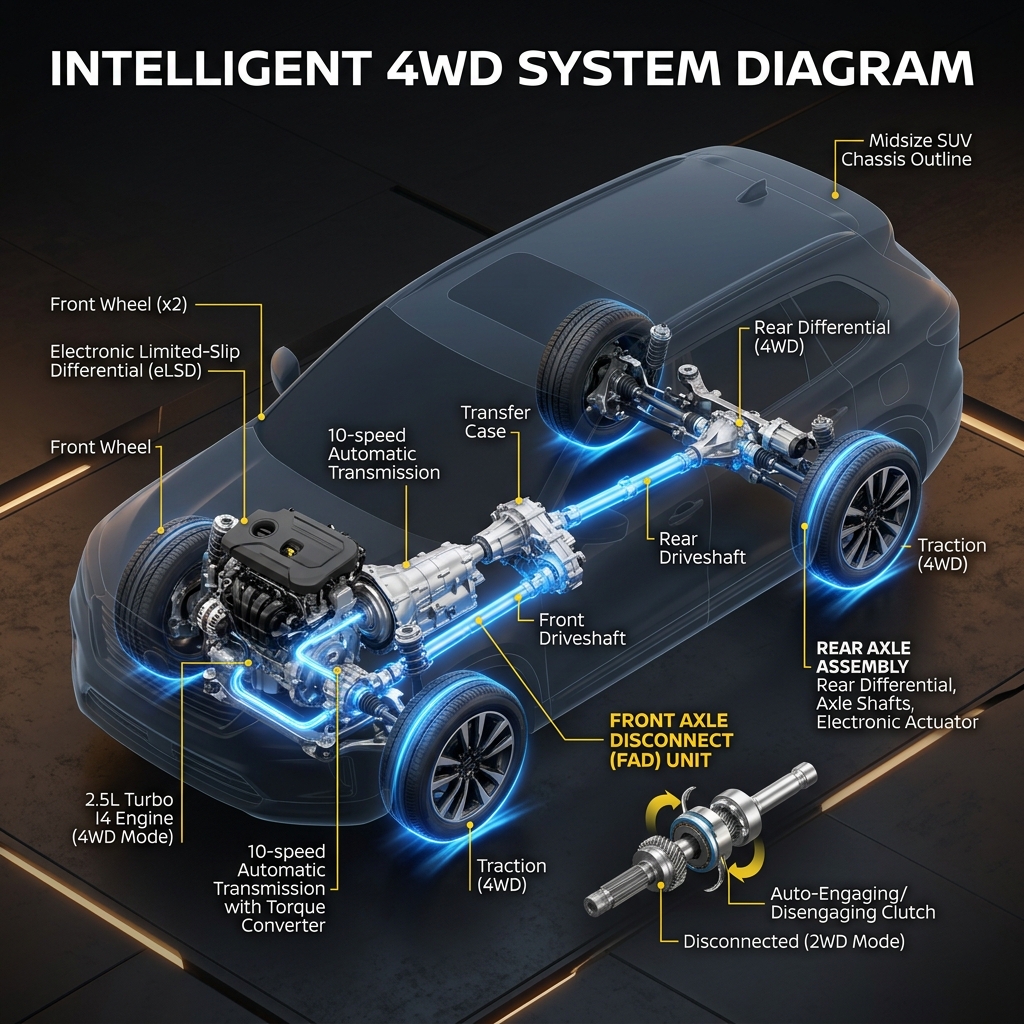
The 2027 Ford Explorer answers these seasonal hazards with available Intelligent 4WD featuring an auto-disengaging front axle. On dry, clear stretches of road, the system automatically disconnects the front driveline, eliminating rotational drag and conserving fuel.
The instant onboard sensors detect wheel slip, wet leaf build-up, or sudden steering angle changes, Intelligent 4WD seamlessly re-engages power to all four wheels in milliseconds. This dynamic allocation gives you maximum confidence without paying a constant fuel penalty.
The Explorer Terrain Management System™ features tailored drive modes including Slippery and Trail. By adjusting throttle response, shift points, and traction control for slick autumn conditions, Ford engineering balances active safety with efficient fuel delivery.
Cargo Capacity, Passenger Comfort, and Payload Impact on Fuel Mileage
Autumn road trips typically mean loading up heavy autumn gear—coolers for tailgating, bulky camping equipment, heavy jackets, and luggage for up to seven passengers. Additional weight increases rolling resistance and forces engine labor, which directly impacts fuel consumption.
The Ford Explorer balances spatial utility with aerodynamic efficiency. Featuring up to 88 cubic feet of maximum cargo capacity behind the first row and flexible 35/30/35 split-folding second-row seats, packing is simple. High-strength, military-grade aluminum alloy components in key body structures keep overall curb weight lighter than the Chevy Traverse.
The Chevrolet Traverse offers a spacious interior, but its heavier curb weight requires extra power output to haul equivalent payloads. Carrying four adults and weekend equipment causes a noticeable drop in highway MPG for the Traverse compared to its unladen baseline.
By maintaining superior structural weight distribution and lower overall mass, the Explorer limits payload-induced fuel penalties. You enjoy rich interior legroom, versatile cargo arrangements, and long-haul fuel economy whether commuting around Carol Stream or heading across state lines.
What Lighting Features on 2027 Ford Vehicles Help with Autumn Fog and Early Darkness?
Shorter autumn days bring earlier sunsets and heavy morning fog rolling off local waterways near DuPage County forest preserves. Navigating reduced visibility requires advanced lighting technology to ensure driver safety without straining vehicle electrical systems.
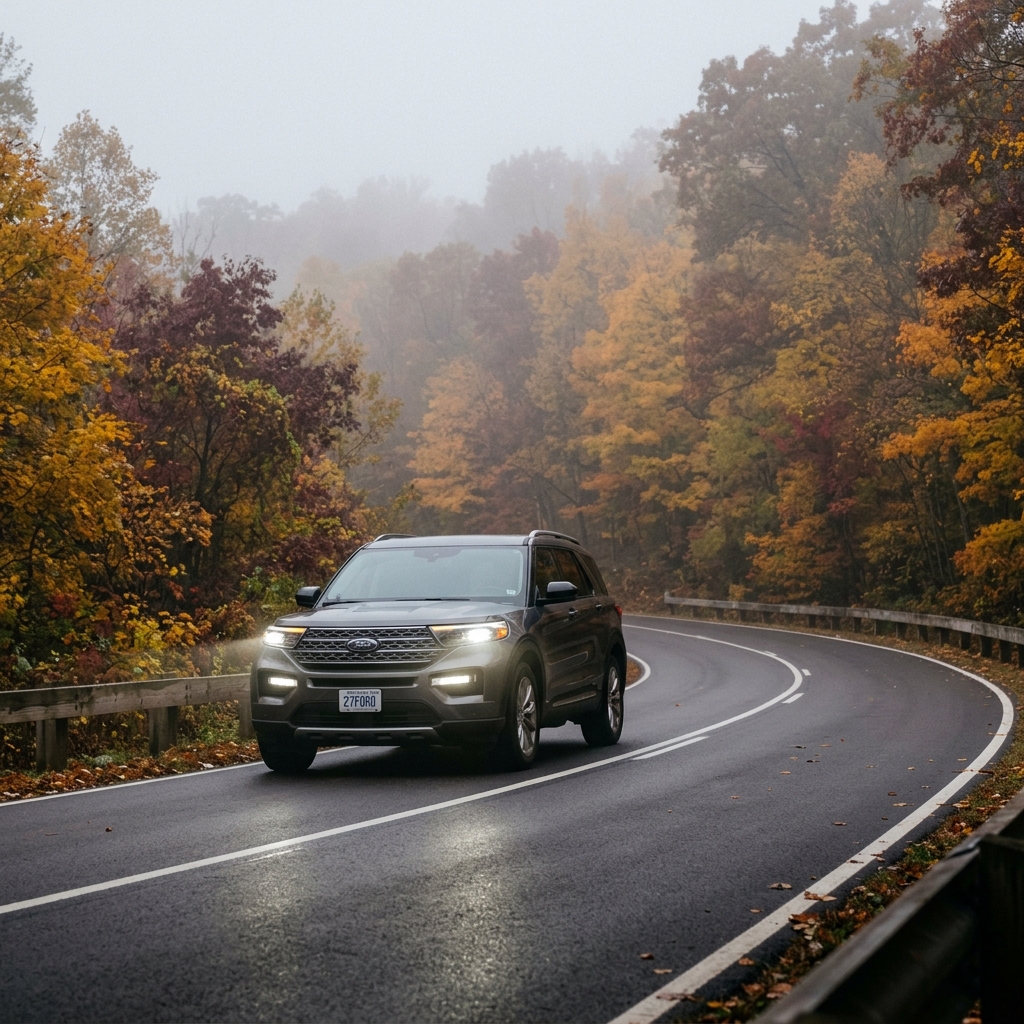
The 2027 Ford Explorer comes equipped with signature LED headlamps with available Adaptive Dynamic Bending Light technology. These intelligent headlights swivel in sync with steering input, illuminating dark curves and hidden corners before you initiate a turn.
Integrated low-mounted LED fog lamps cut low across road surfaces, piercing dense autumn haze without glaring glare reflections. Standard Auto High-Beam Headlamps continuously scan oncoming traffic, toggling between high and low beams automatically so you can focus on the road.
How Does Nighttime Pedestrian and Animal Detection Work on 2027 Ford Vehicles?
Autumn coincides with peak white-tailed deer movement throughout Illinois suburban neighborhoods and rural state park connectors. Early darkness and dim road lighting heighten the risk of nocturnal animal collisions and unseen pedestrian encounters.
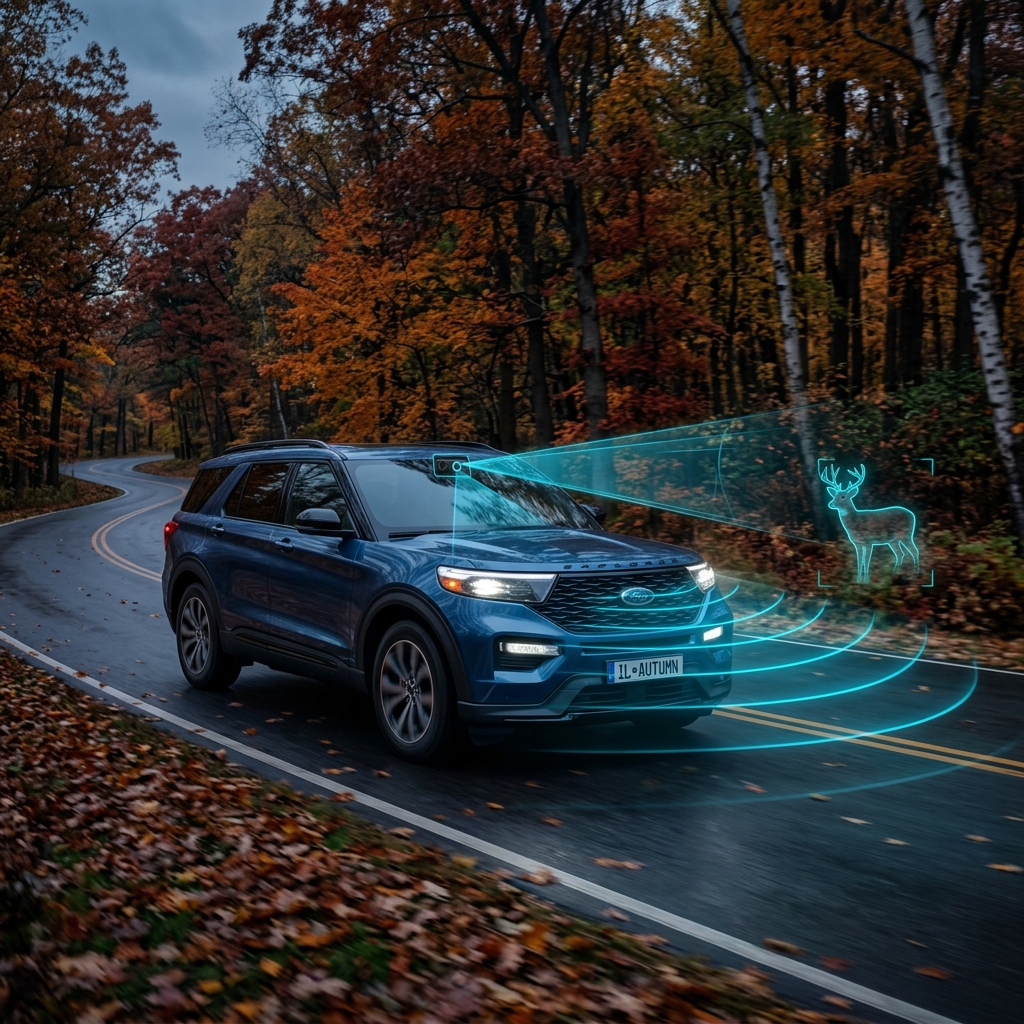
The 2027 Ford Explorer comes standard with Ford Co-Pilot360® Assist+ technology featuring Pre-Collision Assist with Automatic Emergency Braking (AEB) and enhanced Pedestrian Detection. The system combines high-resolution windshield optical cameras with front radar sensors to scan the road ahead.
Operating reliably in low-light environments, the system identifies heat and visual silhouettes of crossing animals or pedestrians. If a potential collision is detected, clear visual and audible alerts alert the driver immediately. If reaction time is insufficient, the system automatically applies full braking pressure to reduce impact severity or avoid an accident entirely—providing priceless peace of mind during nighttime fall travel.
How Should I Prepare My Ford Vehicle for Autumn Driving Conditions?
1. Tire Health & Pressure
Air pressure drops approximately 1 PSI for every 10-degree decrease in outside temperature. Inspect tire pressure regularly to preserve fuel economy and maintain traction over wet autumn leaves. Ensure tread depth exceeds 4/32 inches for effective water evacuation.
2. Battery & Electrical Check
Cold mornings place extra stress on your vehicle battery as starting power requirements increase. Have your battery voltage tested and terminal posts cleaned. Ensure defrosters, seat heaters, and exterior lighting draw current efficiently without draining the charge.
3. Essential Fluid Top-Offs
Verify coolant/antifreeze concentration levels to protect your radiator against unexpected early frosts. Replace engine oil with winter-grade synthetic motor oil and top off washer fluid with freeze-resistant seasonal formulations. Schedule pre-trip inspection at
Schedule Service Now.
When Should Ford Windshield Wiper Blades Be Replaced Before Fall Rain and Frost?
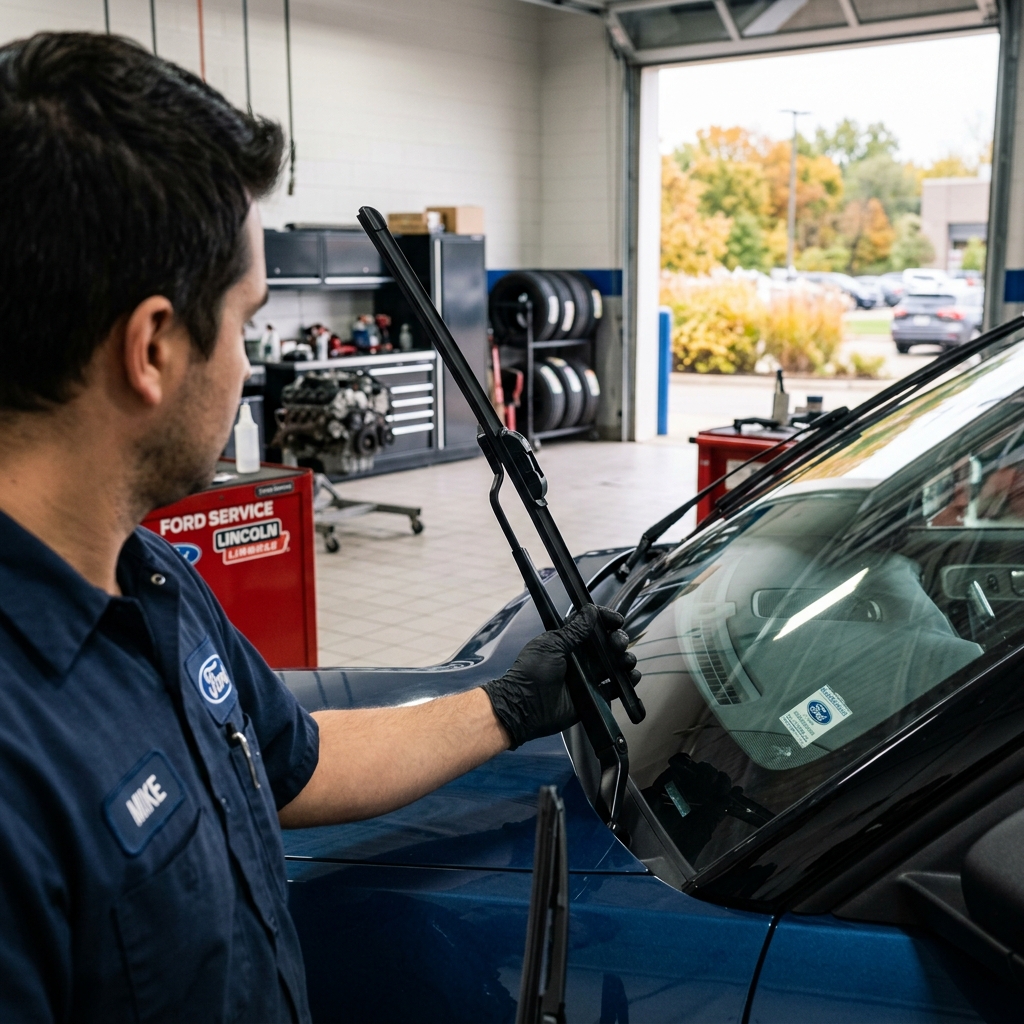
Summer sun exposure bakes and dries out wiper blade rubber compounds, leaving them prone to cracking, squeaking, and streaking. As autumn rain downpours and morning frost become common in Carol Stream, degraded wipers severely hinder driver visibility.
Automotive experts recommend replacing windshield wiper blades every 6 to 12 months—ideally right at the start of autumn. Signs you require immediate replacement include chatter across the glass, uneven streaks, or torn rubber edges.
Selecting genuine OEM Motorcraft® premium beam wiper blades ensures exact windshield contour fitting and uniform pressure across the glass surface. Visit the
Parts Center at Hawk Ford of Carol Stream to pick up precision-matched replacement wipers engineered for your specific Ford vehicle.
Autumn Towing Efficiency: Explorer vs. Traverse for Weekend Trailer Trips
For outdoor enthusiasts taking small campers, utility trailers, or boats on autumn weekend getaways, towing capability directly influences overall trip efficiency. Pulling a heavy load increases aerodynamic drag and requires constant torque delivery.
The Ford Explorer offers a maximum towing capacity of up to 5,000 lbs when properly equipped with the Class III Trailer Tow Package. Ford’s integrated Tow/Haul mode recalibrates shift points to hold lower gears longer, suppressing unwanted gear hunting while climbing incline roads along river valleys.
The Chevrolet Traverse also rates up to 5,000 lbs maximum towing. However, pulling a 4,000 lb trailer causes its 8-speed transmission to shift more frequently under stress, leading to higher fuel consumption spikes compared to the Explorer’s 10-speed range.
Explorer drivers benefit from standard Trailer Sway Control, which selectively applies individual wheel braking to maintain trailer stability in gusty autumn crosswinds, ensuring safety without sacrificing engine power efficiency.
Best Scenic Autumn Road Trip Routes Starting from Carol Stream and DuPage County
Starved Rock & Illinois River Valley
Departing from Carol Stream, Bloomingdale, or Glendale Heights, a 90-minute drive southwest along I-88 and IL-178 brings you to Starved Rock State Park. The Explorer 28 MPG highway range allows easy round trips on less than half a tank.
Great River Road Scenic Byway
Head west on US-30 towards the Mississippi River for breathtaking bluffs and autumn foliage. The Explorer’s 10-speed transmission glides effortlessly along rolling terrain, maintaining low RPM cruising efficiency for extended distance driving.
Lake Michigan North Shore Drive
Take I-294 North up towards Lake Forest and Evanston. Explorer’s Ford Co-Pilot360® features ease high-density expressway navigation, letting your family enjoy stunning lakefront views and vibrant fall tree canopies in comfort.
Test Drive the Fuel-Efficient Ford Explorer at Hawk Ford of Carol Stream Today
When comparing autumn fuel economy, smart 4WD traction control, advanced safety technology, and real-world highway range, the Ford Explorer proves itself as the definitive 3-row SUV for Midwest fall trips. Outperforming the Chevrolet Traverse in highway MPG efficiency and gear ratio optimization, the Explorer keeps your family moving forward with confidence.




0 comment(s) so far on Ford Explorer vs Chevy Traverse: Autumn Fuel Economy