What Is the Gas Mileage (MPG) of the Ford Explorer?
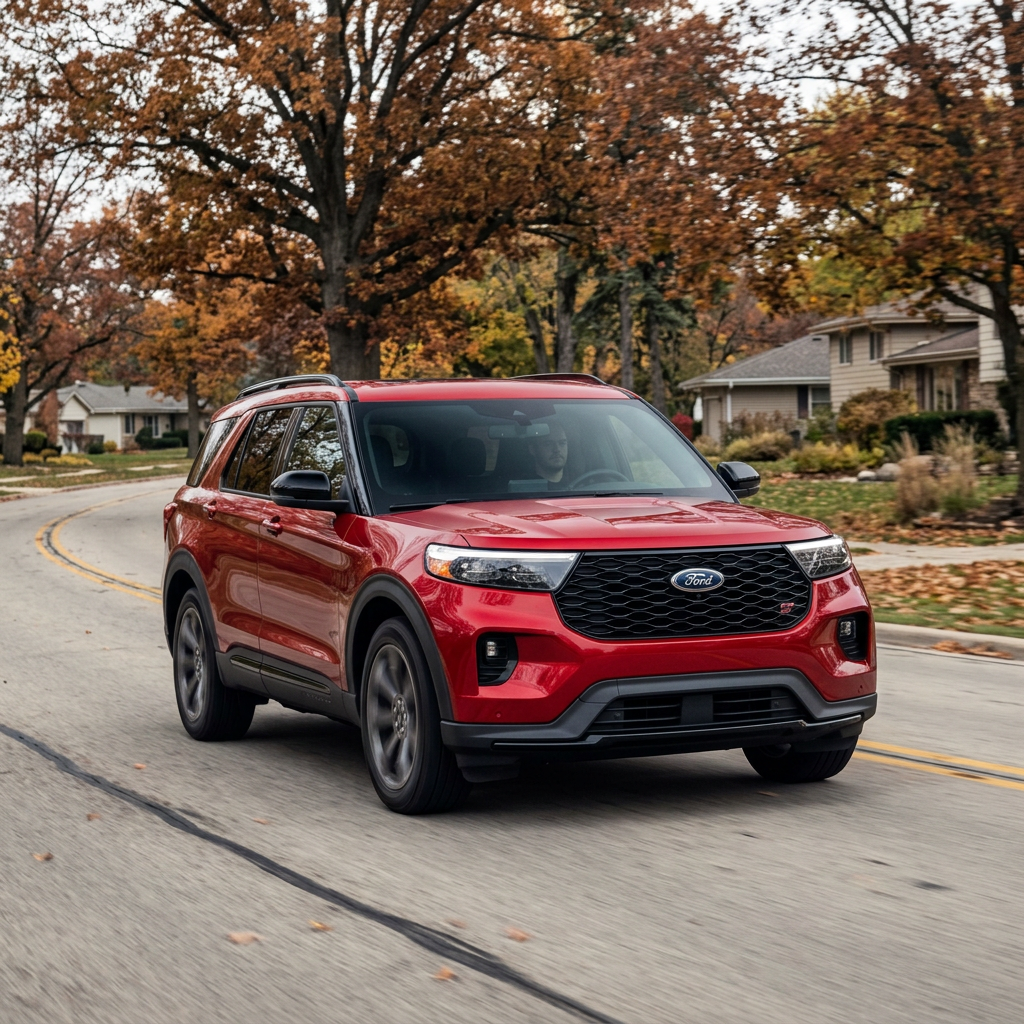
When evaluating a three-row family SUV, fuel efficiency stands alongside safety, seating capacity, and towing power as a top consideration. The Ford Explorer delivers impressive EPA-estimated fuel economy across its powertrain lineup. Equipped with the standard 2.3L EcoBoost I-4 engine and Rear-Wheel Drive (RWD), the Ford Explorer achieves up to an EPA-estimated 21 MPG in the city, 28 MPG on the highway, and 24 MPG combined. Choosing the Intelligent All-Wheel Drive (AWD) system slightly alters these figures to an EPA-estimated 20 MPG city and 27 MPG highway, offering robust all-weather capability across DuPage County winters while preserving fuel efficiency.
For drivers seeking elevated performance, the 3.0L EcoBoost V6 engine delivers maximum horsepower without sacrificing realistic efficiency. In its standard RWD configuration, the 3.0L EcoBoost V6 yields an EPA-estimated 18 MPG city and 25 MPG highway (21 MPG combined), while the Intelligent AWD model delivers 18 MPG city and 24 MPG highway. For daily suburban driving—navigating traffic along North Avenue or commuting on I-355 through Carol Stream, Wheaton, and Glendale Heights—these powertrains strike a balance between spirited acceleration and daily commuter economics.
| Engine Powertrain |
Drivetrain |
City MPG |
Highway MPG |
Combined MPG |
| 2.3L EcoBoost I-4 |
RWD |
21 |
28 |
24 |
| 2.3L EcoBoost I-4 |
Intelligent AWD |
20 |
27 |
23 |
| 3.0L EcoBoost V6 |
RWD |
18 |
25 |
21 |
| 3.0L EcoBoost V6 |
Intelligent AWD |
18 |
24 |
20 |
Comparing 2.3L EcoBoost 4-Cylinder vs. 3.0L EcoBoost V6 Gas Mileage and Annual Fuel Costs
Understanding the real-world financial difference between engine options requires calculating annual fuel expenditure across average driving distances. Based on a standard baseline of 15,000 miles driven per year—typical for Chicagoland commuters traveling between Carol Stream, Naperville, and downtown Chicago—the 2.3L EcoBoost I-4 consumes approximately 625 gallons of gasoline annually at a combined rating of 24 MPG. In comparison, the twin-turbocharged 3.0L EcoBoost V6 consumes roughly 714 gallons annually at a combined rating of 21 MPG. Assuming an average regular unleaded fuel price of $3.60 per gallon, the 2.3L EcoBoost incurs an annual fuel cost of roughly $2,250. The 3.0L V6 results in an estimated annual fuel cost of $2,570 when using regular fuel—a difference of around $320 per year or under $27 per month.
Fuel tank capacity and manufacturer fuel recommendations also play a major role in total cost of ownership. Both engine options feature an 17.9-gallon fuel tank on RWD models and an expanded 20.2-gallon fuel tank on AWD configurations. This larger tank capacity allows AWD models to maintain an impressive highway cruising range exceeding 500 miles on a single fill-up. While both engines are engineered to run safely and effectively on 87-octane regular unleaded gasoline, Ford recommends 93-octane premium fuel to achieve peak horsepower and torque ratings during heavy towing or spirited driving. For standard daily errands, regular unleaded keeps ownership costs predictable and low.
How Do Engine Horsepower and Fuel Economy Compare Between the Explorer and Highlander?
When benchmarking three-row SUVs, consumers often weigh the Ford Explorer against the Toyota Highlander. While the Highlander focuses heavily on efficiency, the Ford Explorer delivers significantly greater engine horsepower and responsiveness without sacrificing competitive mileage numbers. The baseline Ford Explorer 2.3L EcoBoost I-4 generates a robust 300 horsepower and 310 lb-ft of torque while achieving up to 28 MPG highway. In contrast, the standard Toyota Highlander 2.4L turbocharged 4-cylinder produces 265 horsepower and delivers an EPA-estimated 28 MPG highway. Drivers gain 35 additional horsepower in the Explorer with virtually identical highway fuel economy. For high-performance enthusiasts, the Explorer ST features a 400-horsepower 3.0L EcoBoost V6 that achieves up to 25 MPG highway. Toyota offers no performance equivalent in the standard Highlander lineup, forcing buyers to choose between utility and performance.
How Does Auto Start-Stop Technology Improve Ford Explorer MPG?
Urban Idle Reduction
Engine idling burns fuel without covering distance. Auto Start-Stop shuts off the engine when come to a complete stop at traffic lights along North Avenue or Army Trail Road, restarting seamlessly when your foot leaves the brake.
Measurable Savings
Studies indicate that Auto Start-Stop technology improves city fuel economy by 3% to 8% during stop-and-go driving, conserving up to half a gallon of gas per full tank in heavy traffic conditions.
Climate & Control
The intelligent system monitors cabin climate, battery state, and exterior temperature. During hot summer afternoons or cold DuPage County winters, the engine automatically stays running to preserve passenger comfort.
The Impact of the 10-Speed SelectShift Automatic Transmission on Highway Efficiency
A cornerstone of the Ford Explorer’s fuel efficiency is its standard 10-Speed SelectShift Automatic Transmission. By featuring ten closely spaced gear ratios, the transmission allows the engine to consistently operate in its optimal powerband and thermal efficiency zone, regardless of vehicle speed or road incline.
On high-speed corridors like I-355, I-290, and Route 59, the upper overdrive gears (8th, 9th, and 10th speed) significantly lower engine RPM at cruising speeds. Cruising at 65 MPH in 10th gear keeps engine speed under 1,800 RPM, reducing internal friction, engine wear, and unnecessary fuel consumption during long highway drives across metropolitan Chicago.
How Much Does a Roof Rack Cargo Box Affect Ford Explorer Fuel Efficiency?
Adding exterior accessories like roof rack cargo boxes, kayak carriers, or oversized bike racks increases functional utility, but introduces aerodynamic drag that negatively affects gas mileage. At highway speeds, aerodynamic drag accounts for over 50% of total vehicle energy consumption. Testing reveals that a standard hard-shell roof cargo box reduces fuel efficiency by approximately 10% to 15% at highway speeds (a loss of 2 to 4 MPG). On family road trips originating from Bloomingdale or Carol Stream, removing top-mounted cargo carriers when not in use immediately restores optimal factory fuel economy. For drivers seeking extra gear storage with minimal aerodynamic penalty, genuine OEM Ford hitch-mounted cargo carriers provide a rear-position solution that drastically reduces wind resistance compared to rooftop boxes.
Intelligent AWD vs. RWD: Drivetrain Effects on Fuel Consumption
RWD Baseline Efficiency
Rear-Wheel Drive provides the lightest chassis configuration and lowest rotational driveline mass, yielding peak EPA ratings of up to 28 MPG highway for maximum long-distance efficiency.
Rear-Axle Disconnect
Ford’s Intelligent AWD features an automated rear-axle disconnect. When extra traction is unnecessary, the system completely disengages front driveline components, operating as RWD to eliminate drag.
Seamless Traction
When sensors detect slip during winter weather or aggressive acceleration, power transfers instantly to all four wheels in milliseconds, delivering maximum grip with minimal fuel efficiency compromise.
What Routine Maintenance Helps Preserve Ford Explorer Gas Mileage?
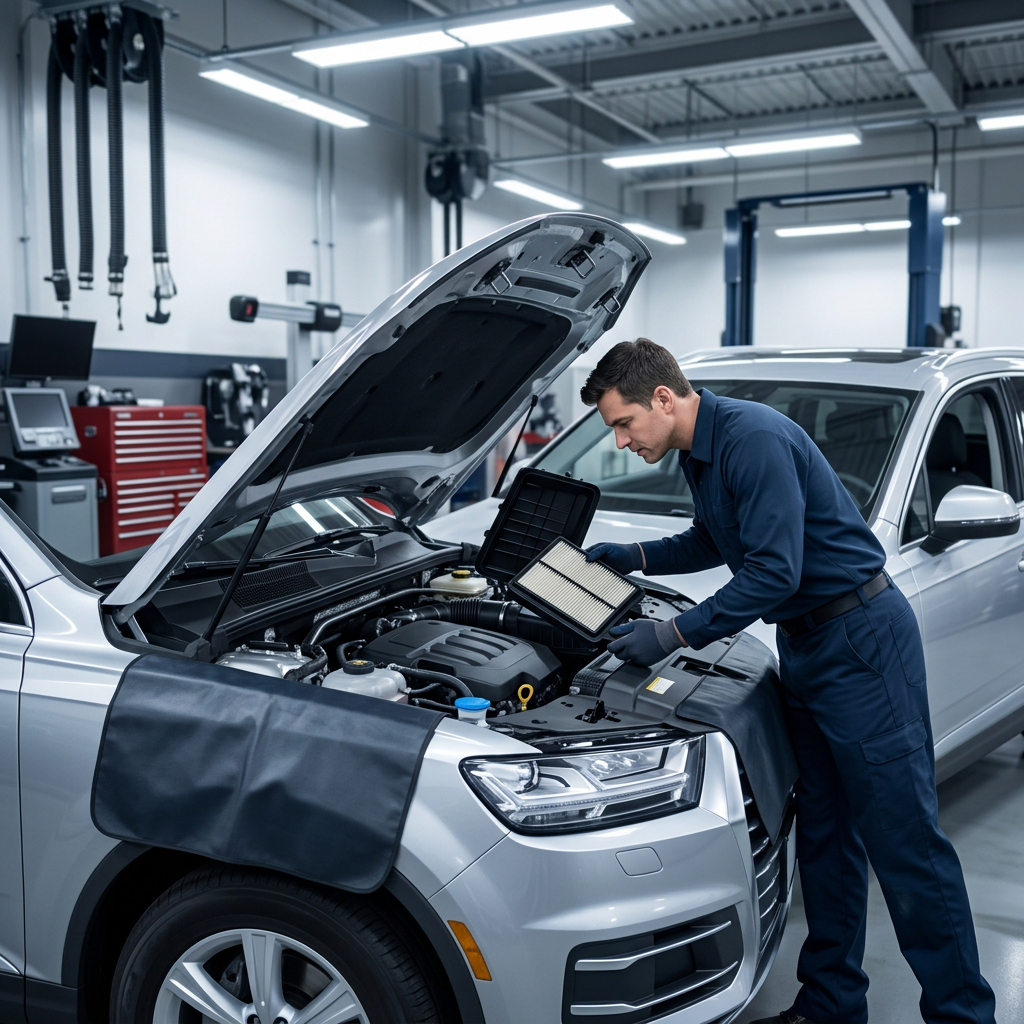
Maintaining factory MPG ratings over time requires consistent adherence to routine vehicle maintenance. Key items that preserve fuel economy include: • **Tire Pressure Monitoring:** Underinflated tires increase rolling resistance. Keeping tires inflated to recommended PSI levels preserves up to 3% in fuel economy. • **Engine Air Filter Replacement:** A clean air filter ensures optimal air-fuel ratio for clean combustion in EcoBoost engines. • **Synthetic Motor Oil Changes:** Low-viscosity synthetic oils reduce internal engine friction during cold starts in Illinois winters. • **Spark Plug Inspection:** Timely spark plug replacements prevent misfires and maintain complete fuel burn efficiency.
Real-World Driving Techniques to Maximize MPG on Chicagoland Arterials
Eco Drive Mode
Selecting Eco Mode via the Terrain Management System adjusts throttle response and transmission shift points, smoothing out acceleration to maximize fuel efficiency.
Adaptive Cruise Control
Utilizing Adaptive Cruise Control on highways like I-355 maintains a steady cruising speed and smooth pacing, avoiding speed spikes that consume excess fuel.
Limit Winter Idling
During cold DuPage County winters, limit pre-heating idling time to 1-2 minutes. Modern engines warm up faster and operate more efficiently while driving gently.
Understanding Ford Explorer Towing Capacity and Its Direct Effect on Fuel Economy
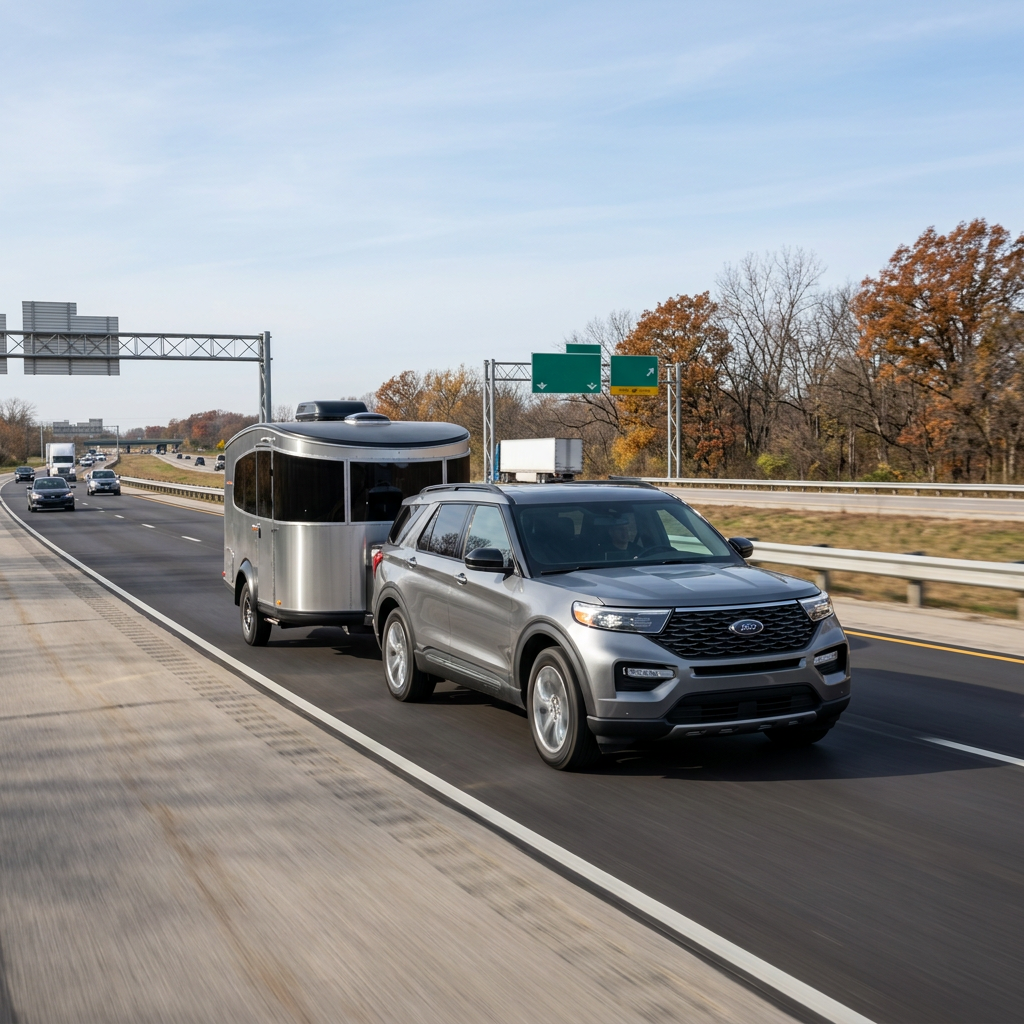
When properly equipped with the Class III Trailer Tow Package, the Ford Explorer achieves a maximum towing capacity of up to 5,600 lbs with the 3.0L EcoBoost V6 engine and up to 5,300 lbs with the 2.3L EcoBoost I-4. Towing heavy loads—such as camper trailers, boats, or utility trailers—significantly increases load demand on the powertrain. While towing, expect real-world gas mileage to adjust to approximately 12 to 16 MPG depending on trailer weight, elevation changes, and frontal area drag. Activating Tow/Haul mode adjusts shift timing to prevent excessive gear hunting, managing thermal dynamics and optimizing fuel consumption while trailering.
Trading In Your Current SUV for a Fuel-Efficient Ford Explorer in Carol Stream
Upgrading from an older, V8-powered or less efficient three-row SUV to a modern Ford Explorer yields immediate savings at the fuel pump. Older utility vehicles averaging 14 to 16 MPG consume hundreds of extra fuel dollars every year compared to a new Explorer averaging 24 MPG combined.
At Hawk Ford of Carol Stream, drivers can explore competitive trade-in valuations, transparent financing terms, and an extensive selection of new and
Used Vehicle Inventory or
CPO Inventory models tailored to your daily driving demands.
Test Drive a Fuel-Efficient Ford Explorer at Hawk Ford of Carol Stream
The Ford Explorer combines standard three-row flexibility, modern EcoBoost powertrain efficiency, and dynamic Intelligent AWD capability. Whether you are prioritizing low annual fuel costs or robust towing performance, our knowledgeable dealership team in Carol Stream is here to help you select the ideal model for your lifestyle.
Visit us at 175 North Ave, Carol Stream, IL 60188 or contact us directly to test drive the Ford Explorer lineup today. Get Directions to Hawk Ford of Carol Stream or Call (630) 233-9696 to schedule your visit.





0 comment(s) so far on Ford Explorer MPG & Fuel Economy Guide