Key Safety Summary: What Recalls Affect Ford Explorer EcoBoost Engines?
If you own or are considering purchasing a Ford Explorer equipped with a turbocharged EcoBoost engine, staying informed about safety recalls is essential for your vehicle’s longevity and your personal safety on the road. Over recent model years, Ford Motor Company and the National Highway Traffic Safety Administration (NHTSA) have issued targeted safety recalls and customer satisfaction programs addressing specific powertrain components across both the 2.3L inline-four and 3.0L V6 EcoBoost engine families. Understanding these campaigns—what causes them, which vehicles are affected, and how to receive free factory repairs—empowers you to keep your SUV running smoothly and safely.
The most prominent recall campaign impacting select 2021–2022 Ford Explorer models (alongside related Ford and Lincoln vehicles equipped with 2.7L and 3.0L EcoBoost engines) involves intake valve stem fractures under NHTSA Campaign Number 24V-635 (Ford Safety Recall 24S55). In addition to intake valve metallurgy concerns, earlier and overlapping model years from 2016 through 2024 have been subject to service campaigns regarding fuel rail pressure sensor leaks, engine oil pump drive belt tensioner degradation, and engine control module (ECM) software updates. When an intake valve fails or oil pressure drops prematurely, drivers may experience severe mechanical knocking, check engine illumination, sudden loss of drive power, or complete engine stall while driving.
At Hawk Ford of Carol Stream, our mission is to deliver complete clarity and rapid service support to Chicagoland drivers. All safety recall repairs mandated by federal guidelines are performed entirely free of charge to vehicle owners, regardless of whether your vehicle is still under its original factory warranty. If you suspect your Explorer is affected or want to confirm its status before embarking on your next family road trip, you can easily
Schedule Service Now or reach out to our service team directly. If you are considering upgrading your current vehicle altogether, feel free to explore our
New Vehicle Inventory or check out our high-quality
Used Vehicle Inventory today.
Which Model Years of the Ford Explorer Are Included in EcoBoost Engine Recalls?
To determine whether your Ford Explorer is impacted by an EcoBoost engine recall, it helps to break down the model years into two distinct structural generations: the fifth generation (2016–2019) and the sixth generation (2020–2024). While the EcoBoost badge represents Ford’s industry-leading combination of direct fuel injection and twin-scroll turbocharging, each generation uses distinct displacement sizes, cylinder head castings, and accessory drive systems.
For 2016 through 2019 Ford Explorers, engine choices featured the 2.3L EcoBoost I-4 standard on mid-tier trims and the 3.5L EcoBoost V6 in the Explorer Sport and Platinum. Recalls for these model years primarily centered on fuel delivery components, high-pressure fuel pump seals, and exhaust manifold heat shielding. While engine structural defects were relatively rare for fifth-gen 2.3L units, high-mileage vehicles can experience turbocharger coolant line seepage or oil feed line blockages if oil service intervals were neglected.
For 2020 through 2024 Ford Explorers built on the rear-wheel-drive CD6 architecture, engine options shifted to the updated 2.3L EcoBoost I-4 and the high-output 3.0L EcoBoost V6. The primary safety recall focus for 2021–2022 models relates to NHTSA Campaign 24V-635, which involves specific batches of 2.7L and 3.0L EcoBoost V6 engines produced with sub-standard intake valve alloy material (known as ‘Silchrome Lite’). Vehicles produced outside these specific engine build windows or equipped with standard 2.3L four-cylinder engines may not fall under 24V-635, but could still be subject to PCM software updates, rear axle mounting bolt recalls, or fuel pressure sensor inspections.
Because safety recall scope is determined by exact assembly plant production dates and engine serial numbers rather than model year alone, two Explorers built in the same month might have different recall statuses. If you bought a pre-owned Explorer recently, reviewing the
CPO Inventory standards or scheduling a quick digital VIN check at Hawk Ford ensures your vehicle has received every available factory enhancement.
What EcoBoost Engine Options Are Available in Recent Ford Explorer Model Years?
2.3L EcoBoost I-4 Engine
Standard on Explorer Base, XLT, ST-Line, and Timberline trims, the 2.3L EcoBoost four-cylinder delivers 300 horsepower and 310 lb-ft of torque. Featuring a twin-scroll turbocharger, high-pressure direct fuel injection, and Ti-VCT (Twin Independent Variable Cam Timing), this engine offers exceptional efficiency combined with up to 5,300 lbs of towing capacity when properly equipped. It utilizes a durable timing chain drive system.
3.0L EcoBoost V6 Engine
Standard on the performance-tuned Explorer ST and available on luxury Platinum trims, the 3.0L Twin-Turbo EcoBoost V6 unleashes 400 horsepower and 415 lb-ft of torque. Constructed with a compacted graphite iron (CGI) block for superior strength without excess weight, this engine propels the three-row SUV from 0 to 60 mph in under 5.5 seconds and supports maximum towing capabilities up to 5,600 lbs.
2025–2026 Engine Updates
For the refreshed 2025 and upcoming 2026 model years, Ford updated both EcoBoost powertrains with improved dual injection (combining port and direct injection), revised intake valve metallurgy, optimized turbo housing heat shielding, and refined 10-speed SelectShift automatic transmission calibration to enhance long-term thermal durability and eliminate prior recall vulnerabilities.
Major Explorer EcoBoost Recalls Explained: Intake Valves, Oil Pumps, and Fuel Lines
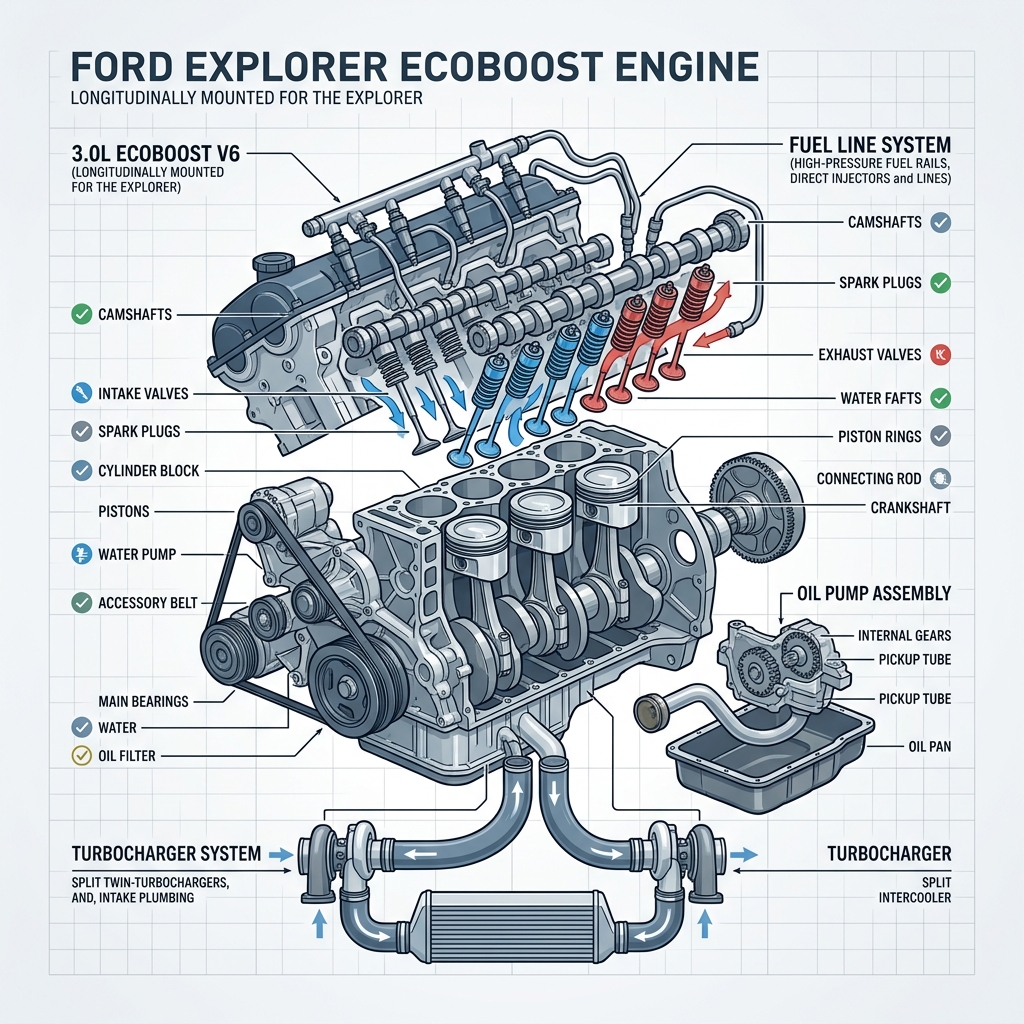
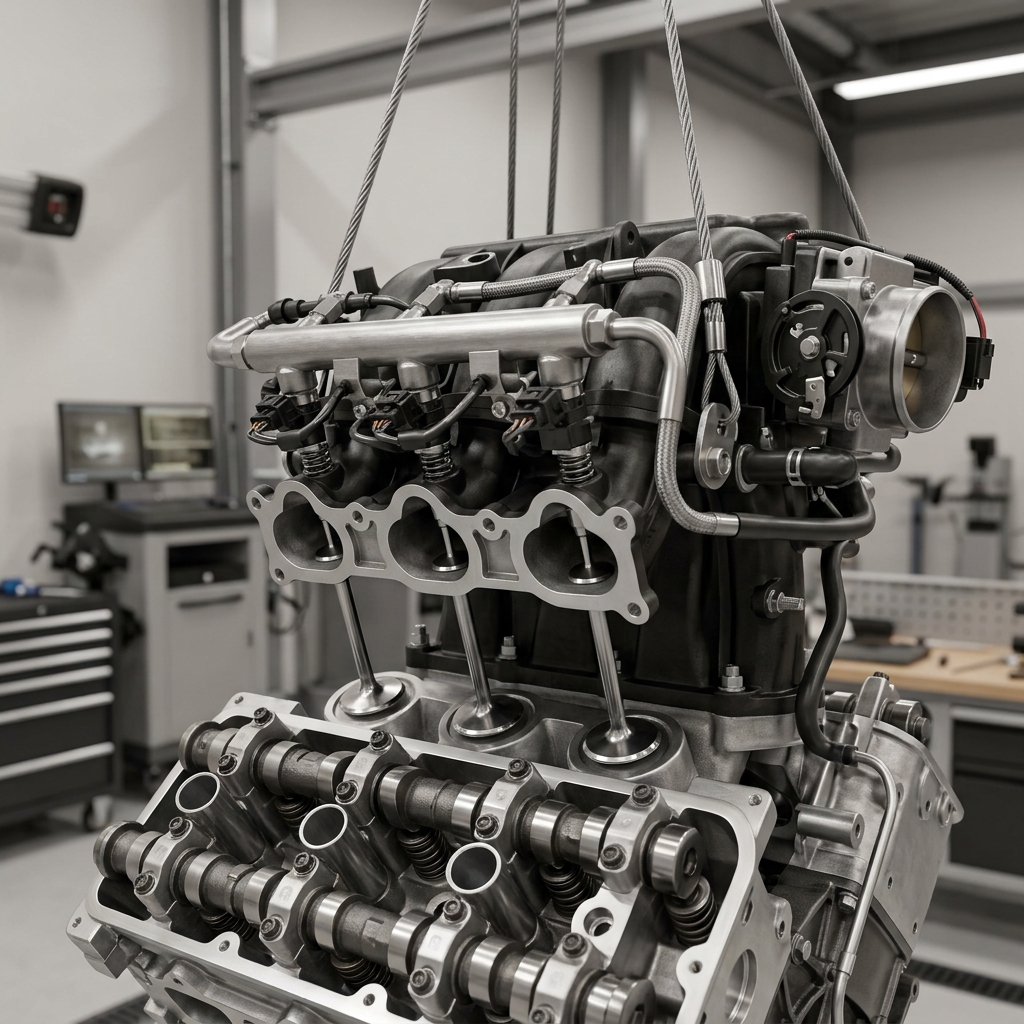
To fully appreciate why factory recall remedies are so critical, it helps to understand the engineering factors involved in major EcoBoost service actions. The primary safety concern that made national headlines is NHTSA Recall 24V-635 (Ford Safety Recall 24S55), which impacts specific 2021–2022 Ford Explorer 3.0L V6 engines. The core mechanism of this issue lies in the intake valve material alloy known as ‘Silchrome Lite.’ Under elevated engine operating temperatures, this specific alloy can become brittle, leading to micro-cracking along the valve stem.
If an intake valve fractures while the engine is running, the valve head can drop directly into the combustion chamber. This causes instantaneous cylinder damage, heavy mechanical noise, engine misfire, check engine light illumination, and a sudden total loss of propulsion. To resolve this, Ford’s factory repair procedure requires dealership master technicians to perform an engine cycle test. Vehicles that fail the test or meet specific mileage/build thresholds receive a complete, redesigned engine long-block assembly free of charge.
A second major focus area involves oil pump drive belt tensioners and fuel rail pressure sensors across broader model years. On select 2.3L engine configurations, excessive belt wear or tensioner degradation can lead to reduced oil pressure, triggering oil pressure warning lights and engine safety limp-home modes. On the fuel system side, cracked fuel rail pressure sensor housings can allow vapor or liquid fuel leaks in the engine compartment, creating potential fire hazards or fuel odors near the air intake.
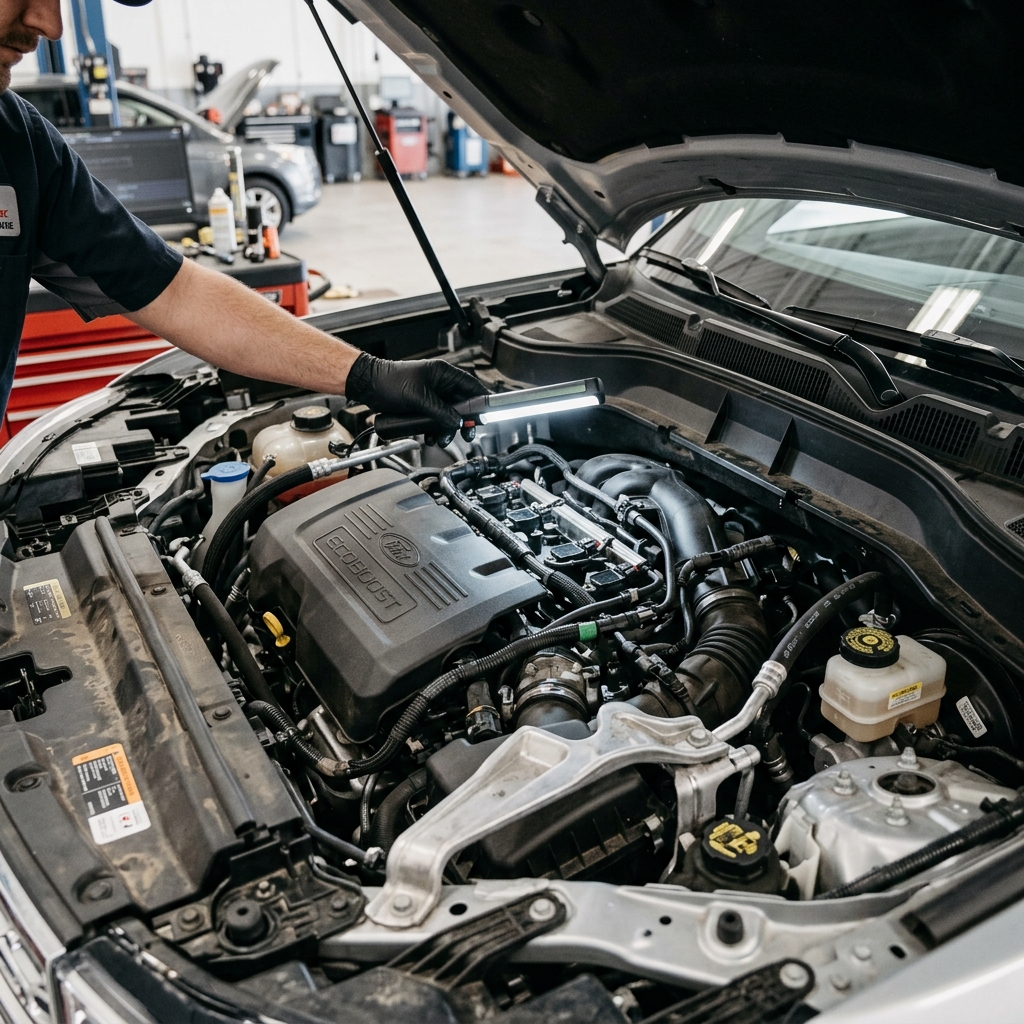
Warning signs that warrant an immediate diagnostic inspection include unusual metallic ticking or tapping from under the hood, hesitations during hard acceleration, sudden low oil pressure alerts on the digital instrument cluster, or a persistent smell of gasoline inside or around your vehicle. If you experience any of these symptoms while driving near Carol Stream, do not hesitate to contact our service team immediately.
How to Check If Your Ford Explorer Has an Open EcoBoost Engine Recall
Step 1: Locate Your Vehicle Identification Number (VIN)
Your vehicle’s 17-digit VIN is a unique identifier required to look up recall records. You can locate your VIN in several convenient places: on the driver-side lower dashboard (visible through the front windshield from outside), stamped on the safety compliance sticker inside the driver-side door jamb, listed on your vehicle registration card, or printed on your auto insurance card.
Step 2: Utilize Official Database Lookup Tools
Once you have your 17-digit VIN, you can instantly check for open safety recalls by visiting the official NHTSA recall lookup page (nhtsa.gov/recalls) or Ford Owner portal (Ford.com/support/recalls). These national databases list incomplete safety recalls, safety compliance actions, and customer satisfaction programs that apply specifically to your vehicle.
Step 3: Connect directly with Hawk Ford of Carol Stream
Online databases update periodically, but local Ford dealerships have direct real-time access to Ford’s OASIS (On-Line Automotive Service Information System). By contacting Hawk Ford, our advisors can query your VIN immediately to verify pending safety actions, check if replacement engine assemblies or intake valves are currently in stock, and reserve a priority service slot for you.
For immediate assistance over the phone, feel free to
Call us at (630) 233-9696. Our knowledgeable service advisors will pull up your vehicle details within seconds and guide you through the next steps seamlessly.
Does Ford Provide a Loaner Vehicle During Recall Repairs?
Ford Loaner Policies
For safety recalls that require extensive engine teardowns or complete engine replacement—such as intake valve replacements under Recall 24S55—Ford Motor Company provides complimentary alternate transportation or rental vehicle reimbursement for affected vehicle owners during the service period.
Hawk Ford Mobility Program
At Hawk Ford of Carol Stream, we maintain a fleet of clean, late-model Ford loaner vehicles to minimize disruptions to your work, family, and daily routine. When you reserve your service appointment, simply inform our service coordinator that you require alternate transportation so we can reserve a loaner SUV for you.
Can a Ford Dealer Near Carol Stream, IL Confirm Explorer EcoBoost Recall Status and Handle the Repair?
Yes, absolutely! Hawk Ford of Carol Stream is a premier, fully authorized Ford dealership serving Carol Stream, Glendale Heights, Bloomingdale, Wheaton, and the surrounding DuPage County communities. Our state-of-the-art service center is equipped with specialized engine hoists, diagnostic equipment, and factory calibration software required to complete complex EcoBoost engine service actions according to strict OEM specifications.
When you bring your Ford Explorer to Hawk Ford, your vehicle is serviced exclusively by Ford Certified Master Technicians who undergo continuous factory training on EcoBoost turbochargers, direct injection systems, and electronic control modules. We utilize 100% genuine OEM replacement parts straight from Ford Motor Company to guarantee full fitment precision and factory warranty protection.
| Service Capability |
Hawk Ford Service Standards |
Customer Advantage |
| Recall Verification |
Direct OASIS Database Lookup |
Instant precision VIN verification |
| Technician Certification |
Ford Master Tech Certified |
Factory-level repair expertise |
| Replacement Parts |
100% Genuine OEM Components |
Preserves resale value & reliability |
| Mobility Options |
Loaners & Shuttle Transportation |
Zero disruption to daily schedule |
Need genuine accessories or OEM replacement filters for routine maintenance? Visit our dedicated
Parts Center to order components directly from our dealership team.
What Maintenance Steps Can Ford Explorer EcoBoost Owners Take to Reduce the Risk of Engine Issues?
1. Adhere to Full Synthetic Oil Intervals
Turbocharged engines subject engine oil to extreme thermal stress and high shear forces. While owner manuals suggest oil changes up to 10,000 miles, changing full synthetic Motorcraft oil and OEM filters every 5,000 to 7,500 miles prevents varnish accumulation, protects oil pump drive belts, and extends turbocharger bearing life significantly.
2. Inspect Spark Plugs and Ignition Coils Regularly
EcoBoost engines operate under high cylinder pressures. Replacing iridium spark plugs every 30,000 to 45,000 miles ensures clean combustion, prevents engine misfires that stress intake valves, and preserves maximum fuel economy across all driving conditions.
3. Perform Routine Intake Valve Carbon Cleaning
Because direct-injection engines spray fuel straight into the combustion chamber rather than over the intake valves, carbon buildup can gradually accumulate on intake valve stems over 60,000+ miles. Having our master technicians perform periodic induction services or walnut shell blasting restores optimal airflow and reduces valve seat friction.
4. Maintain Engine Cooling Systems
Overheating accelerates valve alloy degradation and head gasket fatigue. Flushing engine coolant according to factory intervals and checking coolant expansion tanks prevents thermal spikes during heavy summer towing or hot idle conditions.
How Does the Ford Explorer EcoBoost Compare to the Honda Pilot and Toyota Highlander?
Ford Explorer EcoBoost
Delivers superior low-end torque (310 to 415 lb-ft) and higher towing capacities (up to 5,600 lbs). While subject to targeted intake valve recalls, Ford’s proactive recall fixes replace affected components completely free of charge, leaving owners with fully warrantied, highly capable engines.
Honda Pilot V6
Relies on a 3.5L naturally aspirated V6 (285 hp, 262 lb-ft). While smooth, it lags behind the Explorer’s passing power and towing capacity (5,000 lbs max). Honda has also issued recent safety recalls regarding connecting rod bearing wear on over 240,000 V6 vehicles.
Toyota Highlander Turbo
Uses a 2.4L Turbo four-cylinder (265 hp, 310 lb-ft). Offers strong fuel economy but lower top-end power compared to Ford’s 3.0L V6. Toyota has similarly issued major safety recall actions for front bumper assembly detachment and curtain airbag deployment concerns.
| Vehicle Model |
Engine & Horsepower |
Max Torque |
Max Towing Capacity |
| Ford Explorer 2.3L |
2.3L Turbo I-4 / 300 hp |
310 lb-ft |
5,300 lbs |
| Ford Explorer ST 3.0L |
3.0L Twin-Turbo V6 / 400 hp |
415 lb-ft |
5,600 lbs |
| Honda Pilot |
3.5L V6 / 285 hp |
262 lb-ft |
5,000 lbs |
| Toyota Highlander |
2.4L Turbo I-4 / 265 hp |
310 lb-ft |
5,000 lbs |
2026 Ford Explorer EcoBoost Recall & Reliability Updates: What Buyers Need to Know
For suburban families eyeing a new or pre-owned SUV, the 2026 Ford Explorer represents a major milestone in powertrain refinement and quality control. Following comprehensive engineering evaluations from earlier model year recalls, Ford Motor Company implemented upgraded valve metallurgy, enhanced oil cooling circuits, and revised factory casting processes across all production facilities.
As a result, 2025 and 2026 model year Explorers are completely exempt from prior intake valve fracture campaigns. Buyers selecting a brand-new 2026 Explorer can drive with total confidence, backed by Ford’s 5-year/60,000-mile factory powertrain warranty and 24/7 Roadside Assistance.
If you are planning to purchase or lease a new model, you can review our full line of models in our
New Vehicle Inventory. If you prefer trade-in convenience, take a moment to
Value Your Trade online to calculate your current vehicle’s cash value, or
Apply for Credit to lock in competitive auto loan rates.
Driving Conditions in Carol Stream, Bloomingdale, and Glendale Heights: Why EcoBoost Health Matters
Living in DuPage County comes with severe climate fluctuations and unique commuting demands. Sub-zero winter cold snaps force engines to operate under thick oil viscosities during cold starts, increasing initial oil pressure resistance along turbo bearing lines. Conversely, hot Chicagoland summers combined with heavy stop-and-go traffic along Army Trail Road, Route 64 (North Ave), and I-355 elevate under-hood heat soaking.
When an EcoBoost engine operates with compromised intake valves, worn oil pump belts, or degraded fuel pressure sensors, localized extreme heat and thermal cycling magnify mechanical weaknesses rapidly. Ensuring your recall repairs are completed promptly safeguards your vehicle against unexpected breakdowns during harsh winter snowstorms or mid-summer family highway trips.
Schedule Your Free Ford Explorer Recall Inspection at Hawk Ford of Carol Stream
Don’t leave your family’s safety or vehicle reliability to chance. If you reside in Carol Stream, Bloomingdale, Glendale Heights, or anywhere in the greater Chicago area, Hawk Ford of Carol Stream is here to make your recall experience stress-free, swift, and completely transparent. All factory recall inspections and repairs are 100% free of charge.





0 comment(s) so far on Ford Explorer EcoBoost Recalls Guide – Hawk Ford of Carol Stream