

Demystifying Your Car’s Service Menu

July 1st, 2026 by

Demystifying Your Car’s Service Menu: What Routine Maintenance Actually Means in Plain English


For many drivers across Carol Stream, Glendale Heights, and Bloomingdale, opening a vehicle owner’s manual or looking at a dealership service board can feel like trying to translate a foreign language. Terms like ‘multi-point inspection,’ ‘cabin air filter filtration efficiency,’ ‘wheel alignment thrust angles,’ and ‘fluid viscosity’ are tossed around by service advisors as if they are everyday vocabulary. This automotive jargon often creates a wall of confusion, leaving vehicle owners feeling disconnected from the actual physical needs of their vehicles. At Hawk Ford of Carol Stream, we believe that transparency is the absolute foundation of a great service relationship. You shouldn’t have to possess a degree in mechanical engineering just to understand why your sedan, SUV, or pickup truck needs care, or what is actually happening to your hard-earned money when you hand over your keys.

 

A Ford service advisor shows a tablet to a customer at a dealership service center desk. (Representative image for illustration purposes only. Actual vehicle may vary based on trim and configuration.)


This comprehensive, educational guide is designed to tear down those barriers and demystify the automotive service menu completely. We will translate complex, technical jargon into straightforward, plain English, using clear analogies and practical explanations that make sense to everyday drivers. Whether you are wondering what happens during a standard oil change, why tire rotations are critical, or how to read the line items on your service invoice, we have you covered. Our team of automotive experts is dedicated to ensuring that you feel confident, empowered, and fully informed every single time you visit our facility at 175 North Ave. Let’s take a deep, transparent look under the hood and simplify your car care routine.


What Does ‘Routine Maintenance’ on a Car Actually Mean in Simple Terms?


To understand ‘routine maintenance,’ it is incredibly helpful to think of your car as a highly sophisticated human body or a modern home. In the medical world, you don’t wait until you are experiencing a severe health crisis to visit a physician; instead, you schedule regular physicals, eat balanced meals, brush your teeth, and get routine screenings. Similarly, in homeownership, you do not wait for your roof to collapse or your basement to flood before you clean out the gutters, replace the HVAC filters, or paint the siding. These are proactive, small, manageable steps designed to maintain structural integrity and prevent massive, expensive disasters down the road.


In the automotive world, routine maintenance is exactly the same concept: it is a program of proactive, scheduled care designed to protect your vehicle’s complex systems from wearing out prematurely. Your car is made of thousands of moving parts that operate under intense pressure, high friction, and extreme temperatures. Over time, fluids break down, filters clog, rubber hoses degrade, and metal components gradually wear thin. Routine maintenance is the practice of replacing these expendable items at specific, predetermined intervals. By addressing these minor needs today, you prevent major physical failures—such as a seized engine or completely failed brakes—tomorrow.


What Is an Oil Change and Why Does My Car Need It?
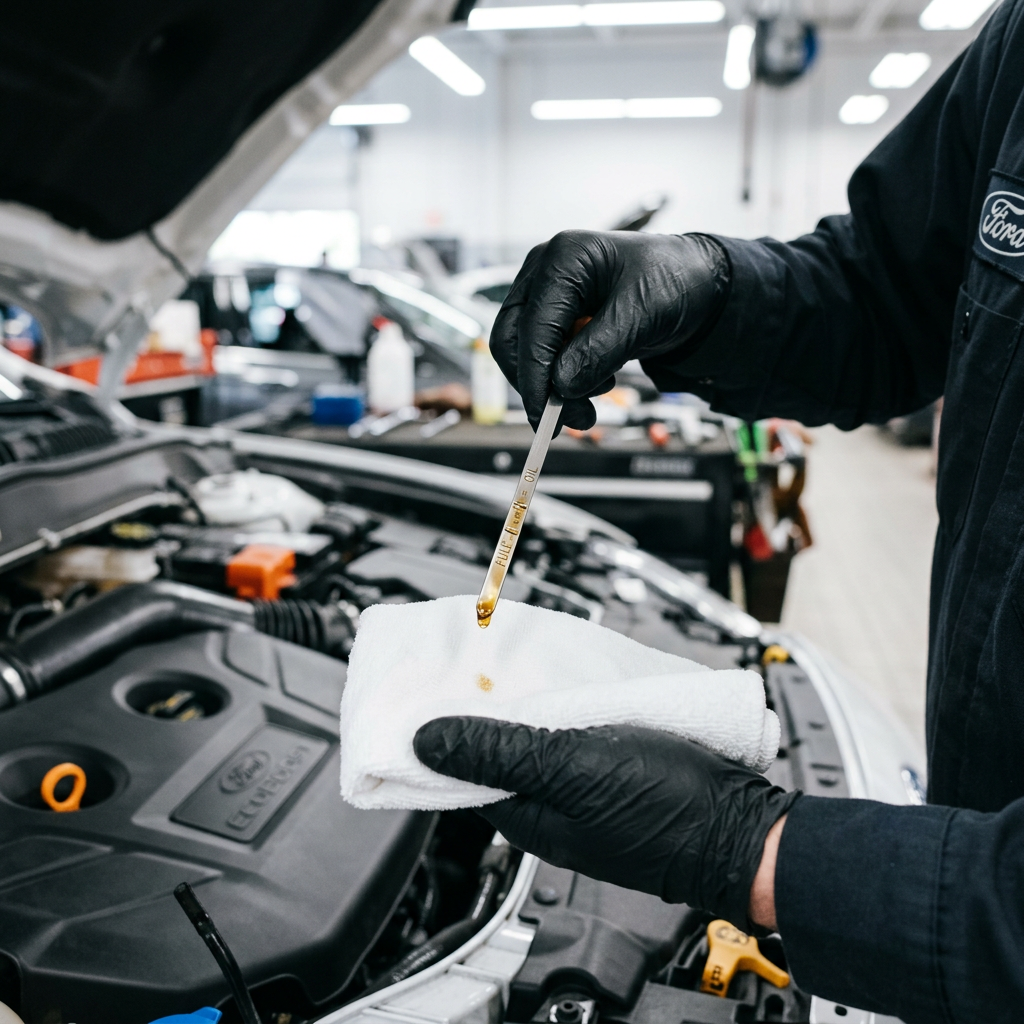
 

At the very heart of your vehicle’s mechanical health is the engine, and at the absolute center of engine survival is motor oil. You can think of motor oil as the lifeblood of your vehicle. Inside your engine, metal pistons are moving up and down thousands of times every single minute inside metal cylinders, creating immense friction, heat, and pressure. If these metal parts were to rub directly against one another without any protection, the sheer friction would generate enough heat to melt the metal together, instantly destroying your engine—a catastrophic failure known as a ‘seized’ engine.


Motor oil prevents this by creating an incredibly thin, yet remarkably strong, protective barrier between these rapidly moving parts. It allows them to slide smoothly past each other with minimal friction. Beyond lubrication, oil plays a crucial role in cooling the engine. While your car’s radiator system cools the upper portion of the engine, the circulating motor oil carries intense heat away from the lower, fast-spinning internal components.


A mechanic in black gloves holding a car engine oil dipstick over a white cloth to check the oil level. (Representative image for illustration purposes only. Actual vehicle may vary based on trim and configuration.)


Additionally, motor oil acts as a highly effective cleaning agent. As you drive around DuPage County, tiny microscopic pieces of metal debris, combustion byproducts, dust, and moisture find their way into the engine. Modern motor oil is formulated with chemical detergents designed to sweep up these microscopic particles and carry them to the oil filter, where they are trapped and held. Over several thousand miles of driving, however, the oil’s chemical additives degrade, its viscosity thins, and it becomes heavily saturated with trapped dirt. If left unchanged, the oil breaks down into a thick, black, tar-like substance known as sludge. This sludge clogs the oil passages, deprives the engine of lubrication, and will eventually ruin your engine.


What Am I Really Paying for in a Typical Car Service Bill?


When you receive your final invoice after an automotive service visit, the list of line items can sometimes look complex and overwhelming. At Hawk Ford of Carol Stream, we believe in complete financial transparency. We want you to feel fully confident in your investment, knowing exactly what each item on your bill represents and why it is essential for the long-term health, safety, and reliability of your vehicle.


High-Quality OEM Parts


This line item covers the physical physical materials installed in your vehicle, such as Motorcraft oil filters, premium synthetic blend or full synthetic oil, engine air filters, or brake pads. These are not cheap, generic, one-size-fits-all components; they are Original Equipment Manufacturer (OEM) parts, engineered and rigorously tested by the manufacturer specifically for your vehicle’s exact make, model, and engine configuration.


Specialized Technician Labor


Labor costs represent the time, expertise, and manual work of our factory-trained and certified automotive technicians. Modern vehicles are incredibly complex, computerized machines. Our technicians undergo hundreds of hours of highly specialized training to master diagnostic computers, high-precision tools, and intricate repair procedures. You are paying for their certified expertise to get the job done safely and correctly.


Diagnostics & Disposal Fees


Modern automotive service requires incredibly advanced computer diagnostic equipment to read error codes and precisely analyze vehicle performance. Additionally, environmental disposal fees cover the strictly regulated, ecologically safe handling, recycling, and disposal of toxic automotive materials like spent motor oil, heavy-duty coolants, worn-out batteries, and old tires, keeping Illinois clean.


How Do Dealership Service Departments Compare to Independent Mechanics?
 

When deciding where to take your vehicle for maintenance, you might wonder whether there is a real difference between a full-service dealership like Hawk Ford of Carol Stream and a small, independent corner garage. While local independent mechanics are capable of performing basic tasks, dealerships provide a level of specialization, technology, and consumer protection that independent shops simply cannot match.


First and foremost is the level of expertise. Our technicians are Original Equipment Manufacturer (OEM) certified. This means they are trained directly by Ford, undergoing intensive, continuous education to stay updated on the latest engineering updates, recalls, and specialized procedures. While an independent mechanic must work on dozens of different makes and models every week—making it very difficult to specialize—our technicians work exclusively on Ford vehicles day in and day out. They know every nuance of your specific model.


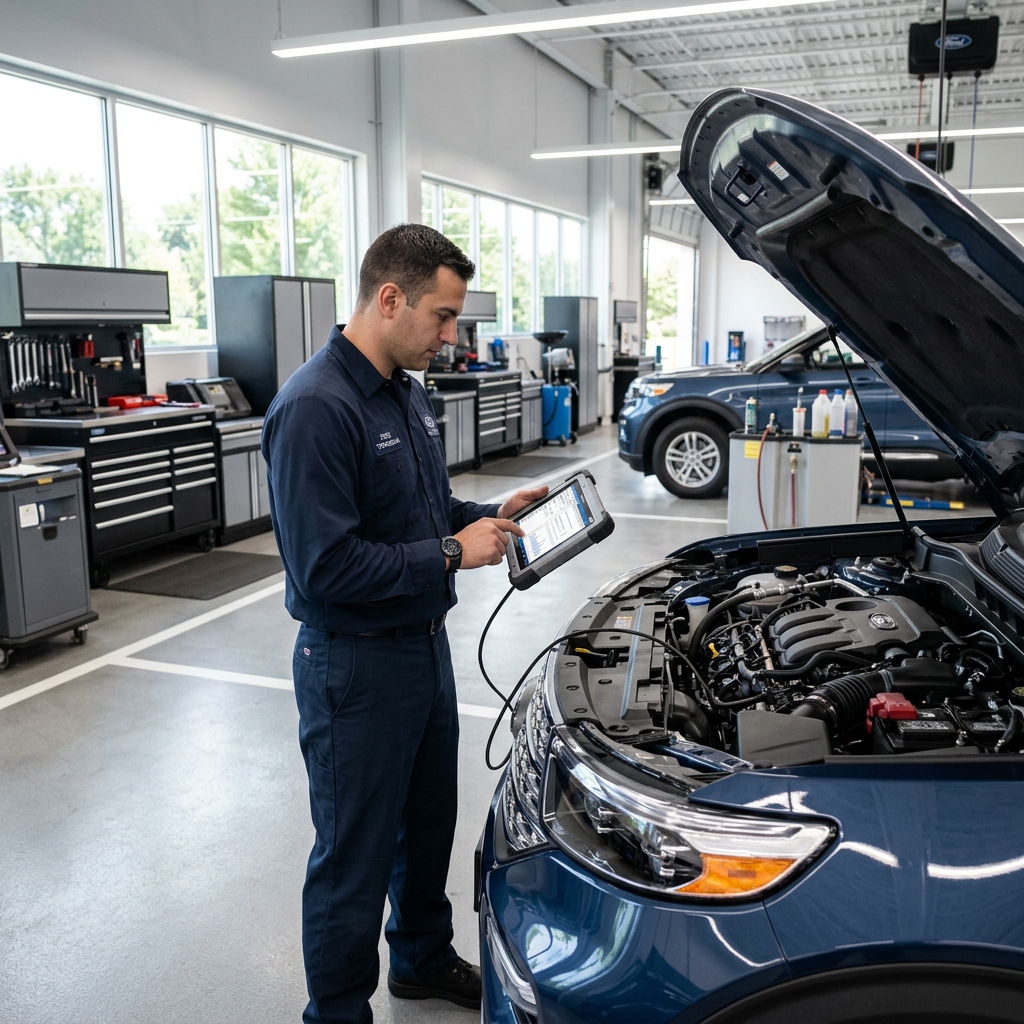
A mechanic using a handheld diagnostic tablet to service a car in a modern dealership garage. (Representative image for illustration purposes only. Actual vehicle may vary based on trim and configuration.)


Furthermore, a dealership has direct access to proprietary factory diagnostic computers and software systems that independent shops do not have. This allows us to perform software updates, identify complex electronic issues, and execute factory recalls. We use only genuine Ford and Motorcraft parts, which are backed by a robust nationwide warranty. When you choose a dealership, you are receiving state-of-the-art care, complete accountability, and unparalleled expertise.


Do Full-Service Shops Keep Track of My Car’s Previous Services?


One of the most overlooked advantages of utilizing a professional, full-service dealership is the meticulous maintenance of your vehicle’s digital service records. When you bring your car to Hawk Ford of Carol Stream, every single oil change, tire rotation, brake replacement, and multi-point inspection is digitally logged and permanently tied to your vehicle’s unique 17-digit Vehicle Identification Number (VIN). This creates a comprehensive, highly organized, and completely transparent digital paper trail.


This continuous service history is incredibly valuable for several reasons. First, it completely removes the guesswork from your car care routine. You never have to scratch your head and try to remember exactly when you last had your cabin filter replaced or your coolant flushed; our service advisors can pull up your vehicle’s entire history in a matter of seconds, ensuring we only perform the services you actually need.


Second, a comprehensive, documented maintenance history is an incredibly powerful asset when it comes time to sell or trade in your vehicle. When potential buyers or dealerships see a flawless, continuous record of professional care, it provides massive peace of mind, dramatically increasing your vehicle’s overall resale value. Buyers are willing to pay a premium for a vehicle they know has been meticulously maintained by factory-trained experts rather than one with a mysterious, unrecorded past.


To get started on maximizing your vehicle’s value, we encourage you to Value Your Trade online to see how much your well-maintained car is worth today. Keeping pristine records isn’t just about physical health; it’s a smart, long-term financial strategy.


How Does Regular Servicing Reduce the Chance of My Car Breaking Down?


There is a direct, undeniable mathematical link between regular, proactive vehicle servicing and the prevention of sudden, catastrophic roadside breakdowns. A roadside breakdown is rarely a random stroke of bad luck; in the vast majority of cases, it is the predictable culmination of a minor mechanical issue that went unnoticed and unaddressed for months. Regular servicing acts as your car’s early-warning defense system, catching these minor issues before they escalate into high-stress, dangerous emergencies.

 

A smiling family of four drives a silver SUV along a winding, tree-lined road on a sunny day. (Representative image for illustration purposes only. Actual vehicle may vary based on trim and configuration.)


Consider a worn serpentine belt. During a routine, low-cost multi-point inspection, a factory-trained technician can easily spot tiny, hairline cracks forming along the rubber belt. Replacing a worn belt is a quick, inexpensive procedure. However, if that belt is ignored, it will eventually snap while you are driving down North Avenue or cruising along the busy I-355. When it snaps, your power steering, alternator, and water pump instantly shut down, leaving you stranded on a narrow highway shoulder with an overheated engine and no power. By investing in minor, planned maintenance, you completely eliminate these dangerous, expensive scenarios, ensuring absolute peace of mind during your daily commutes across DuPage County.


Which Routine Maintenance Jobs Are Safe for Most Drivers to Do Themselves?


While modern vehicles are highly complex machines that require specialized professional training for major repairs, there are several simple, highly effective maintenance tasks that everyday drivers can safely perform at home with no special tools. Understanding what you can easily handle yourself—and what absolutely requires professional expertise—is key to smart, cost-effective car ownership.


Windshield Wipers & Fluids


Replacing streaky windshield wiper blades is incredibly simple and takes less than five minutes. Modern wiper blades use standard, click-in clips. Additionally, topping off your windshield washer fluid is as simple as popping the hood, identifying the clearly labeled reservoir cap, and pouring in fresh fluid. These tasks are perfectly safe for any driver.


Checking Tire Pressure


Checking your tire pressure is one of the easiest ways to improve safety and fuel economy. Using a simple pocket pressure gauge, you can check each tire’s pressure when they are cool. Compare the reading to the manufacturer’s recommended PSI, which is located on a sticker inside your driver-side door jamb, and add air as needed.


Cabin & Engine Air Filters


Many cabin and engine air filters are incredibly accessible. The engine air filter is typically housed in a plastic box under the hood secured by quick-release metal clips, while the cabin filter is often located behind the glove box. Swapping these out yourself can save you time and keep your cabin air and engine breathing clean, fresh air.


Important DIY Warning: While these simple checkups are safe, complex tasks like brake pad replacements, engine diagnostics, transmission fluid flushes, and suspension repairs require specialized precision tools, heavy-duty hydraulic lifts, and extensive training. Attempting these at home without proper equipment can result in severe personal injury or catastrophic damage to your vehicle. For any complex service or if you need genuine OEM components, we encourage you to contact our expert Parts Center or schedule a professional service visit.


Understanding Brake Service: Why Grinding Noises Mean It’s Time for New Pads
 

To understand how your braking system works, it helps to understand a basic principle of physics: turning kinetic energy (motion) into thermal energy (heat) through friction. When you press down on your brake pedal, you are initiating a hydraulic system. Brake fluid is forced through steel lines, pushing a hydraulic clamp called a caliper. Inside this caliper are thick, high-friction friction plates called brake pads. The caliper clamps these pads tightly against a heavy, rapidly spinning metal disc called a rotor, which is bolted directly to your vehicle’s wheel. The friction between the stationary brake pads and the spinning rotor slows the vehicle down.


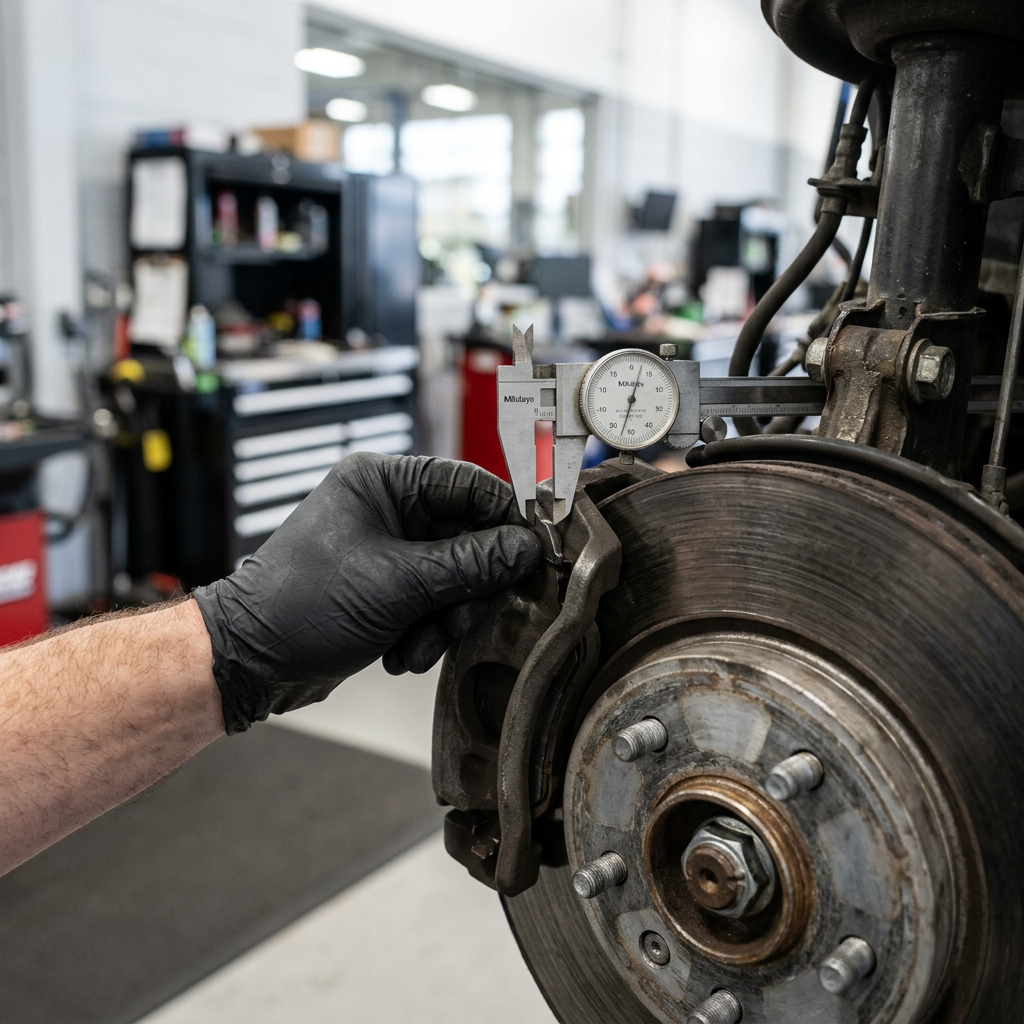
Because brake pads generate massive friction, they are designed to wear out over time, acting as a sacrificial barrier to protect the heavy metal rotors. Manufacturers build a tiny, metal indicator tab directly into the brake pad material. When your pads wear down to a critical thickness (typically around 3 millimeters), this metal tab is exposed and begins to rub against the spinning rotor, producing a high-pitched, metallic squealing noise whenever you apply the brakes. This squealing is a built-in warning system designed to alert you that your pads are running thin.


A mechanic uses a dial caliper to measure the thickness of a vehicle's brake rotor in an auto shop. (Representative image for illustration purposes only. Actual vehicle may vary based on trim and configuration.)


If you ignore the high-pitched squealing, the friction material on the pads will eventually wear away completely, leaving only the raw, heavy steel backing plate of the pad. When this steel backing plate clamps directly onto the cast-iron rotor, it creates a terrifying, metal-on-metal grinding noise. At this point, you have moved from a simple, low-cost brake pad replacement into an expensive mechanical emergency. The metal-on-metal grinding instantly gouges deep, irreparable grooves into your expensive rotors, destroying them. It also generates extreme heat that can warp the rotors, damage the calipers, and severely compromise your vehicle’s overall stopping power. If you hear grinding, it is critical to seek professional assistance immediately.


Tire Rotations and Alignments Explained Without the Technical Jargon

Tire Rotations: Evening Out the Wear


Many drivers confuse tire rotations with wheel alignments, but they are completely different services. Tire rotation is the physical practice of moving your tires from one position on your car to another (such as moving the front tires to the rear, and the rear tires to the front, often crisscrossing them). This is necessary because your front and rear tires carry different amounts of weight and experience different forces. In front-wheel-drive vehicles, the front tires handle steering, braking, and engine power, causing them to wear down much faster than the rear tires. By regularly rotating your tires—typically every 5,000 to 7,500 miles—you ensure that all four tires wear down at a perfectly even rate, dramatically extending their overall life and saving you money.


Wheel Alignments: Traveling Straight


A wheel alignment, on the other hand, has nothing to do with the physical tires themselves; instead, it is an adjustment of your vehicle’s steering and suspension systems. Think of a wheel alignment as adjusting the physical angles at which your wheels meet the road. Over time, driving over potholes, hitting curbs, or traveling on rough gravel roads can jar your suspension out of alignment, causing the wheels to point slightly inward, outward, or tilted. This misalignment causes your tires to drag unevenly, leading to rapid, uneven tread wear and causing your car to pull to one side. A professional alignment restores these angles to factory specifications, ensuring your car travels straight, handles safely, and achieves optimal fuel economy.


Preparing Your Vehicle for Carol Stream, Glendale Heights, and Bloomingdale Seasons


Living in the Chicago suburbs means our vehicles must endure a wide range of intense weather conditions. From scorching summer heat to freezing, snow-filled winters, each season puts unique stresses on your vehicle’s mechanical components. Preparing your vehicle for these seasonal shifts is one of the most effective ways to ensure year-round reliability.


Summer Heat Toll


As of July 1, 2026, we are in the absolute peak of the hot Illinois summer. Extreme summer heat is actually more damaging to automotive batteries than freezing winter temperatures. High heat accelerates the internal chemical corrosion of your battery and evaporates essential liquid electrolytes, leading to sudden battery failure. Summer also puts immense pressure on your cooling system, making fluid checkups absolutely critical.


Winter Salt & Cold Defense


Conversely, harsh winter weather requires preparation for freezing temperatures and salt-covered roads. Freezing weather causes fluids to thicken, making your engine work harder, and contracts tire pressure. Road salt is highly corrosive to your vehicle’s metal undercarriage, brake lines, and electrical connections, requiring regular underbody washes and protective fluid inspections.


Local Driving Conditions


Driving around local roads like North Avenue, Gary Avenue, and Army Trail Road means dealing with heavy commuter traffic and rapid temperature fluctuations. This stop-and-go driving, combined with local weather shifts, qualifies as ‘severe driving conditions’ under manufacturer guidelines, making routine seasonal inspections and timely maintenance even more essential.


Don’t let seasonal weather catch you off guard. Whether you need a comprehensive summer battery health check or want to prepare your heating and fluid systems, our team is here to help. Get Directions to Hawk Ford of Carol Stream and let our certified technicians ensure your vehicle is fully prepared for whatever the weather brings.


The Multi-Point Inspection: What Techs Look at While Your Oil Is Draining
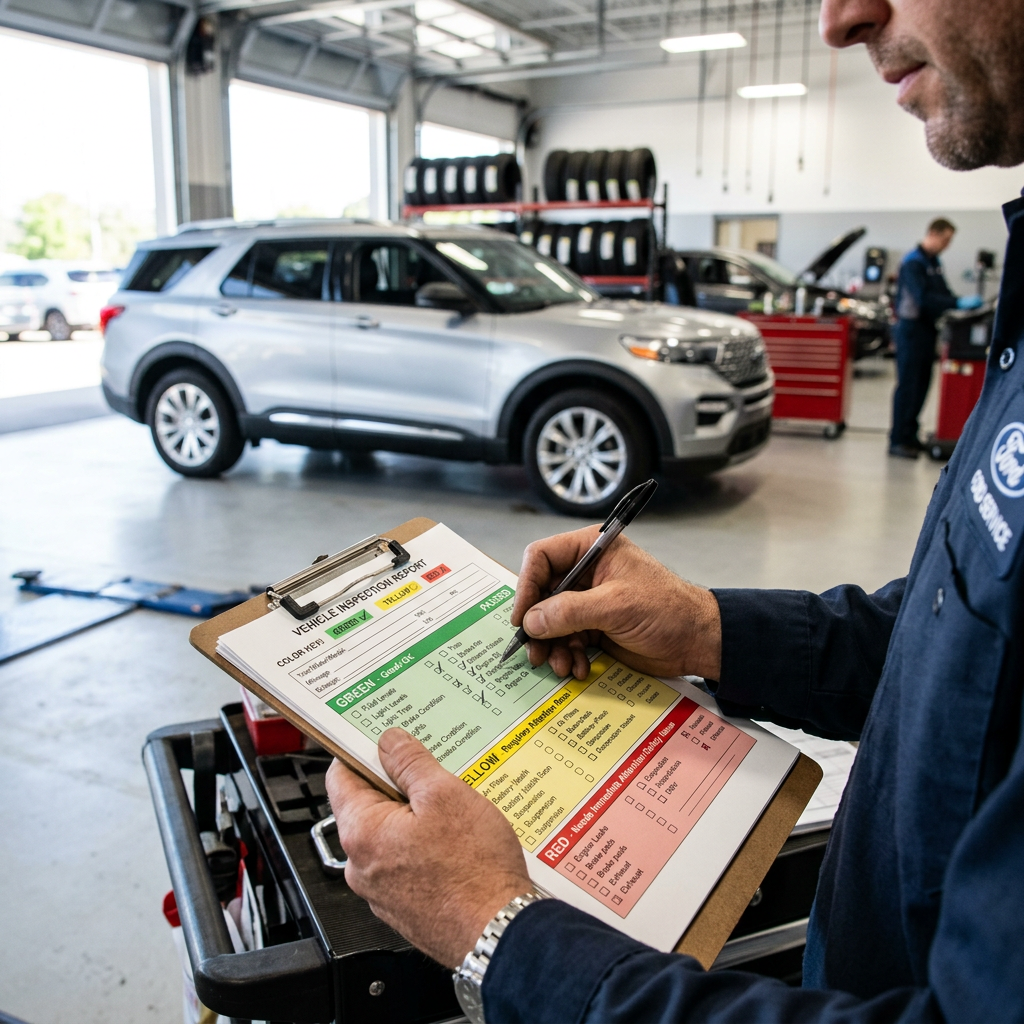
 

When you bring your vehicle in for a standard oil change at Hawk Ford of Carol Stream, you will receive a comprehensive document called a Multi-Point Inspection report. While your old, worn-out motor oil is draining from the oil pan, our factory-trained technicians don’t just stand around; they perform a highly structured, thorough visual and physical inspection of your vehicle’s critical safety and operational systems.


To make this report incredibly easy for drivers to read and understand, we utilize an intuitive, highly visual ‘stoplight’ reporting system. Every inspected component is marked with a color-coded rating: Green means the component is in excellent condition, meeting all manufacturer specifications, and requires no immediate attention. Yellow indicates that while the component is currently functioning safely, it is showing signs of moderate wear and should be monitored closely, as it will likely require replacement or service in the near future. Red is an urgent safety or operational warning, indicating that a component has worn down to a dangerous level or is actively leaking, requiring immediate repair to prevent vehicle damage or safety hazards.


A service technician fills out a vehicle inspection checklist on a clipboard, with a silver SUV in the background. (Representative image for illustration purposes only. Actual vehicle may vary based on trim and configuration.)


During this detailed inspection, our technicians check a wide variety of critical components, including fluid levels (such as brake, power steering, transmission, and windshield fluids), belt tension and wear, radiator hose flexibility, battery health and charge capacity, tire tread depth and wear patterns, brake pad thickness, suspension shock absorbers, steering joints, and exhaust system integrity. This report is an invaluable tool that gives you complete visibility into the health of your vehicle, allowing you to plan and budget for future maintenance needs without any unexpected surprises.


Ready to Simplify Your Car Care? Schedule Your Next Service at Hawk Ford of Carol Stream


At Hawk Ford of Carol Stream, our ultimate goal is to make automotive maintenance as stress-free, straightforward, and transparent as possible. You should never feel pressured, confused, or left in the dark about the health and safety of your vehicle. We are dedicated to explaining every recommended service in plain, honest language, providing you with all the information you need to make confident decisions for your family’s safety and budget.


Looking to upgrade? Browse our New Vehicle Inventory or explore our premium Used Vehicle Inventory today.


Hawk Ford of Carol Stream
175 North Ave, Carol Stream, IL 60188
Call us at (630) 233-9696
Get Directions to Hawk Ford of Carol Stream


}