



Chicagoland Winter Coolant & Battery Protection Guide
What Freezing Temperature Should Car Coolant Protect Down to in Chicagoland Winters?
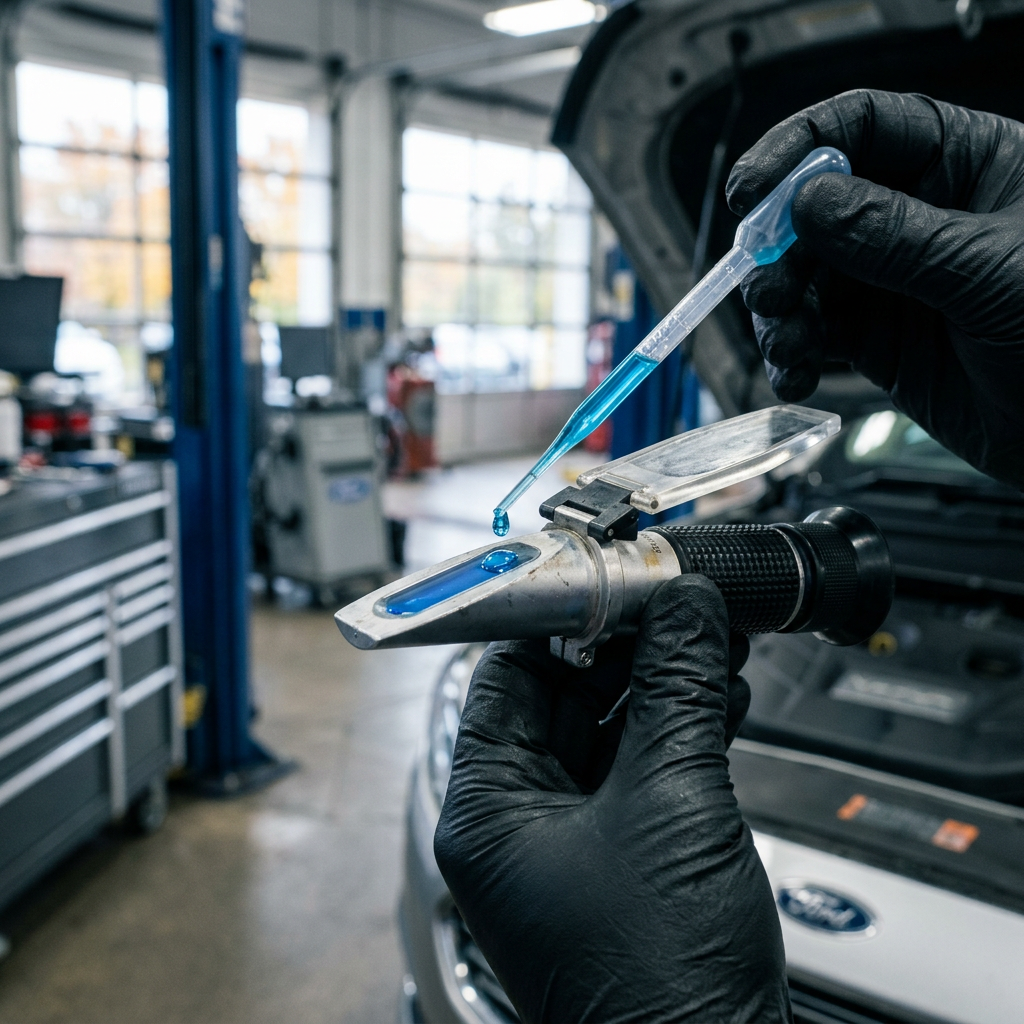
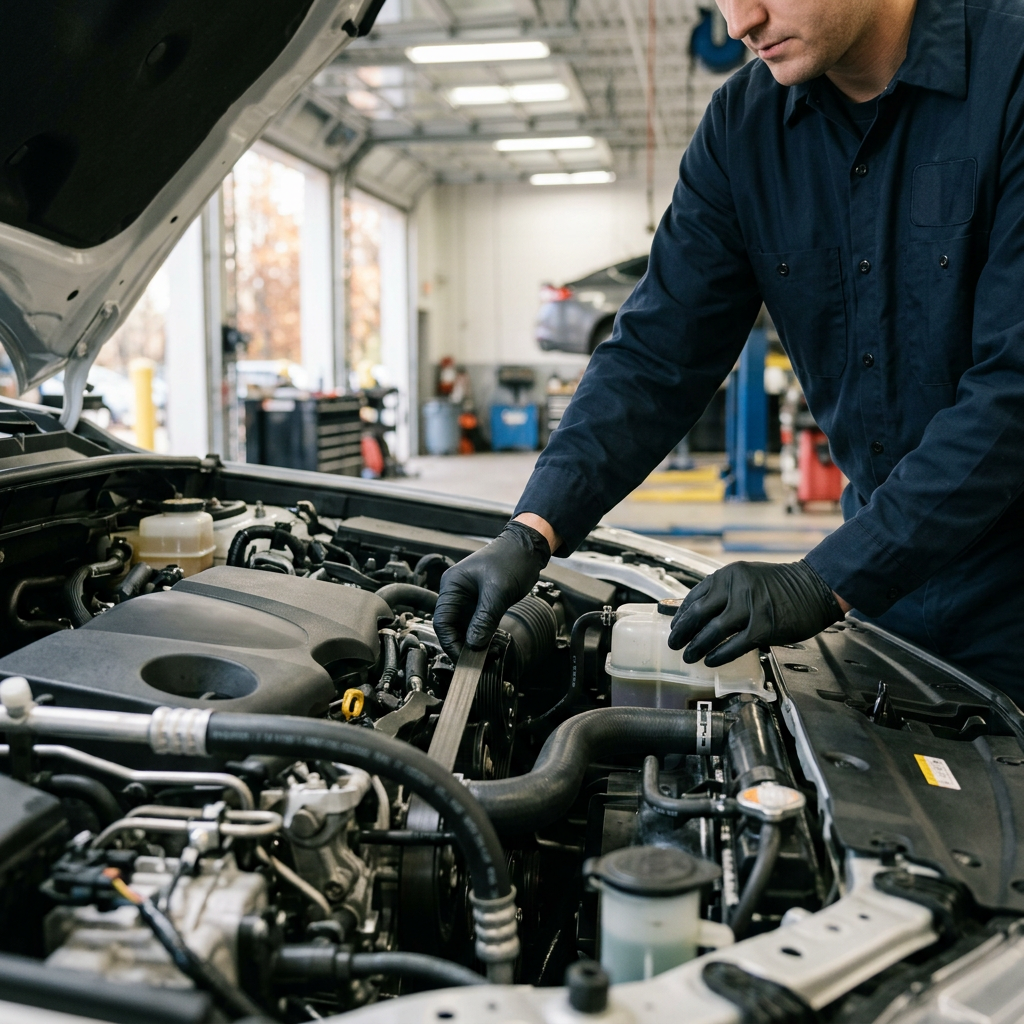
For vehicle owners in Carol Stream, Bloomingdale, Glendale Heights, and throughout Northern Illinois, winter conditions are notorious for delivering unpredictable, severe sub-zero cold spells. When a polar vortex dips down over Chicagoland, ambient temperatures routinely drop well below zero degrees Fahrenheit, with localized wind chills plunging into the -30°F to -40°F range. To ensure your engine block, radiator, heater core, and cooling passages are completely safe from freeze-expansion catastrophic failure, your vehicle’s engine coolant must be mixed to protect down to at least -34°F using a standard 50/50 ratio of concentrated antifreeze and distilled water. For maximum severe-weather defense during prolonged sub-zero blasts, a 60/40 coolant-to-water concentrate ratio provides freeze protection down to -50°F.
Why is this freeze protection rating so non-negotiable in DuPage County? Plain water expands by roughly 9% when it freezes into solid ice. If your cooling system contains an improper fluid mixture—such as straight water used during warm summer months or diluted antifreeze—that fluid will crystallize into slush and eventually turn into solid ice inside your radiator and engine block. The resulting hydraulic expansion generates thousands of pounds of pressure per square inch, capable of cracking heavy cast-iron or aluminum engine blocks, splitting thin radiator tubes, bursting rubber radiator hoses, and popping expansion core plugs (freeze plugs) right out of the engine block. Ensuring your fluid retains proper chemical glycol concentrations ensures that even at -34°F or -50°F, the fluid stays in a fluid or non-expanding gel state, allowing your cooling pump to function smoothly and preventing tens of thousands of dollars in mechanical repair bills.
Chicagoland Autumn Maintenance: Battery Testing and Coolant Service Before the First Freeze
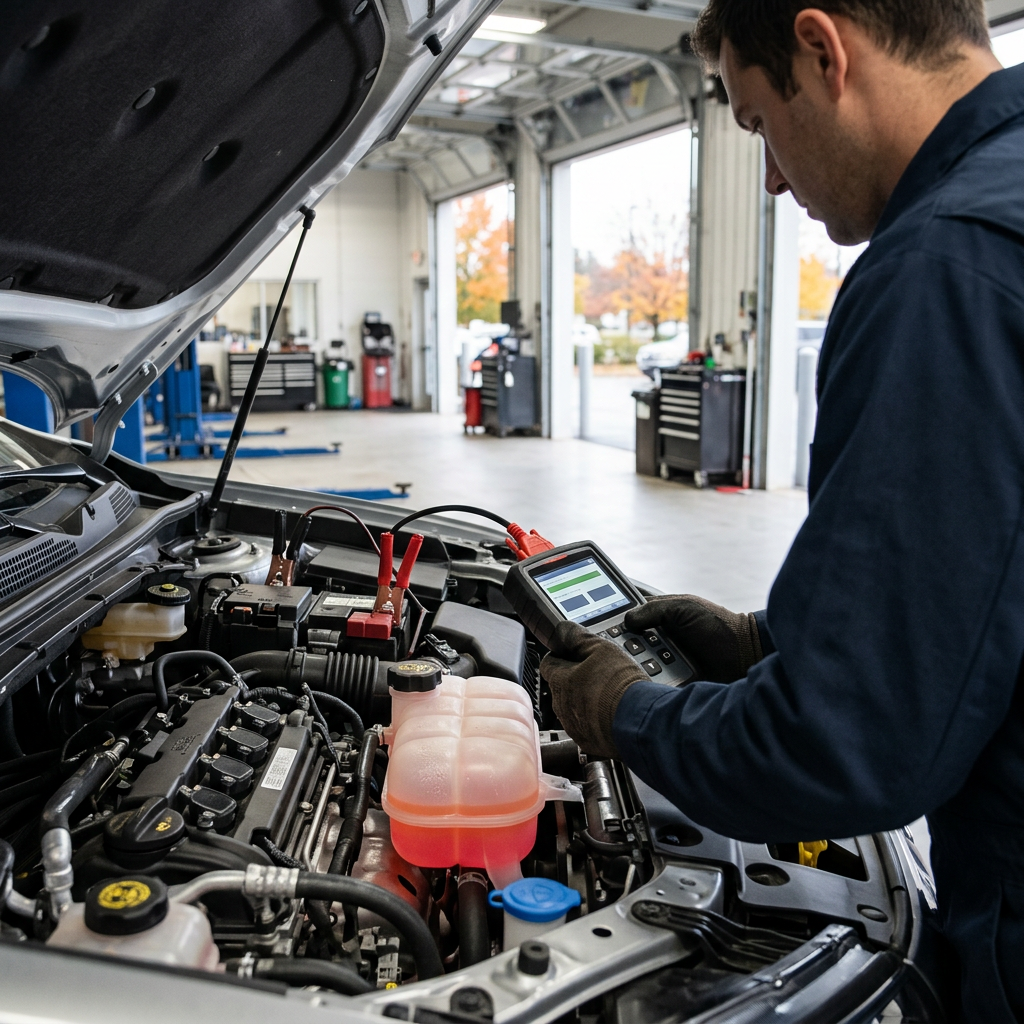
Understanding Glycol Ratios: How 50/50 vs. 60/40 Antifreeze Protects Against Extreme Sub-Zero Temps
What Is the Difference Between OAT, HOAT, and Traditional Green Coolant for Winter Protection?
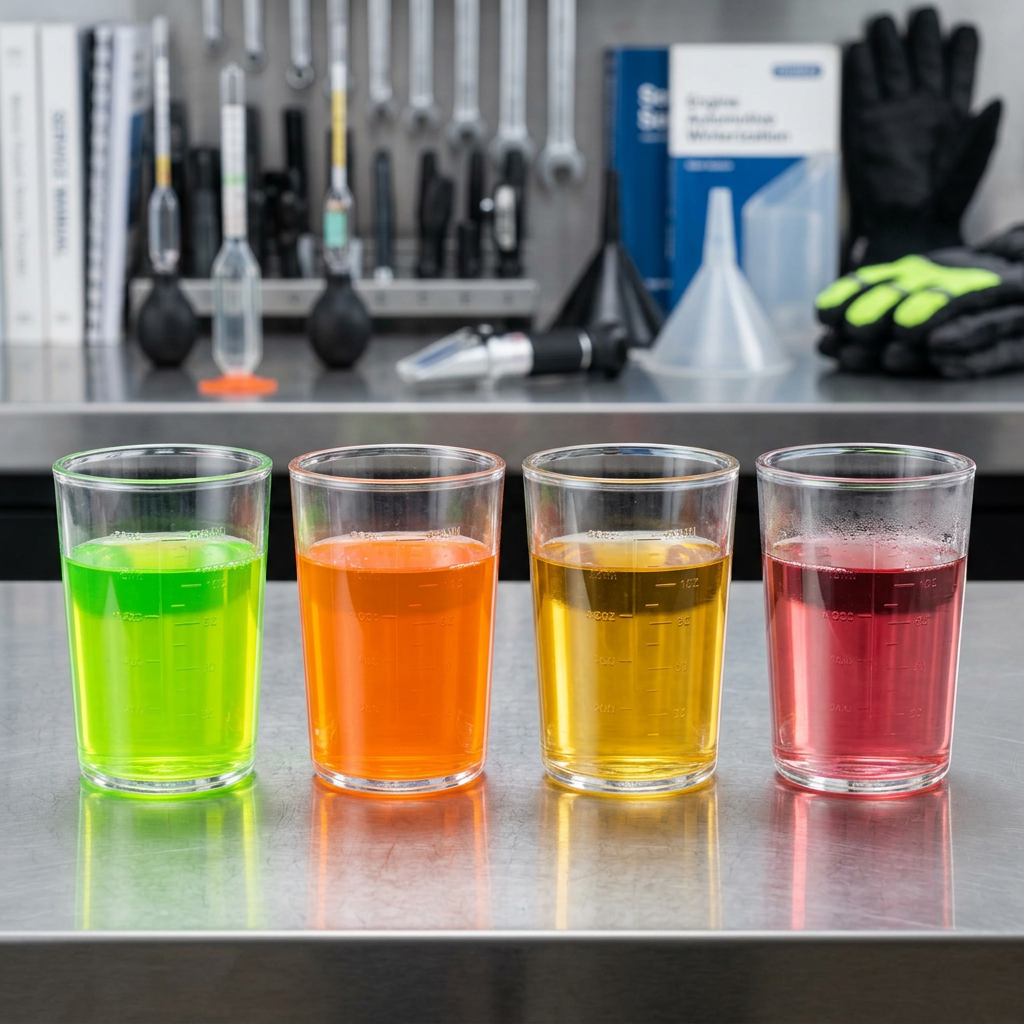
How Can You Tell Which Coolant Type Your Vehicle Requires?
How Much Capacity Does a Car Battery Lose at 0 Degrees Fahrenheit?
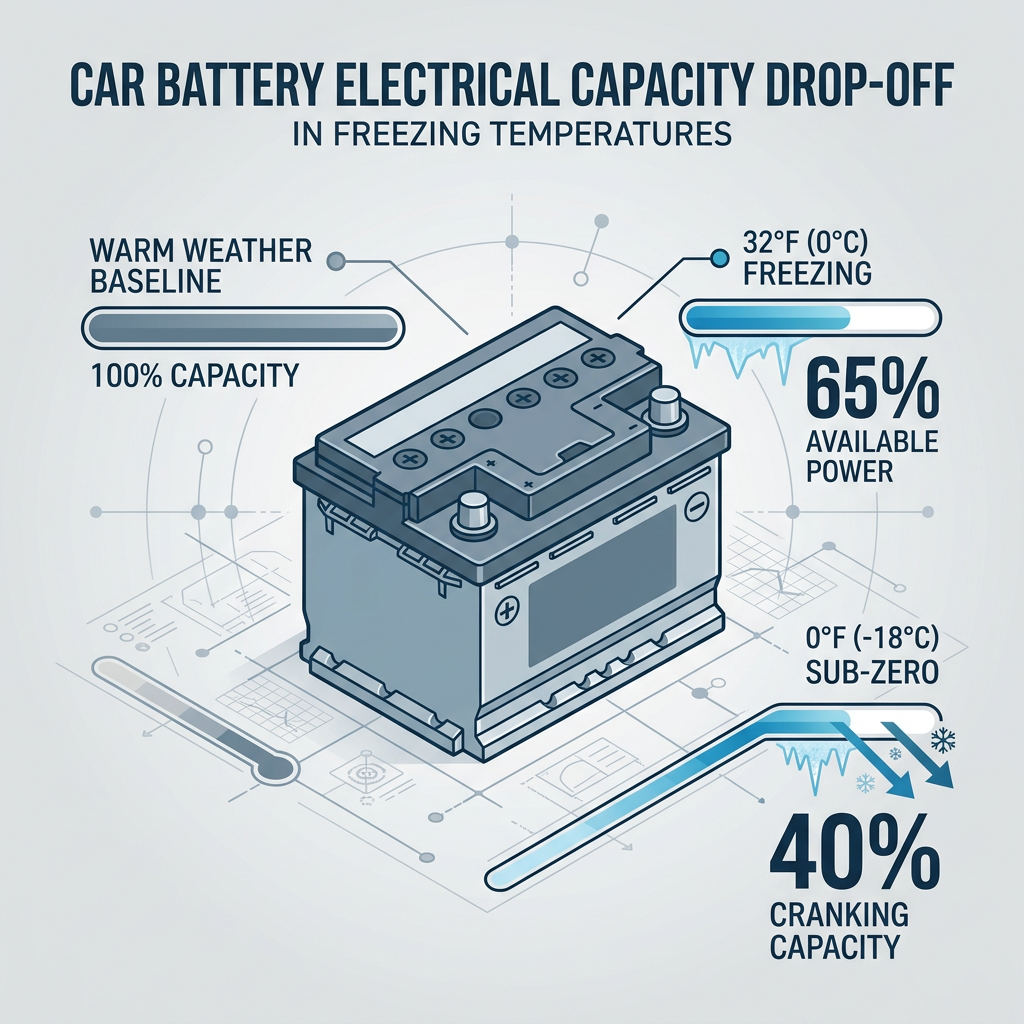
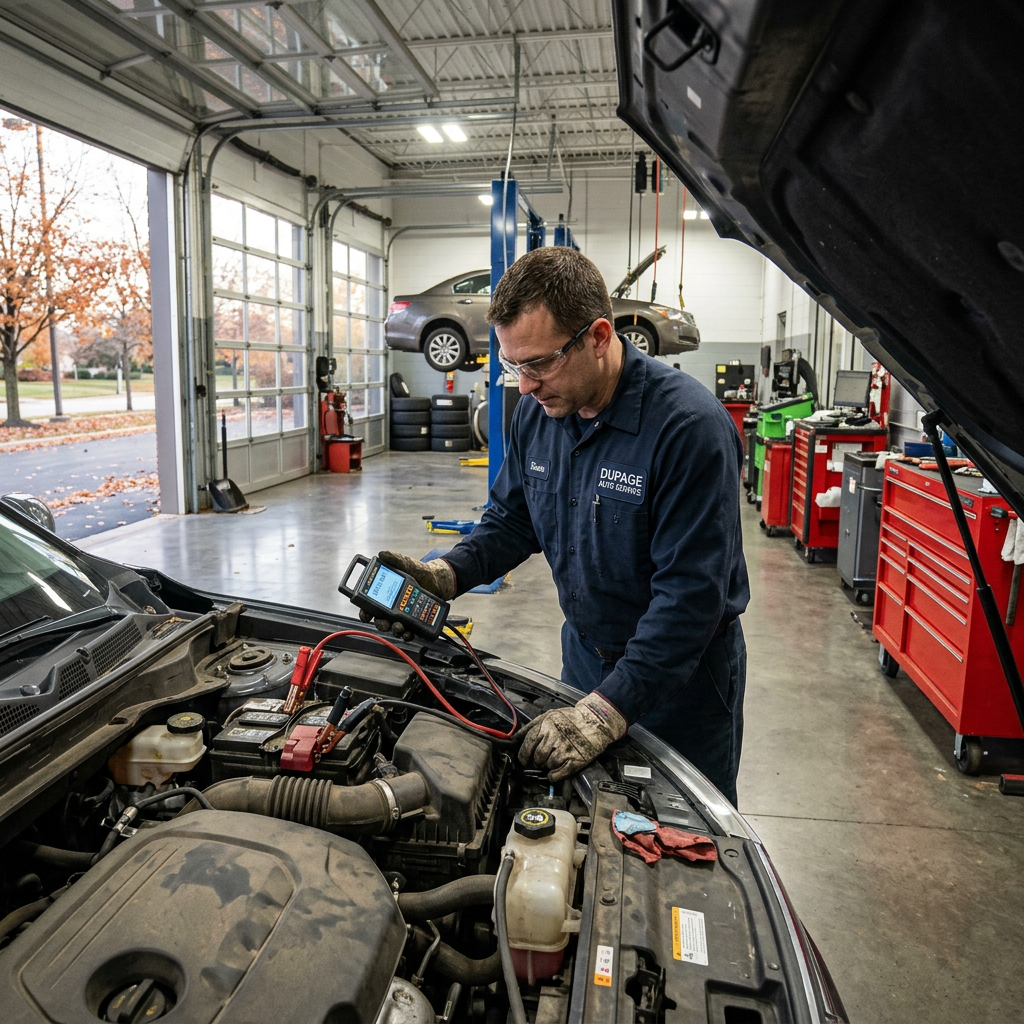
Cold weather is the single greatest adversary of automotive batteries. Standard 12-volt lead-acid batteries rely on internal liquid electrolyte chemistry (sulfuric acid and water) to generate electrochemical energy. As ambient air temperatures fall, internal chemical reactions slow down dramatically.
Here is the exact impact of freezing temperatures on automotive battery output:
• At 32°F (0°C): A fully charged car battery loses approximately 35% of its available cranking power compared to warm summer operation. • At 0°F (-18°C): A battery loses up to 60% of its total starting capacity. To make matters worse, freezing temperatures simultaneously cause engine oil to thicken into a high-viscosity sludge. Turning over a cold engine at 0°F requires nearly twice as much electrical energy from the starter motor compared to summer starting requirements. This double-whammy—60% less available battery power paired with 200% higher engine cranking demand—is why aging batteries that worked fine in September completely fail to turn the engine over on the first zero-degree morning in Carol Stream.
What Cold Cranking Amps (CCA) Rating Is Recommended for Winter Driving?
Can a Battery Test Good in Warm Weather But Fail in Freezing Weather?
Why Should Carol Stream Drivers Test Their Battery Before Winter?
Essential Winterization Checklist: Beyond Antifreeze and Battery Voltage
Schedule Your Winter Maintenance and Coolant Flush at Hawk Ford of Carol Stream
Don’t wait until the first polar vortex brings freezing temperatures to DuPage County. Protect your vehicle investment, safeguard your morning commute, and keep your engine performing flawlessly all winter long by trusting the certified service experts at Hawk Ford of Carol Stream.
Whether you need a quick refractometer coolant test, a full multi-point winter inspection, a cooling system flush, or a fresh high-CCA battery installation, our factory-trained technicians are equipped with state-of-the-art diagnostic tools and genuine OEM fluids.
Ready to get winter-ready? Schedule Service Now online, or call our service department directly at Call us at (630) 233-9696. Looking to upgrade your ride before winter arrives? Explore our New Vehicle Inventory, check out our reliable Used Vehicle Inventory, Value Your Trade online, or Apply for Credit today!
0 comment(s) so far on Chicagoland Winter Coolant & Battery Protection Guide