Car Paint Rust Repair: How to Identify, Treat, and Prevent Vehicle Surface Rust
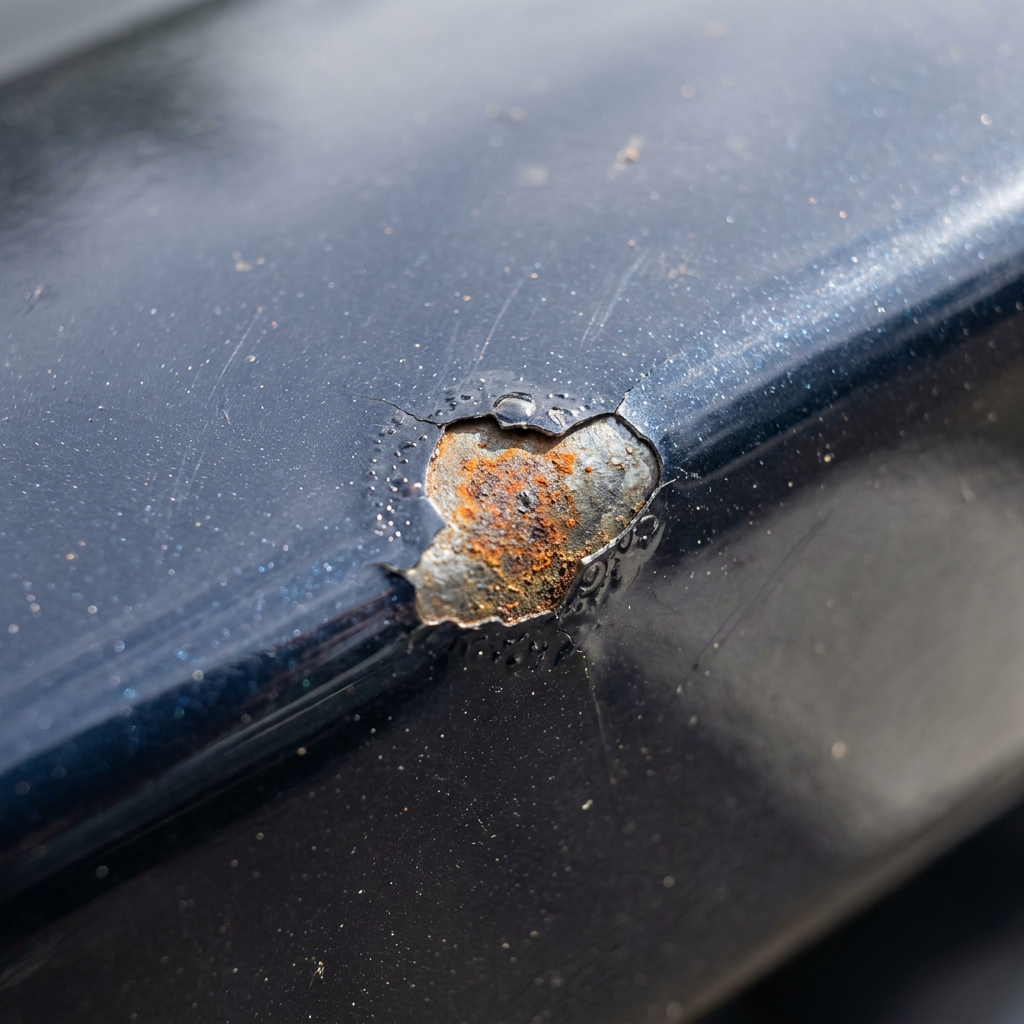
Automotive rust is an insidious chemical process that can transform a minor cosmetic stone chip into a severe structural threat if left unaddressed. Every vehicle on the road today relies on a multi-layered protective barrier consisting of an electrocoated primer (e-coat), base color coat, and clear coat designed to isolate the underlying sheet metal from oxygen and moisture. However, daily driving in Northern Illinois exposes your vehicle to continuous mechanical impacts, environmental pollutants, and extreme thermal cycles. Once the outer protective clear coat and paint layers are breached, iron molecules within the steel body panels immediately react with ambient oxygen and water vapor, initiating the oxidation process known as rust (iron oxide, Fe₂O₃).
Key Takeaway: Vehicle paint rust progresses through three distinct evolutionary stages: surface rust, scale rust, and structural penetrating rust. Early detection and immediate intervention with specialized chemical rust converters or professional bodywork stop chemical oxidation at its inception. Prompt treatment preserves structural integrity, prevents massive mechanical repair bills, and safeguards your vehicle’s resale value over its lifespan. Vehicle owners in Carol Stream, Bloomingdale, and Glendale Heights can consult our expert service center at
Hawk Ford of Carol Stream for thorough body evaluations.
What Are the Different Stages of Car Paint Rust?
Stage 1: Surface Rust & Initial Paint Blistering
Surface rust represents the earliest and easiest stage of automotive corrosion. It typically begins when small stone chips, deep scratches, or sharp gravel impacts penetrate the clear coat and base paint layers, exposing bare steel to air and water. At this stage, oxidation is confined strictly to the outer molecular skin of the metal panel. You may notice tiny reddish-brown spots or slight bubbling under the paint finish, often termed paint blistering. Because the underlying metal strength remains 100% intact, addressing surface rust immediately requires minimal mechanical intervention—usually light sanding, chemical neutralization, and spot touch-up painting.
Stage 2 & 3: Scale Rust and Penetrating Rot
If surface rust is ignored, moisture continuously creeps under adjacent paint edges, accelerating into Scale Rust. In this second stage, iron oxide expands in volume, lifting large flakes of paint off the metal surface and creating rough, pitted scaling across body panels. The chemical process strips base metal thickness. Left unchecked, scale rust rapidly deteriorates into Penetrating Rust (Structural Rot). At this final stage, oxidation eats entirely through sheet metal, forming holes, structural weakening in unibody rails, floor pans, and rocker panels. Once metal has rotted away, simple chemical treatments are ineffective; whole panels must be cut out and fresh steel welded into place.
Why Does Road Salt Accelerate Paint Rust Formation in Northern Climates?
Electrochemical Electrolyte Reaction
In winter environments throughout Carol Stream and Bloomingdale, municipalities spread thousands of tons of sodium chloride (rock salt) and liquid calcium chloride to de-ice roadways. When dissolved in slush and road water, salt breaks down into free sodium, calcium, and chloride ions. This liquid acts as a potent electrolyte solution, lowering electrical resistance between free electrons in raw steel and ambient oxygen, which accelerates oxidation speed by up to 1000%.
Microscopic Undercutting Action
Road brine atomizes into fine mist while driving behind other vehicles on winter highways. This chemical slurry penetrates micro-fissures around stone chips, door edges, wheel arches, and rocker panels. Because chloride ions smaller than oxygen molecules easily slip past compromised clear coats, salt brine lodges beneath healthy paint layers, initiating invisible sub-surface corrosion that creeps outward under the paint film.
Hygroscopic Freeze-Thaw Traps
Calcium chloride is highly hygroscopic, meaning it continuously draws moisture out of surrounding air even when temperatures hover near freezing. Parking a salt-covered vehicle inside a heated garage accelerates rust formation rapidly, as warmth speeds up chemical reaction rates while trapped salt deposits hold liquid moisture directly against bare metallic surfaces for extended periods.
What Chemical Treatments Stop Rust on Car Body Panels?
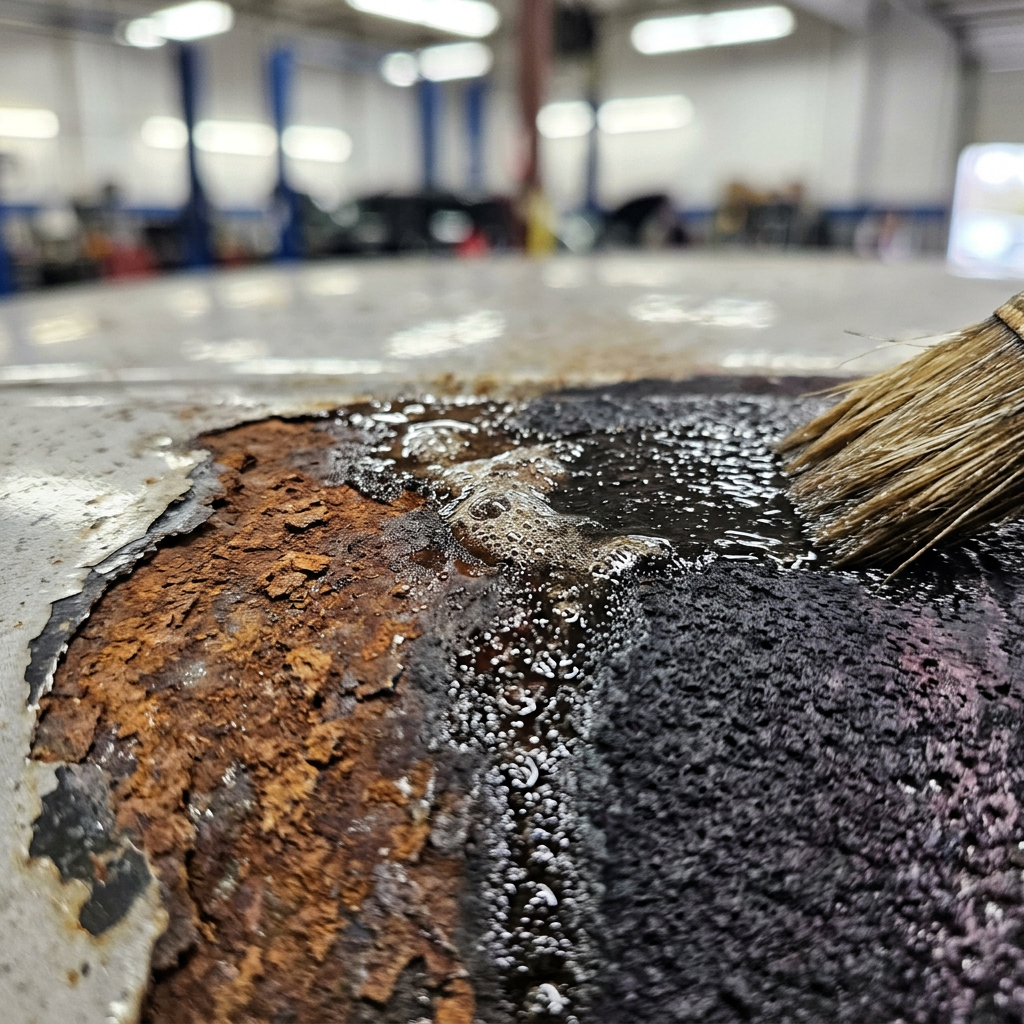
Stopping chemical oxidation on car body panels requires specialized chemical formulas engineered to neutralize iron oxide and seal steel against future exposure. Simply painting over active rust is guaranteed to fail, as trapped oxygen and moisture continue to destroy metal beneath fresh paint. Modern body restoration relies on three core chemical solutions:
• Phosphoric Acid Rust Converters: Chemical compounds containing organic polymers and phosphoric acid convert porous iron oxide (rust) into ferric phosphate—an inert, hard, moisture-resistant black barrier. This converted surface provides an excellent base for primers. • Self-Etching & Zinc-Rich Primers: Acid-etch primers chemically bite into raw sheet metal while depositing sacrificial zinc particles. In the event of future paint chips, the zinc corrodes sacrificially before underlying steel paneling oxidizes. • Chemical Iron Removers & Deironizers: Concentrated fall-out removers dissolve microscopic metallic particles embedded in clear coats before they can oxidize into full surface rust spots. For thorough vehicle inspections and professional paint preservation solutions, local drivers can easily schedule service online with our factory-trained technicians.
What Basic Tools Are Required for a DIY Car Paint Rust Repair?
Abrasives & Mechanical Preparation Tools
Tackling minor body rust at home requires specialized abrasive media to eliminate corrosion without destroying structural metal:
• Dual-Action (DA) Sander or Sander-Grinder: For rapid, consistent removal of damaged clear coat and flaking rust scale. • Assorted Grit Sandpaper: 80-to-120 grit for heavy rust scale removal; 320-to-600 grit dry sandpaper for feathering paint edges smoothly; 1500-to-2000 wet sandpaper for final clear coat leveling. • Wire Wheel Brushes & Sanding Blocks: For cleaning tight crevices, inner panel seams, and achieving smooth, flat contouring.
Chemical Cleaners, Coatings & Safety Gear
Proper surface preparation and personal protective equipment are essential for long-lasting, safe repairs:
• Wax and Grease Remover (Pre-Paint Solvent): Cleans silicone, oil, and road grime to ensure optimal primer adhesion. • Self-Etching Primer & Aerosol Factory Paint: High-build primers fill deep sanding scratch marks before color application. • 2K Polyurethane Clear Coat: Features a dual-component hardener chamber for professional UV and chemical resistance. • Respirator & Safety Equipment: NIOSH-approved organic vapor respirator mask, nitrile gloves, and impact safety goggles.
Why Is Matching Factory Paint Color Difficult in DIY Rust Repairs?
UV Degradation & Aging
Even when using your vehicle’s exact OEM paint code, fresh off-the-shelf aerosol paint rarely matches older vehicle panels. Prolonged exposure to solar ultraviolet radiation causes gradual breakdown of paint pigments and clear coat resins. Sunlight slightly alters hue intensity over time, meaning factory-fresh paint applied next to 5-year-old weathered finish will stand out distinctly unless tinting and professional blending are performed.
Metallic Flake Flop Angle
Modern automotive paints often incorporate microscopic aluminum flakes or pearlescent mica particles. The angle at which these flakes settle during spraying—known as metallic flop—depends heavily on spray pressure, distance, paint viscosity, ambient temperature, and humidity. Aerosol cans lack precise air pressure regulation, frequently causing metallic particles to clump or lay flat, creating dark halo rings around repair zones.
Panel Blending Constraints
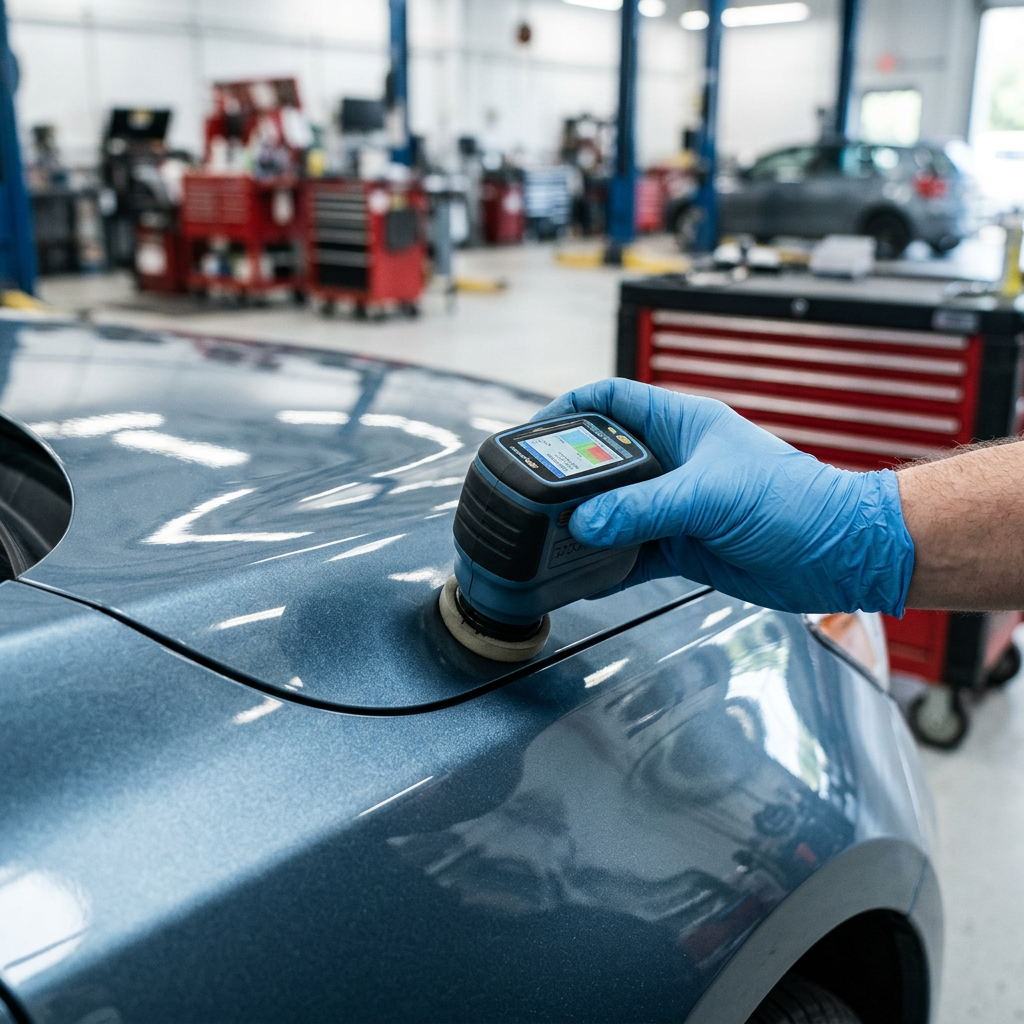
Professional body technicians achieve invisible spot repairs by blending fresh base coat into surrounding panels and clear-coating entire body sections inside temperature-controlled spray booths. DIY spot painting often leaves harsh, hard clear-coat lines or thin edges that peel within months. Professional body shops use digital spectrophotometers to analyze real-world color shifts and mix custom-tinted formulas for seamless matches.
Step-by-Step DIY Surface Rust Repair on Car Body Panels
Preparation, Grinding & Chemical Neutralization
Step 1: Surface Decontamination: Thoroughly wash the affected body panel using automotive soap, followed by a surface cleaner solvent to remove road grime, silicone, and wax contaminants. Step 2: Grinding & Feathered Sanding: Using 120-grit sandpaper or a sanding wheel, strip away all loose paint and scale rust down to shiny, uncorroded steel. Switch to 320-grit paper to feather back the surrounding paint edges, creating a smooth, gradual transition from bare metal to healthy clear coat. Step 3: Rust Converter Application: Wipe down raw metal with wax remover. Apply a thin coat of chemical phosphoric acid rust converter over microscopic rust pits. Allow the solution to cure for 2 to 4 hours until the metal transforms into a hard, black ferric phosphate protective layer.
Priming, Basecoat Spraying & Finishing
Step 4: Masking & Etch Priming: Mask off surrounding bodywork using automotive tape and paper. Spray 2 to 3 medium coats of self-etching high-build primer, waiting 10 minutes between applications. Allow primer to dry completely, then dry-sand with 600-grit paper until perfectly flat. Step 5: Base Color Coat Application: Apply 3 light coats of factory-matched aerosol color, misting outward onto feathered transition zones to blend pigment smoothly into adjacent panel paint. Step 6: Clear Coat & Final Polish: Spray 2 coats of 2K polyurethane clear coat over repair zones. After curing 48 hours, wet-sand using 2000-grit sandpaper and buff with fine rubbing compound to achieve a high-gloss finish matching factory shine.
What Factors Increase the Cost of Body Shop Rust Repair?
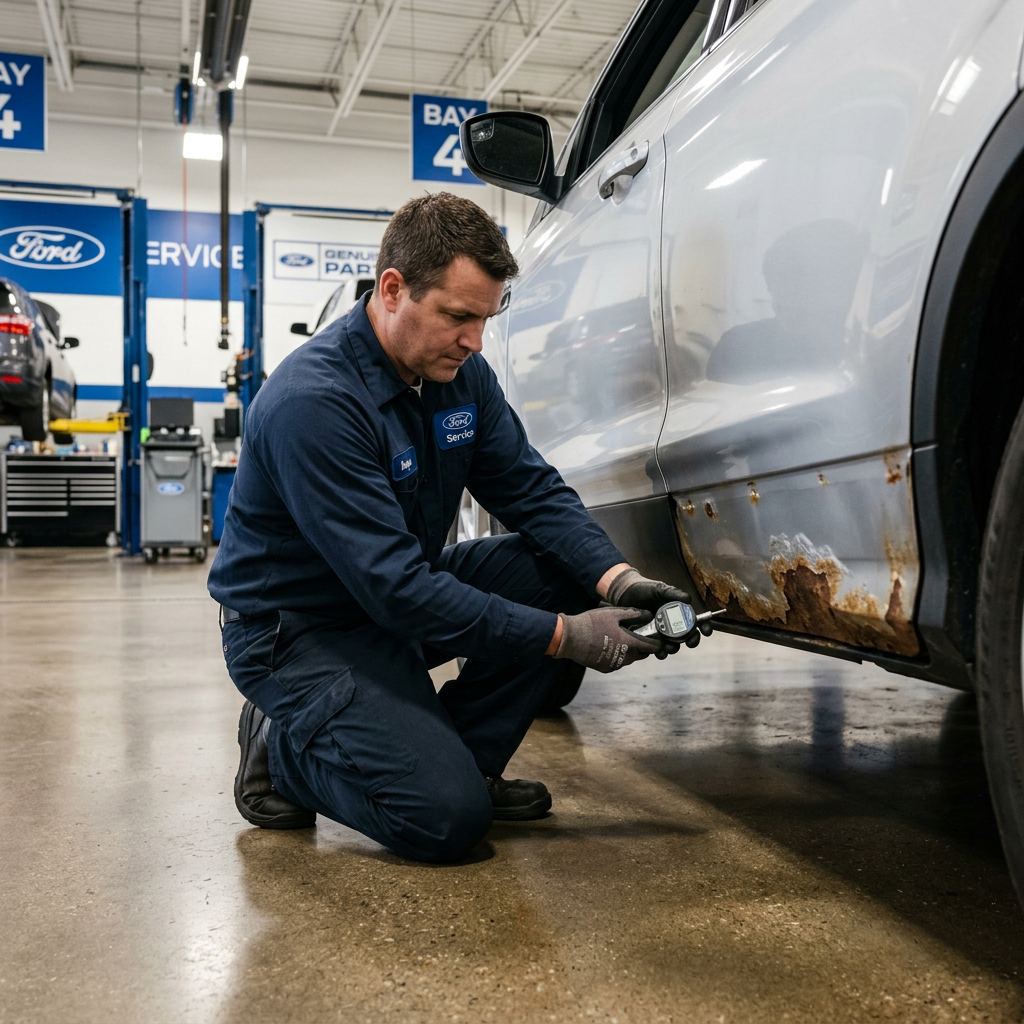
Professional body shop rust repairs vary widely in scope and cost depending on the severity of corrosion, panel accessibility, and labor requirements. While minor surface stone chip repairs require simple sanding and localized spot painting, deep structural rot demands specialized metal fabrication and extensive spray booth time. Key drivers that influence body repair estimates include:
• Labor Hours & Structural Fabrication: Cutting rotted steel out of structural rocker panels or unibody rails requires specialized plasma cutting and metal inert gas (MIG) welding skills. • Location & Panel Complexity: Repairs along complex body style lines, wheel arches, or double-walled structural pillars require significantly more labor than flat center hood sections. • Paint Matching & Multi-Panel Blending: To blend seamless transitions across multi-stage metallic or tri-coat pearl paint finishes, technicians must prepare and clear-coat adjacent doors and quarter panels. For genuine OEM body panels, touch-up paint pens, and protective chemical coatings, vehicle owners can visit our dedicated Parts Center.
| Repair Severity |
Typical Work Scope |
Labor Hours |
Estimated Cost Range |
| Minor Surface Rust / Stone Chip |
Light spot sanding, chemical converter, local primer & color touch-up |
1 – 3 hours |
$150 – $400 |
| Scale Rust Spot / Fender Arch |
Grinding, body filler contouring, panel blending & clear coating |
4 – 8 hours |
$500 – $1,200 |
| Structural Rot / Rocker Panel |
Cutting out rusted steel, welding patch panels, anti-corrosion coating & full paint |
10 – 20+ hours |
$1,500 – $3,500+ |
At What Point Is Car Rust Damage Considered Economically Unfeasible to Repair?
Structural Unibody Compromise & Safety Risks
Vehicle rust transitions from a cosmetic concern to a severe safety hazard when corrosion invades structural unibody rails, subframes, floor pans, or suspension mounting points. Modern vehicles rely on precise structural crumple zones engineered to absorb impact energy during a crash. When structural steel thins due to deep internal rot, structural rigidity collapses. Compromised frame rails or rusted brake lines create immediate driving hazards, rendering the vehicle unsafe for road operation under Illinois safety standards.
The 50-70% Fair Market Value Financial Rule
Automotive financial experts evaluate rust repairs using the 50-to-70 percent rule: if total body shop restoration estimates exceed 50% to 70% of the vehicle’s actual fair market value, repair becomes economically unfeasible. Spending $3,000 on structural metal replacement for an aging vehicle worth $4,000 provides zero return on investment, as rust frequently continues developing in non-treated inner cavities. In these scenarios, allocating repair funds toward a reliable replacement vehicle is the smarter financial choice.
How to Prevent Car Paint Rust in Glendale Heights and Carol Stream
Winter Undercarriage Wash Routine
During Northern Illinois winter months, commit to washing your vehicle every 7 to 10 days at a car wash equipped with high-pressure undercarriage sprayers. Flushing corrosive salt brine out of rocker panel drain holes, wheel arches, and suspension subframes prevents salt accumulation from eating bare steel from the inside out.
Immediate Stone Chip Sealing
Inspect your hood, front bumper, and rocker panels every spring and autumn for fresh paint chips. Clean chips immediately with isopropyl alcohol and seal bare steel using genuine factory touch-up paint pens containing clear coat hardeners to restore protective barriers before humidity triggers oxidation.
PPF & Professional Coatings
Invest in high-impact Paint Protection Film (PPF) along front bumpers, hood leading edges, and lower side skirts. Apply professional hydrophobic ceramic coatings or seasonal synthetic waxes to seal clear coat pores against chemical environmental contamination and winter moisture penetration.
Should You Repair Body Rust or Trade In Your Vehicle at Hawk Ford of Carol Stream?
Comparing Repair Investment Against Trade Value
When evaluating persistent rust damage, vehicle owners must weigh recurring repair expenses against long-term reliability. Spending thousands of dollars repairing scale rust on an older vehicle rarely increases trade-in value proportionally. Instead of sinking money into temporary body repairs, trading in your current car allows you to leverage its remaining value toward a clean, rust-free vehicle equipped with modern anti-corrosion factory protection.
Hassle-Free Trade Valuations & Quality Inventory
Schedule Professional Paint and Rust Inspection at Hawk Ford of Carol Stream
Don’t let surface rust compromise your vehicle’s safety, appearance, and resale value. Whether you need an expert multi-point body inspection, factory touch-up paint supplies, or guidance on trading in your vehicle, Hawk Ford of Carol Stream is your trusted automotive authority in DuPage County. Serving drivers across Carol Stream, Glendale Heights, Bloomingdale, and West Chicago, our friendly team is ready to help you preserve your vehicle investment.
Visit us today at 175 North Ave, Carol Stream, IL 60188 or get immediate assistance by calling our dealership at Call (630) 233-9696. Click below to find exact driving directions to our dealership.
}



0 comment(s) so far on Car Paint Rust Repair Guide | Hawk Ford of Carol Stream