Yes, You Can Daily Drive a Ford Mustang in Chicagoland Winters: Key Takeaways & Bottom Line
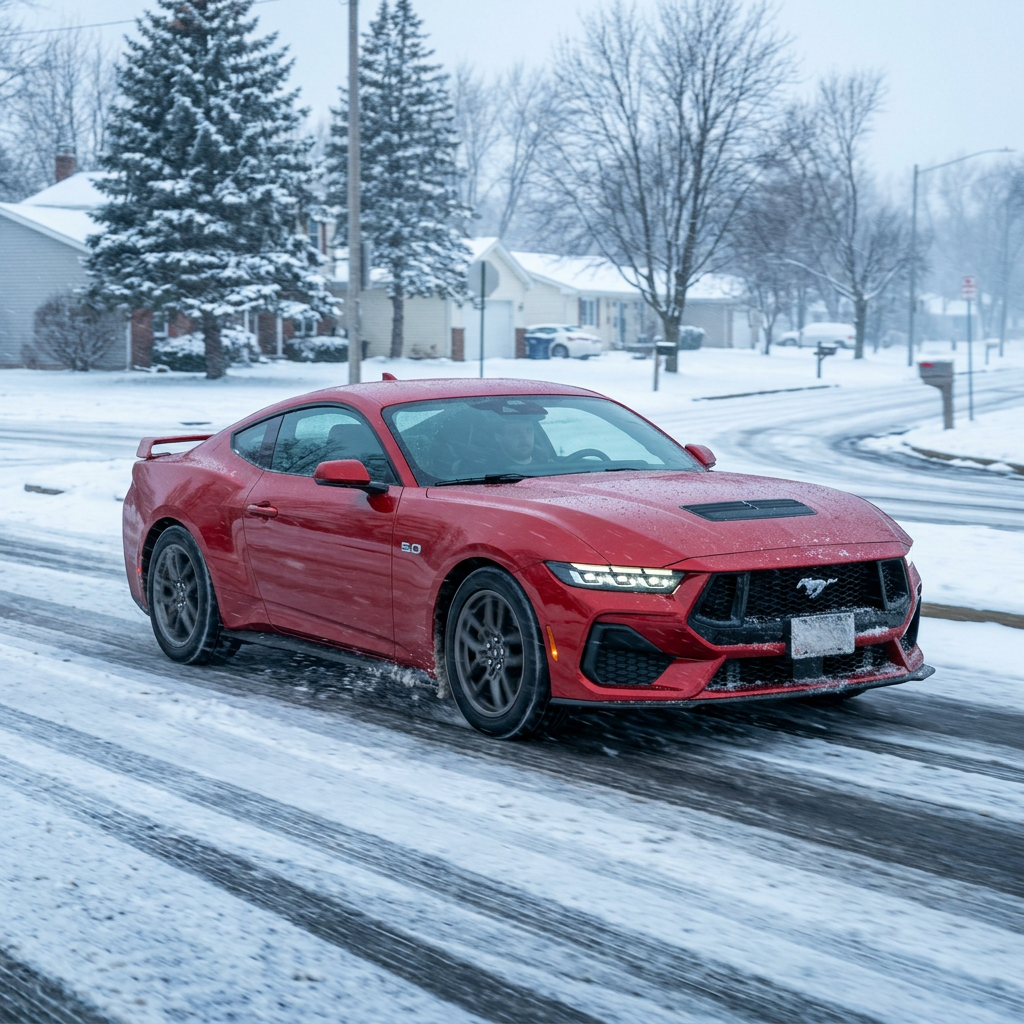
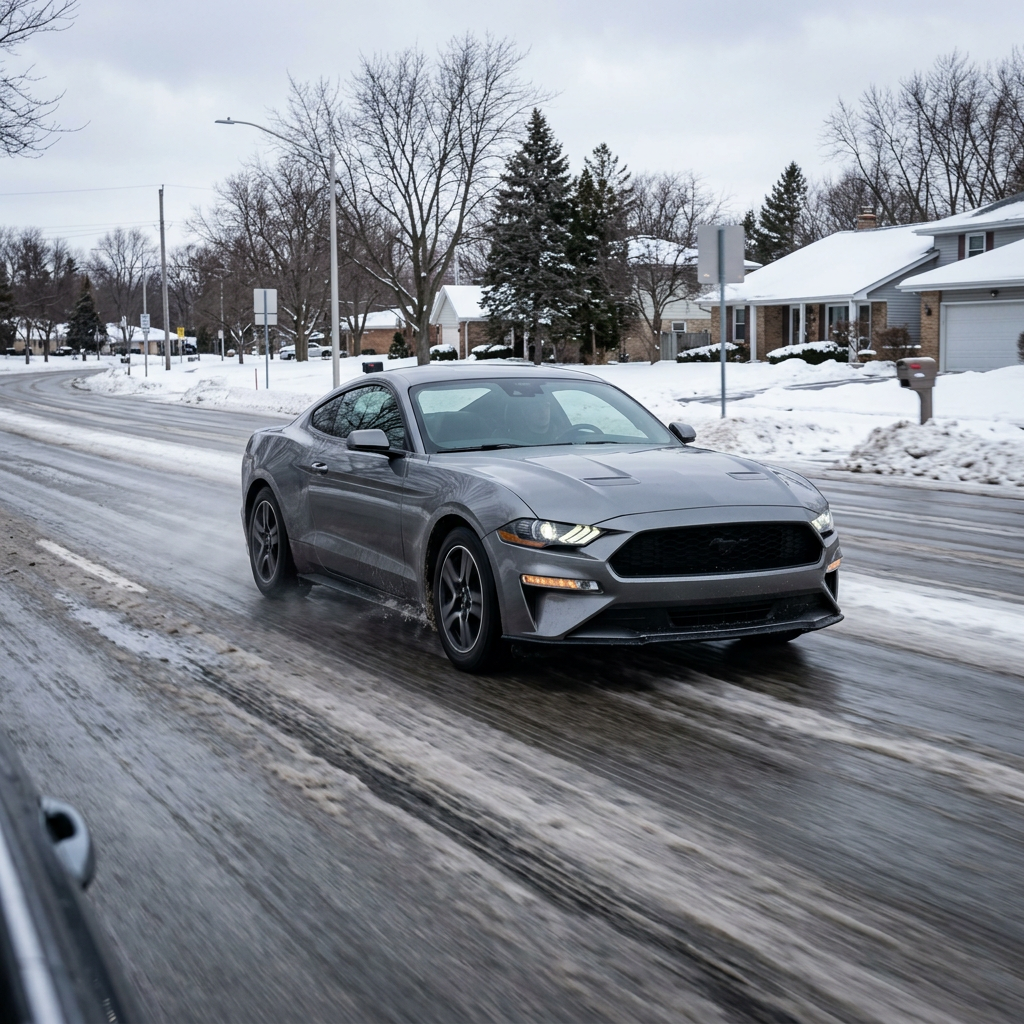
For generations, automotive mythology has dictated that rear-wheel-drive muscle cars must be tucked away in a climate-controlled garage the moment the first snowflake touches the pavement in Northern Illinois. If you live in Carol Stream, Bloomingdale, or anywhere across DuPage County, you know that Chicagoland winters are relentless—bringing lake-effect snowstorms, sub-zero wind chills, and rutted ice on high-traffic corridors like Army Trail Road and North Avenue. However, modern engineering has transformed the Ford Mustang from a seasonal track beast into a highly capable year-round daily driver.
The short answer is a definitive YES: you can absolutely daily drive a Ford Mustang through Chicago winters. However, success relies on respecting four non-negotiable pillars: Dedicated Winter Tires, Advanced Electronics & Drive Modes, Smart Weight Distribution, and Respect for Ground Clearance. Without dedicated cold-weather rubber, summer performance tires turn into hard plastic hockey pucks below 45°F. But when equipped with modern winter tires and Ford’s Selectable Drive Modes (specifically Snow/Wet mode), a current-generation Mustang offers predictable traction, refined throttle mapping, and exceptional stability.
At Hawk Ford of Carol Stream, we help hundreds of local Mustang enthusiasts navigate Midwest weather comfortably every season. Whether you are considering a powerful 5.0L V8 GT fastback, an efficient 2.3L EcoBoost coupe, or looking at our
New Vehicle Inventory, this complete guide covers everything you need to know about surviving and thriving on Chicago roads in sub-zero conditions.
How Does a Rear-Wheel-Drive Mustang Compare to an AWD Sedan in Snow?
The fundamental difference between rear-wheel-drive (RWD) and all-wheel-drive (AWD) comes down to traction allocation under acceleration. An AWD sedan distributes power across all four contact patches, making it effortless to pull away from a snow-covered stoplight on Schmale Road. However, many drivers suffer from a dangerous misconception: AWD helps you turn and stop better in snow. In reality, all vehicles have four-wheel braking and four-wheel steering dynamics.
Modern Mustang models leverage sophisticated electronic safety suites, including Ford’s AdvanceTrac Electronic Stability Control (ESC) and an Available TORSEN® or mechanical limited-slip rear differential. When a rear wheel loses traction on black ice, the differential locks up to transfer power to the wheel with grip, while AdvanceTrac applies targeted brake force and reduces engine torque within milliseconds to prevent vehicle rotation.
A rear-wheel-drive Mustang outfitted with dedicated winter tires will consistently out-brake, out-corner, and out-maneuver an AWD sedan equipped with standard factory all-season tires on freezing rain or packed snow. Tires provide grip; drivetrains merely distribute energy. Because rear-wheel-drive isolates steering forces to the front wheels while rear wheels provide propulsion, steering feel through the Mustang wheel remains crisp and unpolluted by torque steer.
When stopping from 30 mph on slick pavement, tread compound matters far more than driven axles. The controlled weight transfer during braking loads the front wheels, allowing a winter-shod Mustang to come to a swift, controlled stop long before an all-season AWD vehicle slides past the intersection.
Are Winter Tires Mandatory for Driving a Mustang in Chicago Winters?
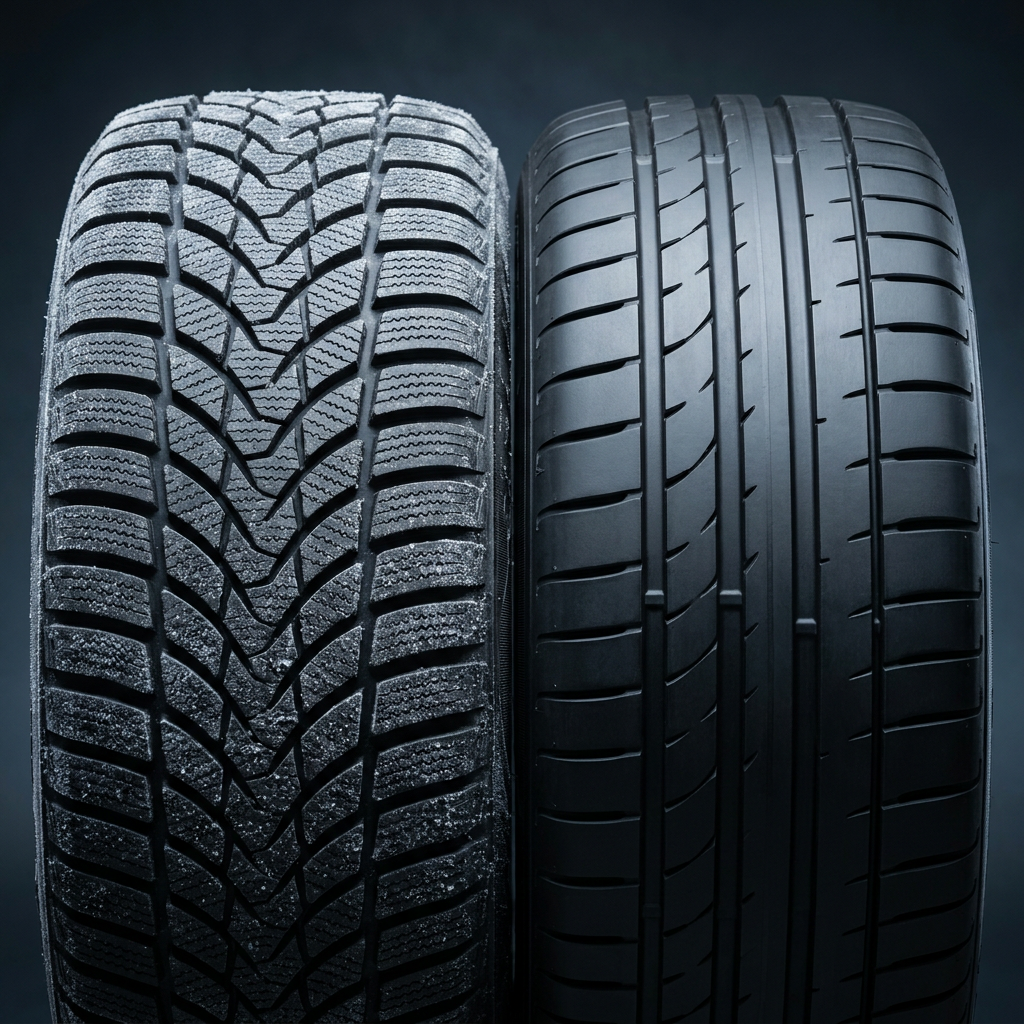
If you plan to drive your Mustang between November and March in Northern Illinois, dedicated winter tires are non-negotiable. High-performance Mustang models often come equipped from the factory with summer performance compound tires (such as Michelin Pilot Sport 4S or Pirelli P Zero). Summer rubber features a high-silica compound engineered strictly for temperatures above 45°F (7°C).
When temperatures plummet during Chicago freeze snaps, summer tires undergo a chemical transformation known as glass transition. The rubber hardens, losing flexibility and drastically diminishing mechanical grip even on dry asphalt. On snow or ice, summer tires provide near-zero traction, creating dangerous stopping distances. Even standard ‘All-Season’ tires begin hardening below 40°F and lack the deep siping necessary to pack and discharge snow.
By mounting winter tires like Bridgestone Blizzak WS90, Michelin X-Ice Snow, or Dunlop Winter Sport, your Mustang benefits from hydrophilic rubber compounds that stay pliable in sub-zero weather, combined with thousands of 3D sipes that bite into hard-packed ice. Visit our dedicated
Parts Center at Hawk Ford of Carol Stream to select complete winter wheel and tire packages fitted specifically for your Mustang’s brake clearance.
Mustang Drive Modes: How Snow/Wet Mode Tames Sub-Zero Chicagoland Roads
Relaxed Throttle Response
Selecting Snow/Wet mode via the toggle switch on your dash immediately reprograms drive-by-wire accelerator sensitivity. Sudden foot inputs are smoothed out electronically, preventing peak engine torque from overwhelming rear tire traction when pulling away from slippery stops in Bloomingdale or Wheaton.
Optimized Shift Calibration
On 10-speed SelectShift® automatic models, Snow/Wet mode initiates upshifts earlier in the RPM band and locks out aggressive downshifts. Keeping engine RPM low reduces wheel torque spikes during gear changes, maintaining chassis poise over icy bridge decks on Route 59.
Proactive Traction Control
AdvanceTrac sensitivity is dialed up to its highest threshold. The system detects micro-slips in rotational speed before driver perception, utilizing engine retard and micro-braking interventions to prevent yaw buildup and tail-slides before they begin.
Should You Add Sandbags to the Trunk of a Mustang for Winter Traction?
Old-school wisdom suggests throwing several 50 lb sandbags into the trunk of a rear-wheel-drive car for extra traction. But does this hold true for modern Ford Mustangs? Modern S550 and S650 generation Mustangs feature near-ideal weight distribution—roughly 53% front to 47% rear—thanks to aluminum engine components, setback powertrain positioning, and independent rear suspension geometry.
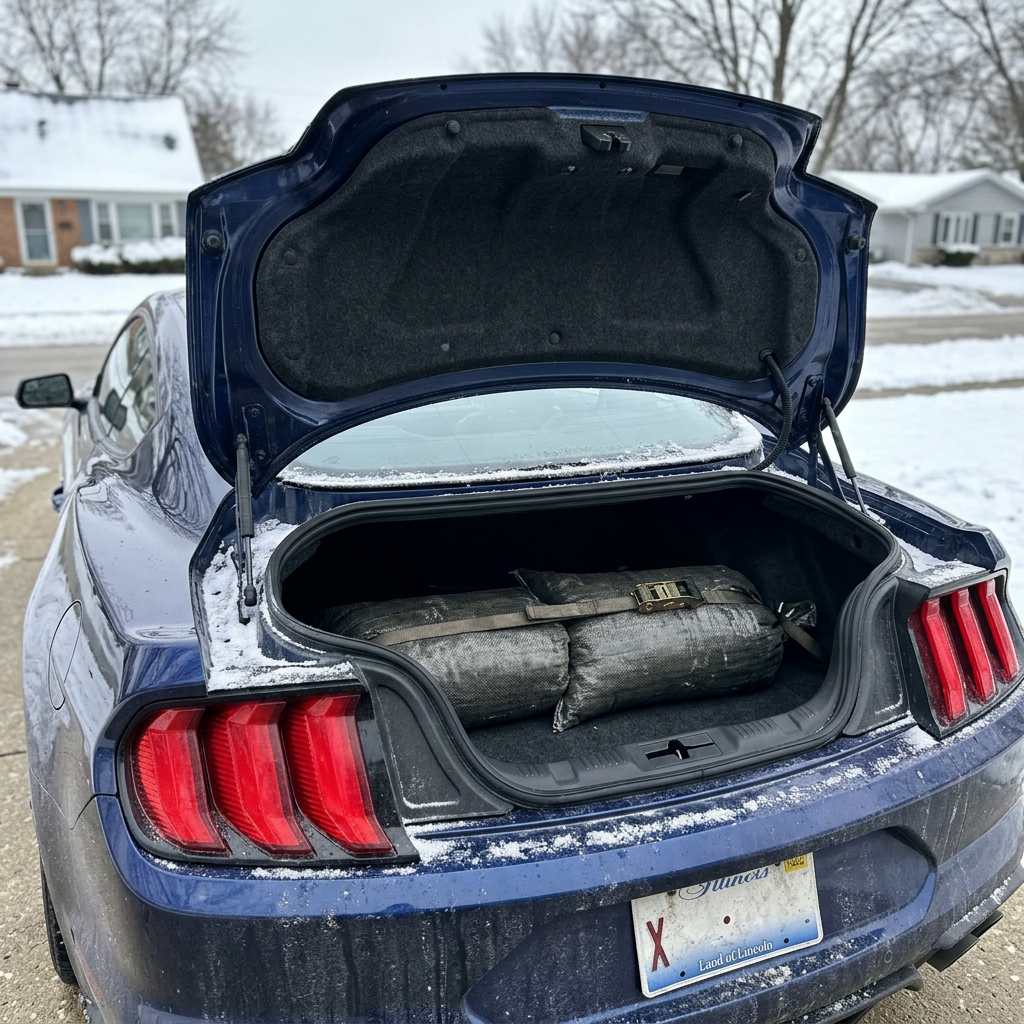
Adding 50 to 100 lbs of ballast directly over or slightly ahead of the rear axle can provide a noticeable benefit when starting from a dead stop in deep snow or unplowed subdivision alleys. Extra weight increases downforce on the drive tires, pushing the winter tread pattern firmly into snow crystals to maximize mechanical friction.
Safety Warning: If you elect to add ballast, use tube sand or bags of quick-set concrete double-wrapped in heavy-duty plastic, and firmly secure them against the rear trunk floor or tie-down points. Unsecured heavy items become dangerous projectiles during hard braking maneuvers or emergency evasive actions.
How Does Cold Weather Affect Ford Mustang Fuel Economy and Performance?
Fuel Economy Realities
Expect a 12% to 20% dip in fuel economy during peak winter months in Carol Stream. Winter-blend gasoline contains lower energy density, while dense sub-zero air increases aerodynamic drag. Extended idling to warm up the cabin also consumes fuel without accumulating miles.
Tire Pressure Physics
For every 10°F drop in ambient outdoor temperature, tire pressure decreases by approximately 1 to 2 PSI. A sharp cold front can illuminate your Tire Pressure Monitoring System (TPMS) warning light overnight. Maintain recommended door-sticker cold inflation pressures to protect wheel rims and optimize tread wear.
Cold Air & Engine Power
On cold, clear winter days, freezing air is significantly denser, allowing both the 2.3L EcoBoost turbo and the 5.0L Coyote V8 to ingest more oxygen per intake stroke. Once fully warmed up, your Mustang engine naturally operates at peak volumetric efficiency—just make sure engine oil reaches operating temp before heavy throttle applications.
Does the Mustang Mach-E Electric SUV Perform Better in Chicago Snow Than the Coupe?
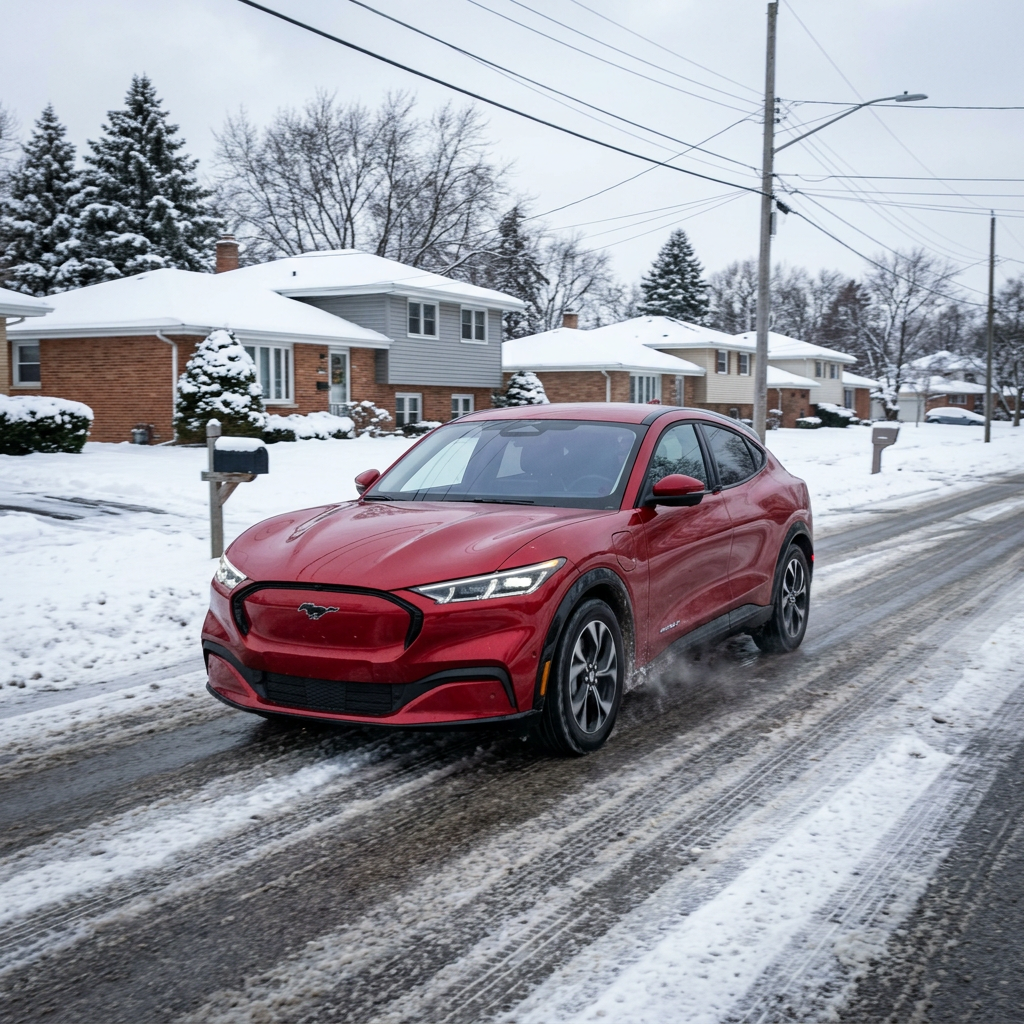
For drivers seeking Mustang styling combined with maximum winter versatility, the all-electric **Mustang Mach-E SUV** presents a compelling alternative to the traditional sports fastback. Equipped with available electric All-Wheel Drive (eAWD), the Mach-E utilizes independent front and rear electric motors to adjust torque split in real time, reacting to slipperiness in milliseconds without mechanical slip delay.
The Mach-E provides 5.8 inches of ground clearance (up to 6.3 inches on GT trims), offering an advantage over the fastback coupe’s 5.1 to 5.7 inches when plowing through heavy snow ridges left by municipal plows at driveway entrances. Furthermore, the heavy floor-mounted battery pack creates a low center of gravity that anchors the vehicle into turns.
While EV battery range decreases by 20-30% in sub-zero weather due to cabin heating demands, preconditioning the cabin via the FordPass® app while plugged in before leaving your garage preserves battery capacity for your commute down North Avenue.
How Often Should You Wash Your Car in Chicago During Winter to Prevent Rust?
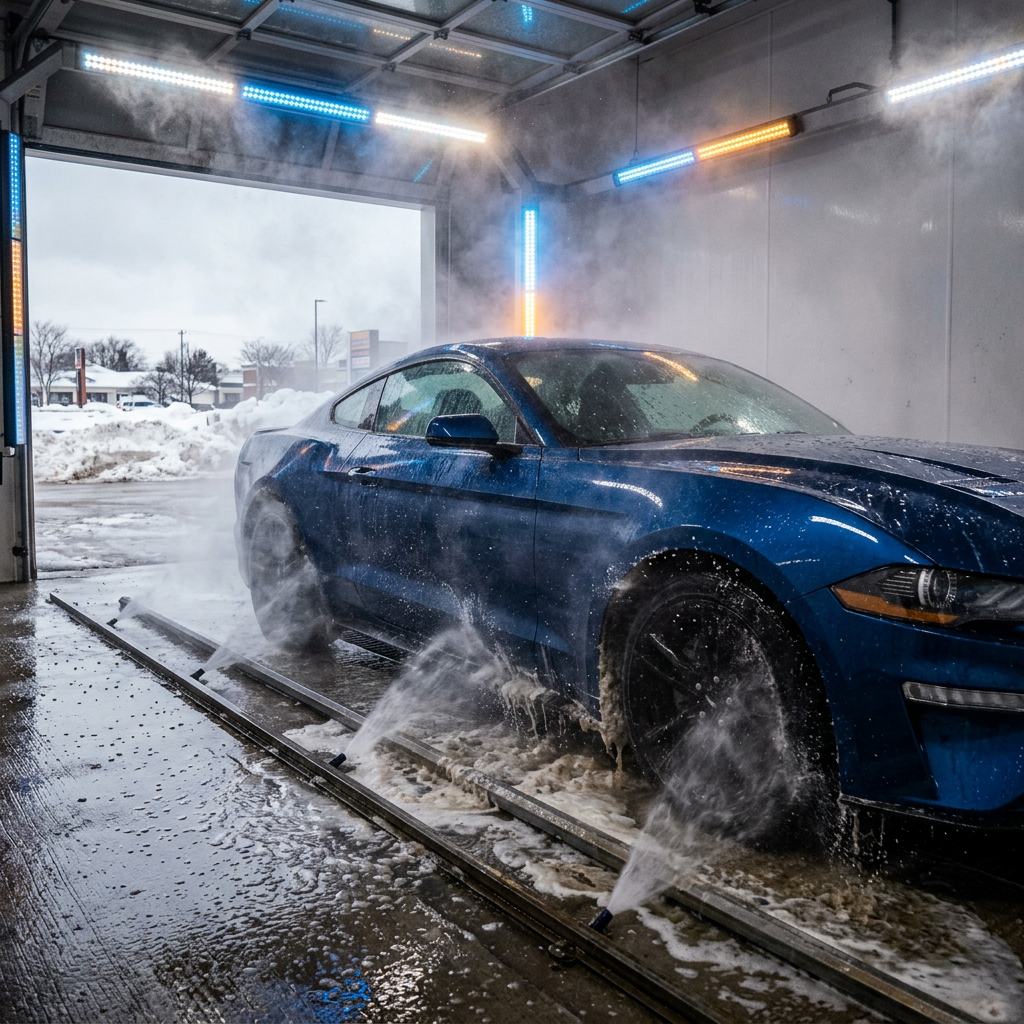
The Illinois Department of Transportation (IDOT) relies heavily on rock salt (sodium chloride) and liquid de-icers (magnesium chloride and calcium chloride) to keep major thoroughfares like I-355, Route 64, and North Avenue open. While essential for traction, these liquid chemical agents create a fine brine mist that atomizes into every underbody crevice of your vehicle.
To prevent oxidation on frame rails, aluminum suspension links, exhaust hangers, and brake line fittings, adopt a 7-to-10 day winter wash frequency. Crucially, ensure the car wash facility offers a dedicated high-pressure undercarriage flush to blast away packed salt deposits. Always wash your Mustang on days when temperatures rise above freezing, and thoroughly wipe down door jambs and rubber weatherstripping to prevent door handles and latch mechanisms from freezing shut overnight.
Essential Winter Protection & Accessories for Your Ford Mustang
All-Weather Interior Protection
Protect your Mustang interior carpet from slush, mud, and road salt stains with OEM Ford custom-molded all-weather floor liners. Deep tray channels trap liquid runoff and can be easily removed and rinsed.
Remote Start & Block Heaters
Warm your engine oil and cabin temperature remotely using FordPass® Remote Start. Installing an OEM engine block heater ensures fast cold-weather starts during sub-zero Polar Vortex spikes.
Exterior PPF & Heavy Wiper Blades
Protect low front fascias from road salt and flying gravel using clear Paint Protection Film (PPF). Pair this with beam-style winter wiper blades that prevent ice buildup along the arm framework.
Practical Winter Driving Techniques for Rear-Wheel-Drive Sports Cars
Driving a rear-wheel-drive performance car in winter requires deliberate control inputs and enhanced situational awareness. Follow these proven techniques for safe navigation:
• Smooth Control Inputs: Treat throttle, braking, and steering inputs with extreme delicacy. Avoid sharp jabs at the brake pedal or sudden throttle snaps when exiting turns.
• Manage Incline Stops: When approaching sloped highway overpasses or incline stoplights, leave extra distance to avoid stopping on the steepest section of the gradient.
• Oversteer Recovery: If the rear end begins to slide (oversteer), smoothly lift your foot off the throttle and look in the direction you want to travel, gently counter-steering into the drift without slamming the brakes.
• Emergency Roadside Kit: Always keep a winter survival kit in your trunk containing a collapsible shovel, traction boards, tow strap, jump-starter pack, warm blanket, and flashlight.
Preparing Your Mustang for Chicagoland Winter: Pre-Season Service Checklist
1. 12V Battery Load Test
Freezing temperatures can reduce battery cranking capacity by over 50%. Have our service technicians conduct a professional load test on your 12V battery to ensure reliable cold-weather starting power.
2. Antifreeze & Coolant Check
Verify that your engine coolant mixture offers protection down to -35°F. Weak coolant concentrations can freeze inside the radiator or engine block, causing catastrophic damage.
3. Brake Inspection & Fluids
Ensure brake pads have ample thickness (at least 5/32″) and inspect brake fluid moisture content. Clean, fresh brake fluid prevents pedal fade and ensures immediate ABS response on slick roads.
Get Winter-Ready at Hawk Ford of Carol Stream
At Hawk Ford of Carol Stream, we are proud to serve drivers across Carol Stream, Wheaton, Glen Ellyn, and the greater Chicagoland area. Whether you need winter tire mounting, seasonal vehicle inspections, or want to explore our extensive
New Vehicle Inventory,
Used Vehicle Inventory, or high-quality
CPO Inventory, our factory-certified team is here to help.





0 comment(s) so far on Can You Daily Drive a Ford Mustang in Chicagoland Winters?