
Ford SUV Towing Guide

July 14th, 2026 by

The Ultimate Ford SUV Towing Guide: Matching the Right Model to Your Trailering Needs


There is something incredibly liberating about hitching up a trailer and setting off on a new adventure. Whether you are preparing to haul a luxury pontoon boat down to the Fox River, pulling a pair of premium jet skis for a weekend getaway, or packing up a heavy-duty family camper for an extended summer road trip across the country, towing expands what your vehicle can do. However, successful and safe towing is not just about having a powerful engine; it is about matching your specific trailering needs with the right vehicle, the proper towing package, and a solid understanding of modern trailering technology.


For drivers in Carol Stream, Glendale Heights, and the surrounding Chicago suburbs, Ford’s diverse lineup of capable SUVs offers an array of options engineered to handle everything from light utility chores to massive heavy-duty hauling. Selecting the perfect SUV requires looking beyond simple tow ratings to understand terms like tongue weight, payload capacities, and integrated safety technologies. At Hawk Ford of Carol Stream, we want to ensure you feel entirely confident before you hitch up and head out. This comprehensive guide will walk you through the towing capacities of the Ford SUV lineup, highlight key engineering features, explain how to operate advanced towing assist technologies, and provide the practical safety tips you need to protect your investment and your passengers on Illinois roads.
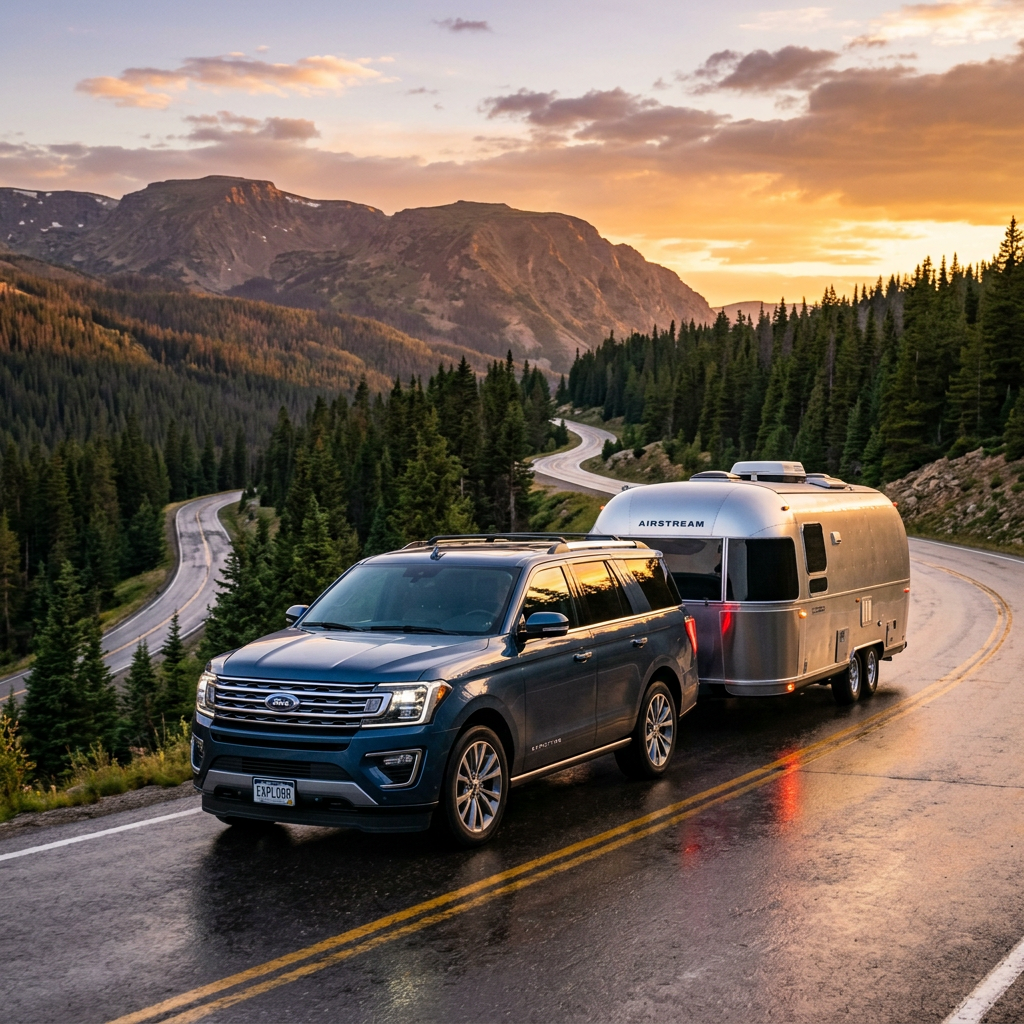
 

A blue Ford SUV towing a silver Airstream trailer on a winding mountain road during sunset. (Representative image for illustration purposes only. Actual vehicle may vary based on trim and configuration.)

Which Ford SUV Has the Highest Towing Capacity?


To choose the right Ford SUV, you first need to establish a clear baseline of what each model can pull. Ford’s lineup spans from highly efficient compact crossovers to massive, body-on-frame full-size haulers. Each step up in vehicle size generally corresponds with an increase in towing capability, frame stiffness, and overall stability. However, the maximum towing capacities listed by manufacturers are only achieved when the vehicle is properly equipped with specific factory-installed towing packages, proper axle ratios, and the correct engine configurations.


Below, we break down the maximum towing capacities of Ford’s core SUV lineup. Keep in mind that these numbers represent the absolute peak limits for each model series. Always consult your specific vehicle’s owner’s manual and the safety compliance certification label on the driver’s door pillar to calculate your exact limits, taking into account passenger weight, cargo loads, and optional equipment installed on your vehicle.


Ford SUV Model Max Towing Capacity (lbs) Recommended Application
Ford Escape (1.5L EcoBoost) 1,500 Small utility trailers, light pop-up campers
Ford Escape (2.0L EcoBoost Class II) 3,500 Jet skis, small fiberglass boats, lightweight trailers
Ford Explorer (2.3L EcoBoost Class IV) 5,000 Mid-size campers, utility trailers, small speedboats
Ford Explorer (3.0L EcoBoost Class IV) 5,600 Ski boats, medium camper trailers, tandem-axle utility loads
Ford Expedition (4×2 / 4×4) 9,300 – 9,600 Large travel trailers, heavy horse trailers, large boats
Ford Expedition MAX (Long Wheelbase) 9,000 Heavy travel trailers with maximum interior cargo room


Ford Escape


For active suburbanites who occasionally need to move light loads, the Ford Escape is a highly agile and efficient option. When equipped with the 2.0L EcoBoost engine and the available Class II Trailer Tow Package, the Escape can confidently pull up to 3,500 lbs, making it perfect for light trailers or small watercraft.


Ford Explorer


The Ford Explorer is a versatile mid-size family champion. Sporting standard rear-wheel drive architecture, the Explorer provides excellent towing dynamics. With a maximum tow rating of up to 5,600 lbs when properly configured, it easily manages family camping trailers, ATVs, and medium-sized powerboats.


Ford Expedition


When only the ultimate hauling capability will do, the full-size Ford Expedition reigns supreme. Utilizing a high-strength steel frame and a robust twin-turbocharged 3.5L EcoBoost engine, the Expedition offers a massive maximum towing capacity of up to 9,600 lbs, rivaling many light-duty pickup trucks.


Exploring the 2026 Ford Expedition Heavy-Duty Trailer Tow Package


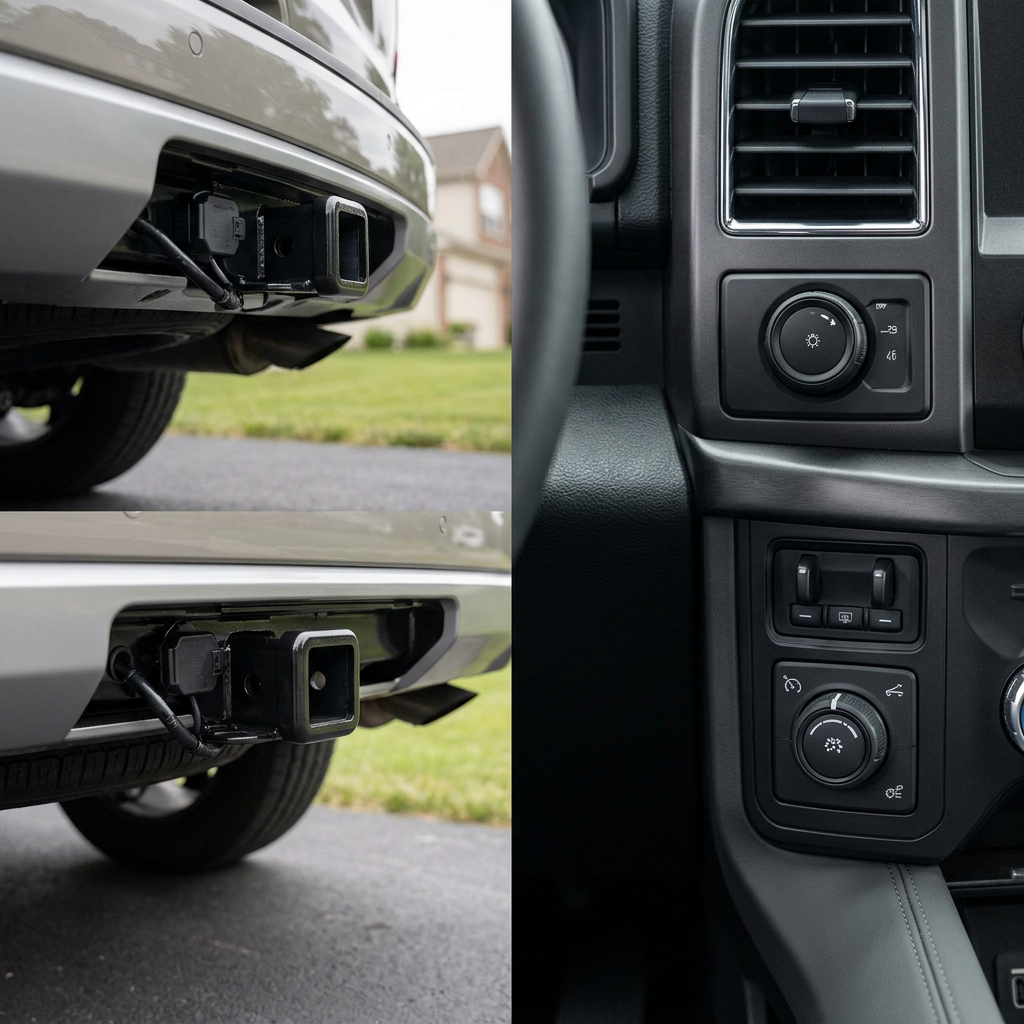
To tap into the absolute maximum trailering performance of the iconic 2026 Ford Expedition, buyers must look for models equipped with the factory-installed Heavy-Duty Trailer Tow Package. This package is not merely an optional hitch receiver bolted to the frame; it is a comprehensive suite of hardware and software upgrades engineered to keep your powertrain running cool, your electrical connections secure, and your trailer perfectly tracking behind you on winding roads.


At the heart of the Heavy-Duty Trailer Tow Package is an upgraded cooling system, featuring a high-capacity radiator and a dedicated, heavy-duty transmission fluid cooler. Towing heavy loads generates massive heat inside the engine and transmission; these upgraded cooling components ensure your powertrain continues operating at optimal temperatures even while climbing steep grades on scorching summer days. The package also adds an integrated trailer brake controller, a 3.73 non-limited-slip rear axle for optimized low-end torque delivery, and a high-output 7-wire harness with a 4-pin/7-pin connector.


In addition to physical hardware, the package includes smart software enhancements like Trailer Sway Control, which monitors vehicle motion and applies selective braking to individual wheels to counteract trailer sway. If you are looking to purchase a fully capable 2026 Ford Expedition in the Carol Stream or Glendale Heights area, you can easily browse our New Vehicle Inventory online or visit our showroom to speak with our dedicated truck and SUV specialists.


Split screen showing a vehicle's rear trailer hitch receiver and the corresponding interior trailer brake controller dashboard dials. (Representative image for illustration purposes only. Actual vehicle may vary based on trim and configuration.)

Smart Towing Tech: How Do You Activate Pro Trailer Backup Assist?


One of the most intimidating aspects of trailering is reversing. Trying to back a boat down a crowded ramp or parking a large travel trailer in a tight campsite requires counter-intuitive steering movements that can frustrate even seasoned drivers. To eliminate this stress, Ford developed Pro Trailer Backup Assist. This revolutionary system allows you to control the direction of your trailer using a simple rotary knob on the dashboard, while the vehicle handles all of the steering wheel adjustments automatically.


To activate and use this technology on your equipped Ford SUV, follow these straightforward steps:


Step 1: Set Up Your Trailer Profile
Before your first trip, you must set up a profile for your trailer. Park your SUV and trailer on a flat, level surface with the vehicle completely straight. On your SYNC infotainment screen, navigate to the Towing menu, select ‘Add a Trailer,’ and follow the prompts to input your trailer’s dimensions. Some models require placing a special checkered sticker on the trailer tongue, while newer models utilize advanced camera-based setup that auto-calibrates without a sticker.

Step 2: Press the Pro Trailer Backup Assist Button
With your trailer attached, your profile calibrated, and your foot firmly on the brake, press the center of the Pro Trailer Backup Assist rotary knob located on the center instrument panel. The SYNC screen will prompt you to select the active trailer profile.

Step 3: Release the Steering Wheel
Once the system connects and displays a green indicator on the screen, take your hands completely off the steering wheel. You will control the vehicle’s speed and braking with the pedals, and control the direction of the trailer with the knob.

Step 4: Rotate the Control Knob to Direct the Trailer
Look in your side mirrors or at the backup camera feed on the central screen. To turn the trailer to the left, rotate the dial counter-clockwise (to the left). To turn the trailer to the right, rotate the dial clockwise (to the right). The SUV will automatically spin the steering wheel to guide the trailer in the precise direction you have dialed. Release the knob to let it return to the center, and the SUV will steer to keep the trailer tracking in a straight line behind you.
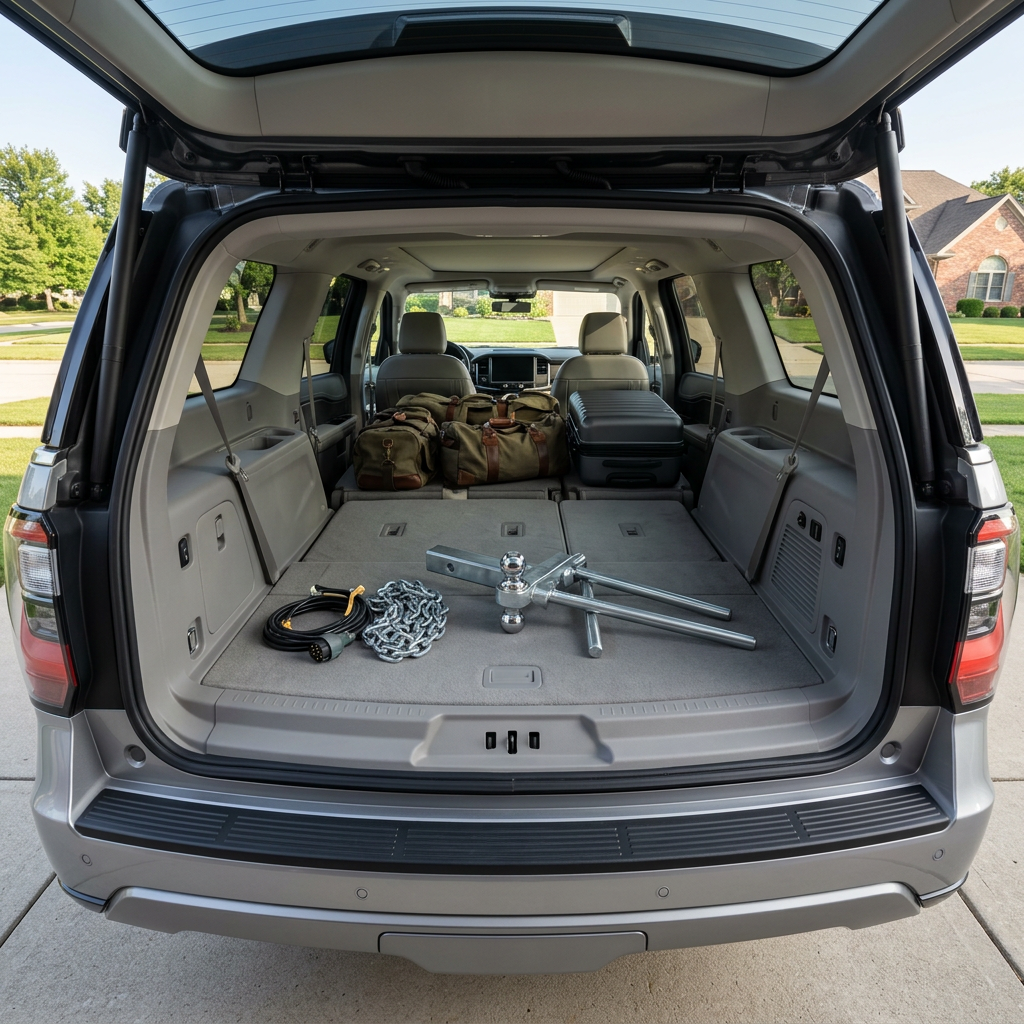
 

Open trunk of a silver SUV showing cargo space with bags, towing hitch, chains, and trailer wiring. (Representative image for illustration purposes only. Actual vehicle may vary based on trim and configuration.)

Which Large SUV Has the Best Cargo Space for Towing Gear?


When planning a trip that involves towing, cargo space inside the cabin is just as critical as the towing weight rating. You need plenty of dry, secure space to store high-value items, electronic gear, heavy hitch components, safety chains, luggage, and groceries, all while keeping your passengers comfortable. This is where comparing the interior volumes of the mid-size Explorer and the full-size Expedition becomes essential.


The Ford Explorer offers a highly practical layout with three rows of seating. Behind the third row, you will find up to 16 cubic feet of storage. Fold the third row down, and that expands to a generous 46 cubic feet. For maximum cargo-hauling mode with both rear rows folded flat, the Explorer delivers up to 86 cubic feet of flat load floor space, which is perfect for mid-sized gear bags, tools, and coolers.


However, if you want the absolute king of cargo volume, the Ford Expedition MAX is the clear champion. Featuring an extended wheelbase that adds nearly a foot of overall length, the Expedition MAX offers a staggering 36 cubic feet of cargo room behind the third row alone. With all rear passenger seats folded flat, the Expedition MAX opens up an enormous 121.5 cubic feet of total cargo volume. This massive capacity allows you to keep your towing gear, emergency tools, and family luggage completely protected inside the climate-controlled cabin, leaving the trailer fully dedicated to hauling your larger toys.


Protecting Your Investment: Are There Additional Insurance Costs When Towing a Trailer?


Understanding the financial and legal aspects of towing is just as vital as knowing your vehicle’s mechanical limits. One of the most common questions we receive from first-time trailer owners in Carol Stream is whether their existing auto insurance policy covers a trailer when it is hooked up to their Ford SUV. The short answer is yes, but with major limitations that you need to be aware of before hitting the road.


Typically, your standard auto insurance policy’s liability coverage extends to whatever you are towing. This means if your trailer swings wide and damages another vehicle, or if a collision occurs while towing, your liability policy will cover the damages to the other party’s property up to your policy limits. However, your standard auto policy does not cover the physical damage to your own trailer, nor does it cover the valuable cargo inside it. If your camper is damaged in a storm, if your boat slips off the trailer, or if your utility trailer is stolen, your auto policy will not reimburse you.


To fully protect your trailer, boat, or camper, you should contact your insurance provider to add a separate, dedicated trailer policy. This specialized coverage typically includes comprehensive and collision protection for the trailer itself, personal property coverage for the gear stored inside, and roadside assistance specifically tailored for towing setups. Adding a trailer policy is generally very affordable, and it offers invaluable peace of mind when traveling through Illinois or across state lines.
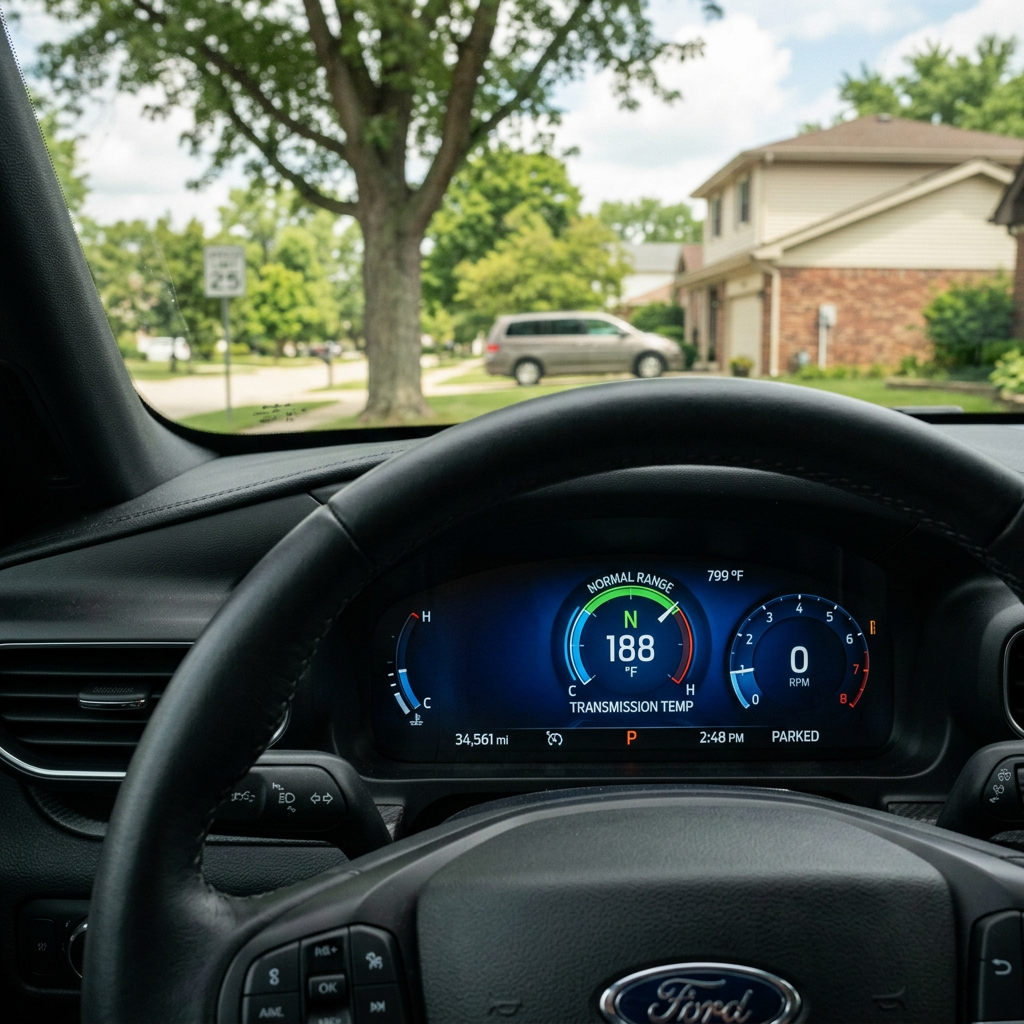
 

Monitoring Your Powertrain: How Do You Know If Your Transmission Is Overheating?


Towing places immense strain on your vehicle’s mechanical systems, and the transmission bears the brunt of that extra work. When pulling a heavy trailer, your transmission is constantly working to manage increased torque demands, which generates heat. If the transmission fluid gets too hot, it loses its lubricating properties, which can lead to accelerated wear, slipping gears, and eventual mechanical failure. Knowing how to monitor your powertrain and recognize the early signs of overheating is critical to avoiding costly repairs.


Modern Ford SUVs make monitoring your powertrain easy. Your instrument cluster’s productivity screen can be configured to display real-time transmission fluid temperature gauges. Keep an eye on this screen: normal operating temperatures generally range between 195°F and 220°F. If the gauge climbs toward the red zone or if a warning light appears on your dashboard, you need to take action immediately. Other physical warning signs include sluggish or delayed gear shifts, a distinct burning smell coming from under the hood, or the vehicle suddenly entering a safety ‘limp mode’ to protect the engine.


If you suspect your transmission is overheating while hauling on a hot summer day, pull over safely to the side of the road as soon as possible. Do not turn the engine off immediately; instead, put the vehicle in Park and let the engine idle. This keeps the water pump and radiator fan running, allowing the cooling systems to circulate fluids and dissipate the trapped heat. If you experience persistent temperature spikes while towing, it is highly recommended to have your system evaluated by certified technicians. You can easily Schedule Service Now to have your cooling and transmission systems thoroughly inspected.


A close-up view of a Ford steering wheel and digital dashboard displaying a transmission temperature of 188 degrees. (Representative image for illustration purposes only. Actual vehicle may vary based on trim and configuration.)

Essential Trailering Checklist Before You Hit the Road in Bloomingdale and Beyond


Safety should always be your top priority when towing. Before you pull out of your driveway in Carol Stream, Bloomingdale, or Glendale Heights, it is crucial to perform a comprehensive pre-trip inspection. Even a minor oversight can lead to trailer swaying, mechanical failure, or hazardous road conditions. Print out this essential checklist or save it on your smartphone to ensure a safe, smooth, and worry-free departure.
 

1. Hitch & Connection


• Verify the trailer coupler is fully seated over the hitch ball and the locking latch is completely secured with a safety pin.
• Ensure safety chains are crossed under the trailer tongue in a ‘cradle’ pattern to catch the tongue if it detaches.
• Confirm the breakaway cable is securely attached to the vehicle’s frame, not wrapped around the hitch.


2. Tires & Brakes


• Check and adjust tire pressures on both your Ford SUV and the trailer to the manufacturer’s recommended cold psi levels.
• Inspect all tires for visible wear, cracks, dry rot, or embedded debris.
• Test the integrated trailer brake controller manually at low speeds to ensure the trailer brakes are engaging smoothly.


3. Lights & Visibility


• Connect the wiring harness plug and ensure it is fully locked in place.
• Have a helper stand behind the trailer to confirm that running lights, brake lights, hazards, and both turn signals are operating correctly.
• Adjust your SUV’s side mirrors to ensure you have a clear, unobstructed view of the trailer’s rear corners.


Keep Your Ford SUV in Peak Towing Condition with Professional Maintenance


Towing places unique demands on your vehicle, meaning standard service intervals may not be sufficient to protect your SUV from premature wear. Operating under heavy loads falls under Ford’s ‘Special Operating Conditions,’ which requires more frequent inspections and fluid changes. Regular maintenance is the single most effective way to prevent costly mechanical breakdowns and ensure your vehicle remains safe and dependable.


Key areas that require specialized attention include your transmission fluid, braking system, and engine cooling setup. Transmission fluid should be flushed and replaced more frequently to prevent overheating damage. Your brakes must be checked to ensure rotors and pads can handle the extra stopping force required when hauling heavy loads. Additionally, your cooling system, including hoses and coolant levels, should be checked regularly to prevent engine overheating.


At Hawk Ford of Carol Stream, our certified service team is highly trained in preparing vehicles for heavy-duty towing. Whether you need a comprehensive pre-trip inspection, a transmission fluid exchange, or heavy-duty brake components from our specialized Parts Center, we are here to help. You can easily Schedule Service Now online to ensure your Ford is ready for your next big adventure.


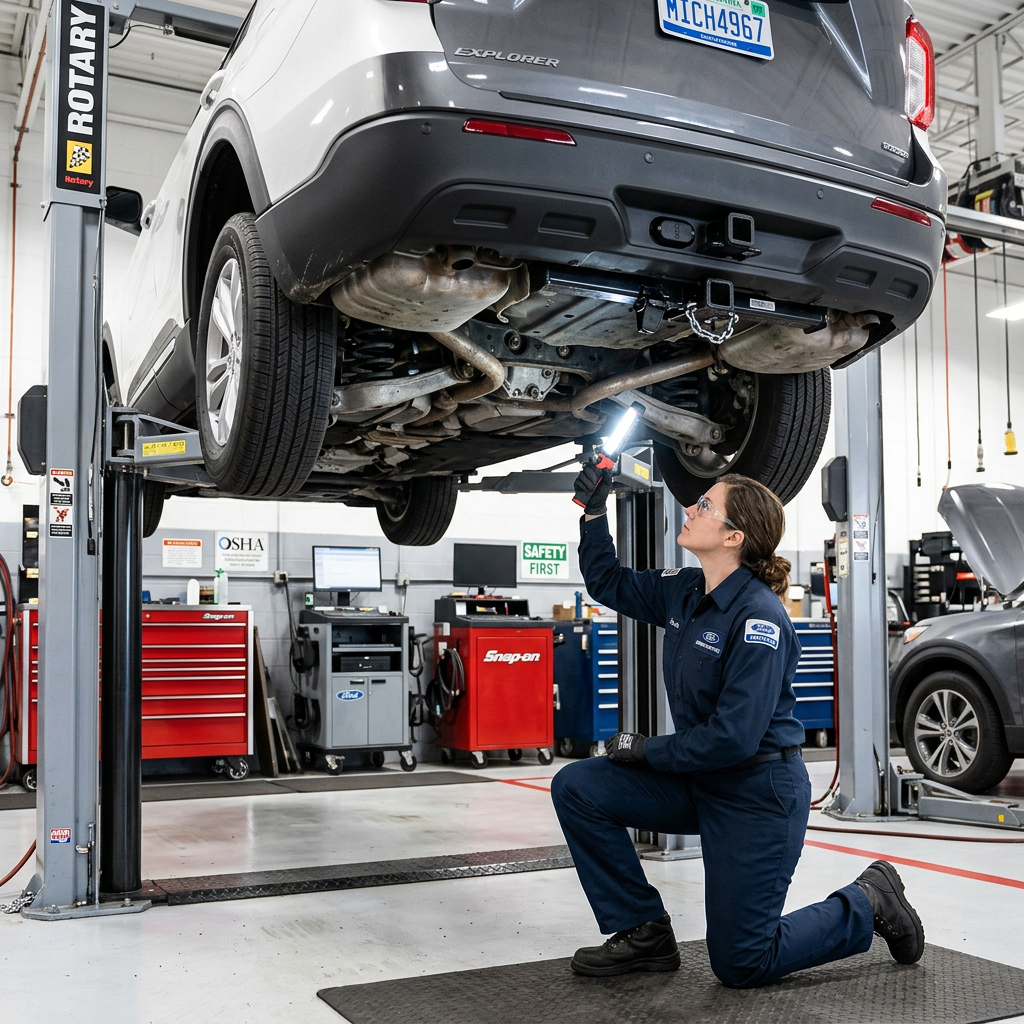
A female mechanic on one knee inspects the undercarriage of a Ford Explorer lifted on a hoist. (Representative image for illustration purposes only. Actual vehicle may vary based on trim and configuration.)

Find Your Next Tow-Ready Ford SUV at Hawk Ford of Carol Stream


No matter what you are planning to haul, finding the right Ford SUV with the proper capabilities is the first step toward a successful journey. From the agile and efficient Ford Escape to the versatile Explorer and the incredibly powerful Expedition, the Ford SUV lineup has a model engineered perfectly for your lifestyle and trailering needs. Let the experts at Hawk Ford of Carol Stream help you find your ideal setup.


We invite you to explore our massive inventory of New Vehicle Inventory and hand-selected Used Vehicle Inventory models online today. Ready to upgrade? You can easily Value Your Trade online to get a competitive offer for your current vehicle, or jumpstart your purchase by completing our secure Apply for Credit application from the comfort of your home.


Our dealership is conveniently located at 175 North Ave, Carol Stream, IL 60188. You can easily Get Directions to Hawk Ford of Carol Stream to visit our showroom, or Call us at (630) 233-9696 to schedule a personal test drive. We look forward to helping you discover the confidence, safety, and excitement of towing with a Ford SUV!